
How Restorative Justice Organizations Can Strengthen Community Peacebuilding and Restorative Practices
Organizations working to build peace with justice often operate where relationships have been damaged, trust is fragile, and traditional responses to conflict haven’t produced lasting resolution.
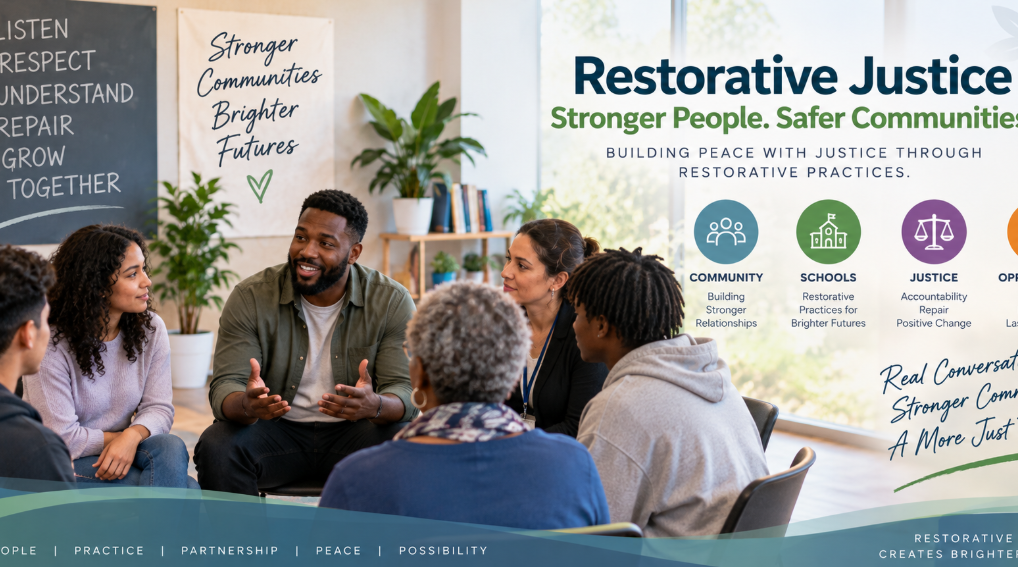
Their work can take many forms. Some introduce restorative justice programs in schools. Others facilitate restorative circles, support community-based conflict resolution, train practitioners, work with justice-involved individuals, or help institutions adopt restorative practices as an alternative to purely punitive responses.
What connects this work is the emphasis on relationships, accountability, repair, participation, and community.
But delivering restorative practices consistently creates an operational challenge that receives far less attention.
As programs grow, organizations need practical ways to manage participants, referrals, cases, restorative processes, training programs, facilitators, follow-ups, documentation, and outcomes without creating administrative systems that get in the way of the work itself.
For restorative justice nonprofits and peacebuilding organizations, the quality of that infrastructure can have a direct effect on how consistently programs are delivered.
Everything in one place: clients, notes, forms, appointments, reports, and outcomes. 👉 Try it Free - No credit card needed💡All-in-one Case Management Software.
Restorative Justice Work Rarely Follows a Simple Case Path
A restorative justice program may receive referrals from schools, community organizations, courts, social service agencies, families, or institutional partners.
What happens next depends heavily on the situation.
A school conflict may involve students, parents, teachers, administrators, and a restorative practices coordinator. A community conflict could involve several participants and facilitators. A reentry or diversion program may require coordination among participants, families, service providers, and referral partners.
Even determining whether a restorative process is appropriate can require several conversations.
That makes rigid workflows difficult.
Restorative justice organizations need enough structure to manage their work consistently while preserving the flexibility facilitators need to respond to individual circumstances.
This balance matters. Too little structure can result in missed follow-ups and fragmented records. Too much can turn a relationship-centered process into an administrative exercise.
Create a Consistent Referral and Intake Process
One of the best places to improve operations is at the beginning.
Referrals may arrive through online forms, email, phone calls, partner organizations, schools, or internal institutional processes. If each referral enters the organization differently, staff can spend considerable time simply determining what has happened and who is responsible for responding.
A defined intake process creates a common starting point.
Depending on the program, an organization may need to capture the referral source, people involved, type of conflict or incident, location, program eligibility, immediate needs, facilitator assignment, and current status.
That doesn’t mean every referral should collect the same information.
A community restorative justice program may need different intake fields than a school restorative practices program. The underlying system should accommodate those differences instead of forcing every program into one template.
👉 Try it Free - Free Case Management System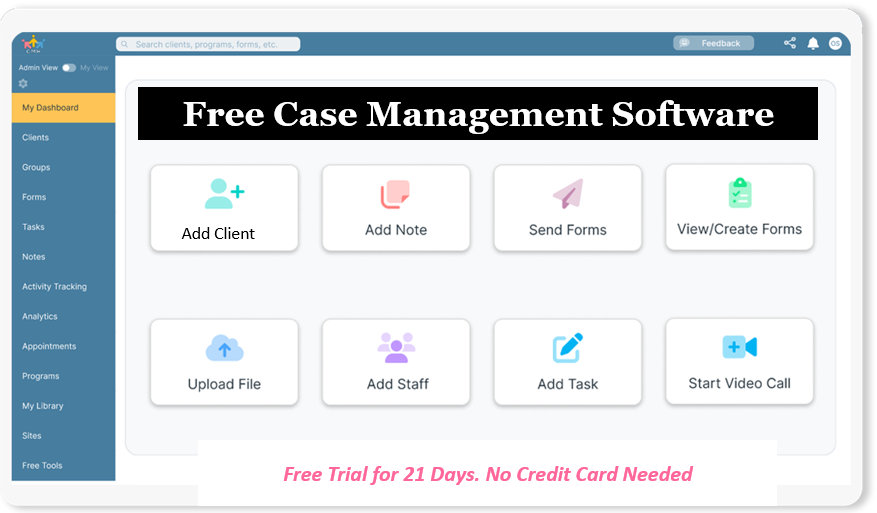
Keep Participants Connected Without Losing the Bigger Picture
Restorative work is fundamentally relational, but participant information can become fragmented surprisingly quickly.
One person may participate in an initial conversation, restorative circle, follow-up meeting, community program, training session, or additional support service. Another participant involved in the same matter may follow a different path.
If those interactions are recorded in separate spreadsheets, forms, calendars, and staff notes, reconstructing the history becomes difficult.
A centralized participant record can give authorized staff a clearer view of relevant interactions while still allowing the organization to separate programs, cases, and services appropriately.
This becomes particularly useful for organizations running several initiatives at once.
Someone might first encounter an organization through a community workshop and later participate in a restorative process. Another person might complete facilitator training and eventually volunteer with a community peacebuilding program.
Those relationships develop over time. An effective information system should be able to reflect that.
Manage Restorative Justice Cases Without Reducing People to Case Numbers
Case tracking is useful, but restorative justice organizations need to think carefully about what they track and why.
Traditional case management systems can sometimes encourage organizations to collect large amounts of information simply because fields exist for it. That isn’t necessarily appropriate for restorative work.
The better approach is purposeful documentation.
A restorative justice case management process might track referral dates, participant involvement, assigned facilitators, meetings, restorative circles, agreements, follow-up activities, services provided, case status, and outcomes relevant to the program.
Sensitive narratives deserve particular care.
Organizations should decide what information genuinely needs to become part of a formal record and what doesn’t. Facilitators also need clear guidance on documentation practices so records remain useful without becoming unnecessarily intrusive.
Switch to an all-in-one case management platform. 👉 Try it Free - No credit card needed🔥Still using spreadsheets for case management?
Restorative Practices in Schools Require Coordination
Schools are one of the most visible settings for restorative practices.
Restorative justice in schools can include restorative circles, conflict resolution, relationship-building activities, reentry conversations, responses to disciplinary incidents, peer mediation, and other practices designed to address harm and strengthen school communities.
The operational side can become complicated quickly.
A school-based restorative justice program may need to coordinate students, families, teachers, counselors, administrators, facilitators, and outside community organizations.
Programs may also need to distinguish between proactive restorative practices and responses to specific incidents.
That distinction matters for reporting.
If every activity is recorded simply as a “restorative justice service,” leadership may struggle to understand what the program is actually doing. Separating community-building circles, conflict interventions, training activities, referrals, and follow-up services provides a much more useful picture.
Schools and partner organizations can then examine participation and program activity without relying solely on anecdotal evidence.
Follow Agreements Beyond the Restorative Conversation
A restorative conference or circle isn’t necessarily the end of the process.
Participants may agree to specific actions intended to repair harm, rebuild trust, provide support, or address needs identified during the process.
Those agreements may require follow-up.
If commitments live only in facilitator notes or meeting documents, checking progress becomes dependent on individual memory.
A structured follow-up process can record agreed actions, responsible participants, target dates, completion status, and subsequent conversations where appropriate.
The purpose isn’t to transform restorative agreements into a punitive compliance system.
It is to make sure commitments aren’t forgotten once the meeting ends.
That distinction should shape both the workflow and the language organizations use around follow-up.
 👉 Try it free today - No credit card needed
Community Peacebuilding Requires Strong Partnership Management
Peacebuilding organizations rarely work alone.
Effective community-based restorative justice programs may depend on schools, behavioral health providers, youth organizations, social service agencies, legal services, neighborhood groups, faith-based organizations, local government programs, and other community partners.
That network becomes part of the organization’s service capacity.
Maintaining a useful referral directory can help staff and facilitators connect participants with additional support when needs extend beyond the restorative process itself.
Referral tracking adds another layer of insight.
If participants are frequently being referred for housing assistance, counseling, youth services, legal support, employment services, or other resources, those patterns tell the organization something about the environment in which conflict is occurring.
Restorative justice doesn’t replace those services. But good referral coordination can connect restorative processes with the broader support participants may need.
Track Facilitator Training and Restorative Practice Programs
Many restorative justice nonprofits do more than facilitate cases. They also build capacity.
They may train teachers, administrators, community leaders, volunteers, youth workers, facilitators, or institutional staff in restorative practices.
Training creates a different set of information-management needs.
Organizations may need to track registrations, attendance, training completion, program cohorts, facilitators, organizations represented, evaluations, and follow-up learning opportunities.
For organizations working across multiple schools or institutions, this data can help answer practical questions.
How many people have completed training? Which partner organizations have participated? Where is additional support needed? Are trained practitioners continuing to engage with the program? Which workshops attract repeat participation?
Training data becomes much more useful when it can be viewed alongside the organization’s broader program activity rather than maintained in an isolated registration system.
👉 Try it Free today - No credit card needed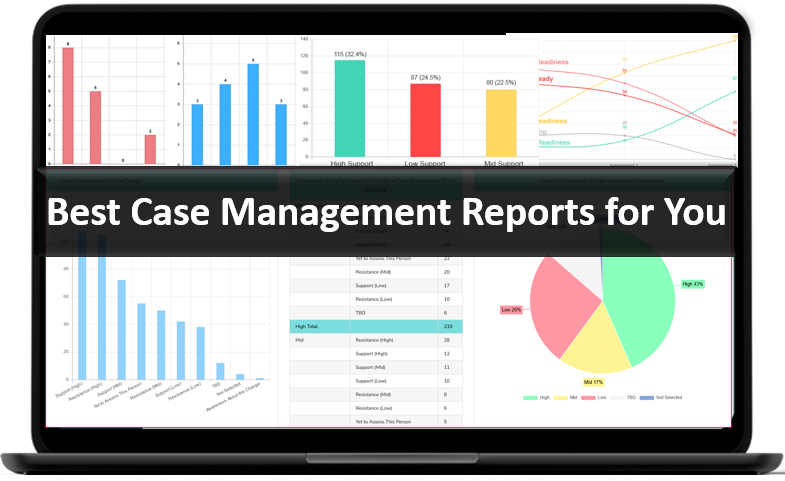
Measure Restorative Justice Outcomes Carefully
Restorative justice programs need evidence of what they’re accomplishing, particularly when reporting to funders, school districts, institutional partners, boards, or community stakeholders.
But measurement requires judgment.
The easiest numbers to collect aren’t always the most meaningful.
Organizations can count referrals, restorative circles, participants, training sessions, workshops, and completed cases. Those activity measures establish scale, but they don’t necessarily explain whether the process was useful.
Depending on the program, organizations may also examine participant feedback, completion of restorative agreements, successful referrals to additional resources, continued engagement, or other outcomes aligned with program goals.
Context matters.
A school-based restorative justice program shouldn’t automatically use the same measures as a community violence prevention initiative or restorative diversion program. Organizations should define success according to the purpose of each program and avoid overstating what their data can demonstrate.
Reporting Shouldn’t Require Rebuilding the Program on a Spreadsheet
Grant reporting can become an unexpected administrative burden for restorative justice nonprofits.
Staff may have the information they need, but not in one place.
Participant counts are in one spreadsheet. Referrals are somewhere else. Training attendance is stored in an event platform. Facilitator notes are in documents. Program outcomes are manually assembled at reporting time.
The problem isn’t necessarily a lack of data. It’s fragmentation.
A more organized system makes it easier to report by program, time period, service, participant population, referral source, location, or other fields relevant to the organization.
It also allows leadership to examine program operations before a grant report is due.
That can reveal where referrals are increasing, which programs are being used, whether follow-ups are being completed, and where administrative processes are slowing the team down.
👉 Try it free today - No credit card needed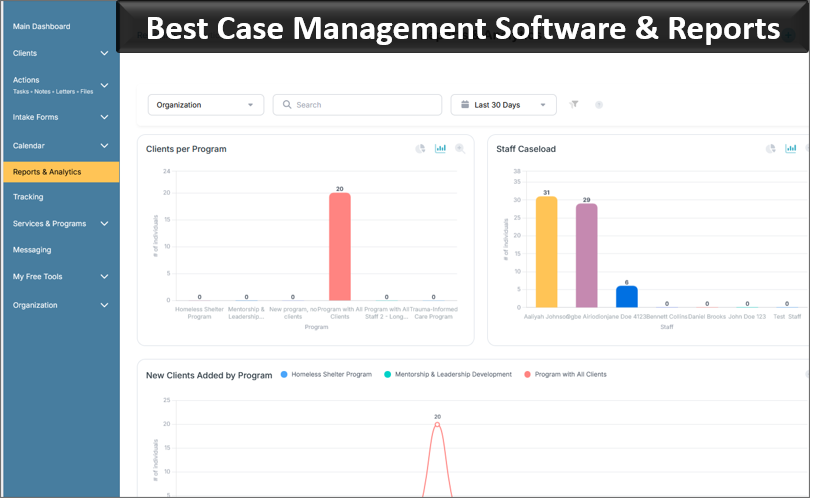
Privacy and Access Need Deliberate Boundaries
Restorative justice work can involve highly sensitive circumstances.
An organization shouldn’t assume everyone involved in delivering a program needs access to every record.
A volunteer facilitator may require information related to an assigned process without needing organization-wide access. A school partner may need certain program information but shouldn’t automatically see unrelated participant records. Program directors may need broader reporting access.
Role-based access can help organizations create those boundaries.
Technology is only part of the answer. Organizations also need internal policies defining what should be documented, who can view it, when information can be shared, and how long records should be retained.
The most useful system is one that supports those decisions rather than encouraging unrestricted collection and access.
Where Case Management Software Can Help
As restorative justice programs expand, case management software can provide a central place for managing the administrative side of the work.
Case Management Hub (CMH), for example, can be configured for nonprofits, community programs, schools, advocacy organizations, and human services teams that need to manage participants, services, referrals, programs, documentation, tasks, and reporting.
For a restorative justice organization, the platform could be customized around its own terminology and processes.
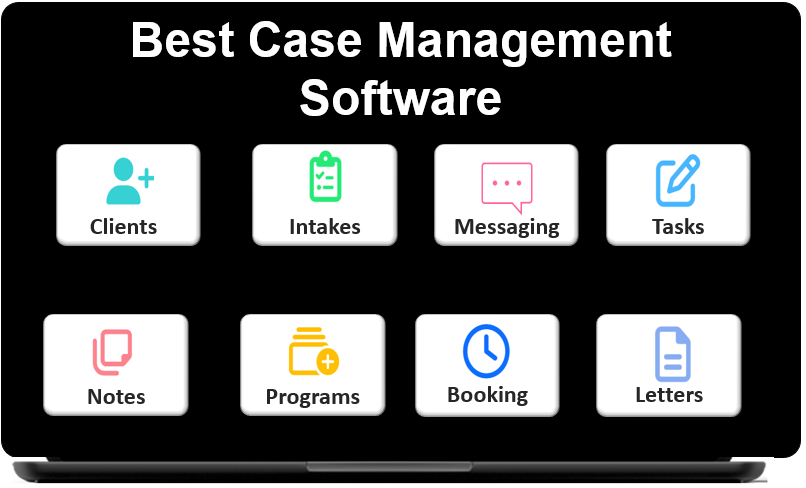
Digital forms can support referrals and intake. Participant profiles can centralize relevant information. Programs and groups can distinguish different initiatives or cohorts. Tasks and reminders can help staff manage follow-ups. Referral tools can document connections with community resources.
Organizations can also use customizable fields and forms to capture information relevant to restorative processes rather than relying entirely on predefined case management categories.
Reporting can then draw from the information already being recorded through daily program operations.
The value isn’t in making restorative justice more bureaucratic. The goal is to reduce the administrative fragmentation surrounding the work.
Everything in one place: clients, notes, forms, appointments, reports, and outcomes. 👉 Try it Free - No credit card needed💡All-in-one Case Management Software.
What a Restorative Justice Case Management Workflow Could Look Like
Consider a community restorative justice nonprofit receiving referrals from several local partners.
A referral is submitted through an online form and reviewed by a program coordinator. The organization determines whether the matter fits the program and records the appropriate next step.
Participant outreach and intake activities can be documented, and a facilitator can be assigned.
As the process develops, authorized staff can track meetings, services, relevant documents, tasks, and follow-ups. If participants are connected with outside community resources, those referrals can also be recorded.
After a restorative process, the organization can schedule follow-up activities and capture appropriate outcome information.
The same platform can support other parts of the organization’s mission.
Training cohorts can be organized separately from restorative cases. Community workshops can be tracked as programs. Custom forms can collect evaluations or participant feedback. Reports can examine program activity across selected periods, locations, groups, or services.
This approach gives organizations a common operational foundation without requiring every restorative justice initiative to operate identically.
Choosing Software for a Restorative Justice Organization
Start with the program, not the product.
Map how referrals currently enter the organization. Look at how participants are enrolled, how facilitators receive assignments, where documentation is stored, how follow-ups happen, and how program reports are created.
The friction points usually become obvious.
Perhaps staff are entering the same participant information several times. Maybe referral status is difficult to determine. Facilitators maintain separate spreadsheets. Follow-ups depend on calendar reminders. Reporting requires weeks of manual reconciliation.
Those are the problems the software should solve.
Restorative justice organizations should pay particular attention to customizable forms and fields, program flexibility, role-based permissions, referral management, document management, task tracking, reporting, data exports, mobile accessibility, and ease of use.
The platform should also be flexible enough to support the organization’s language. A restorative justice nonprofit shouldn’t have to redesign its entire practice around terminology created for a completely different service model.
👉 Try it Free - Free Case Management System
Stronger Systems Can Give Practitioners More Time for the Work That Matters
Peacebuilding and restorative justice depend on human relationships. No database can facilitate an honest conversation, rebuild trust, create accountability, or repair harm.
Technology has a different job.
It can reduce the time practitioners spend searching for information, maintaining duplicate records, checking spreadsheets, reconstructing referral histories, and manually assembling reports.
For organizations advancing restorative practices in communities, schools, and institutions, that distinction matters.
The goal isn’t to digitize every human interaction. It’s to create enough operational structure that referrals receive attention, participants aren’t overlooked, commitments are followed up, programs can be evaluated, and the organization can understand the reach and results of its work.
Done well, better infrastructure stays mostly in the background while restorative justice practitioners, educators, facilitators, and community leaders remain focused on the relationships in front of them.
FAQs About Restorative Justice Organizations and Case Management Software
What is restorative justice and how do restorative justice organizations support communities?
Restorative justice is an approach focused on addressing harm, accountability, repairing relationships, and involving affected people in the process. Restorative justice organizations may provide community peacebuilding, restorative circles, conflict resolution, training, referrals, school programs, and other restorative practices.
How are restorative practices used in schools and communities?
Restorative practices in schools and communities can include restorative circles, conflict resolution, relationship-building activities, reentry conversations, peer mediation, and facilitated responses to harm. These programs can help organizations and schools create more structured approaches to accountability, participation, and repairing relationships.
What is restorative justice case management software?
Restorative justice case management software helps organizations manage participants, referrals, restorative processes, services, facilitators, documents, follow-ups, and program outcomes in one centralized system. It can reduce reliance on disconnected spreadsheets, forms, emails, and manual tracking.
What features should case management software for restorative justice nonprofits include?
Case management software for restorative justice nonprofits should include customizable intake forms, participant profiles, referral tracking, program management, tasks and reminders, document management, role-based permissions, custom reporting, and data exports. Flexibility is especially important because restorative justice programs can differ across schools, communities, and institutions.
How can Case Management Hub help restorative justice organizations?
Case Management Hub can help restorative justice organizations centralize participant information, manage referrals and programs, customize intake forms, track services and follow-ups, organize documents, and generate reports. Organizations can configure the platform around restorative justice programs, community peacebuilding, school-based restorative practices, training, and other initiatives.
Find the Right Case Management Solution for Your Organization: All-in-One Case Management Resource Center.
Note: Content on this casemanagementhub.org site is copyrighted and protected under applicable copyright laws. Read Terms of Use.
Disclaimer: Case Management Hub is an educational resource and software provider site. Our content is not medical advice. Use of this site does not create a provider-patient relationship. Read our full disclaimer here: Case Management Hub Disclaimer.