
How to Track Client Outcomes in Social Services (With Real Examples and Templates)
Tracking client outcomes in social services is one of the most effective ways to improve care, strengthen reporting, and show measurable impact. Organizations that rely only on activity counts often miss the bigger picture. It is not enough to know how many appointments were scheduled, how many referrals were made, or how many forms were completed. The real question is whether services helped clients achieve meaningful progress.

A strong system for client outcome tracking in social work helps teams connect services to results, improve decision-making, and build trust with funders, leadership, and community partners.
Why Client Outcome Tracking Matters in Social Services
Client outcome tracking in social work gives organizations a more accurate way to understand whether programs are working. It shifts attention from process alone to real change in a client’s life. This matters for social workers, case managers, nonprofit leaders, program directors, and anyone responsible for improving service delivery.
Strong social services outcome measurement supports better planning, stronger staff accountability, and more useful reporting. It also helps organizations identify which interventions are leading to progress and which ones may need to be adjusted. When staff can clearly see patterns across clients and programs, they are better positioned to improve service quality and allocate resources more effectively.
- Demonstrate program impact with clear data
- Improve client care through better follow-up and evaluation
- Strengthen grant reporting and funder communication
- Identify service gaps earlier
- Build a stronger culture of continuous improvement
For organizations comparing case management software with spreadsheets or disconnected systems, outcome tracking is often the dividing line between reactive service delivery and proactive program management.
💡All-in-one Case Management Software.
Everything in one place: clients, notes, forms, appointments, reports, and outcomes.
👉 Try it Free - No credit card needed
What Client Outcomes Actually Mean
A client outcome is a measurable change in a client’s condition, situation, knowledge, behavior, or stability after receiving services. Outcomes should reflect progress that matters, not just internal administrative activity. This is the foundation of outcome-based case management strategies.
Examples of client outcomes
- A client moves from unstable housing to stable housing
- A client gains employment and maintains it for 90 days
- A student improves school attendance after receiving support services
- A client reports reduced anxiety using a standardized assessment
- A family completes a case plan and reaches key stability goals
Examples of activities that are not outcomes
- Number of case notes entered
- Number of phone calls made
- Number of forms sent
- Number of appointments scheduled
Those metrics still matter, but they are process measures. To understand client success metrics in human services programs, organizations need to connect service activity to visible progress.
How to Measure Client Outcomes in Social Work Programs
The best ways to track client progress in human services start with a clear, repeatable framework. Teams should know what they are measuring, why it matters, and how the information will be used.
- Define the desired outcome. Identify the client change your organization wants to achieve. Examples include increased safety, improved health, stable housing, employment retention, or reduced crisis events.
- Select a measurable indicator. Choose a practical way to measure progress, such as score improvement, status change, percentage completed, or number of days in a stable condition.
- Capture baseline data. Record the starting point at intake so future change can be measured accurately.
- Track progress consistently. Update outcomes at regular intervals using case notes, assessments, service reviews, and follow-up touchpoints.
- Review and act on the data. Use reporting to identify trends, support supervision, and improve programs over time.
This structure supports monitoring and evaluation in social work practice and helps ensure that progress is tracked in a way that is both useful and realistic for staff.
👉 Try it Free - Free Case Management System
Key Performance Indicators in Social Services
Key performance indicators in social services should align with both program goals and client needs. The strongest indicators are specific, relevant, and easy to review over time.
Common KPI categories
- Housing stability
- Employment placement and retention
- Service engagement and attendance
- Mental health improvement
- School attendance and educational progress
- Referral completion
- Goal completion rates
- Reduction in crisis incidents
What makes a good KPI
A good KPI answers a clear question. For example, if the question is whether a housing program improves stability, the indicator might be the number of days a client remains housed after placement. If the question is whether counseling support improves functioning, the indicator might be a validated score that improves over time.
Avoid using too many KPIs. A smaller set of well-defined metrics usually produces better social work data tracking and reporting methods than a long list that staff struggle to maintain.
How to Document Client Outcomes in Case Notes
Many organizations collect large amounts of information in narrative notes but still struggle to pull meaningful results from the data. Learning how to document client outcomes in case notes is essential because notes often contain the most timely picture of client progress.
What outcome-focused notes should include
- The client goal or outcome area being addressed
- The action taken during the contact
- Observed progress, barriers, or status changes
- Any measurable updates related to the outcome
- The next step or follow-up plan
Example note language
Instead of writing that the client attended a meeting and discussed employment, write that the client completed a resume update, submitted three job applications, and moved from job-ready to active application status. This type of note makes tracking client progress in case management far more useful because it links service activity to measurable change.
Organizations that standardize note templates often have an easier time producing reports later. Even a simple structure can improve consistency across staff.
🔥Still using spreadsheets for case management?
Switch to an all-in-one case management platform.
👉 Try it Free - No credit card needed
Real Examples of Client Outcome Tracking in Social Services
Examples of client outcome tracking in social services are most useful when they reflect real workflows. The goal is to make outcome measurement practical, not overly complicated.
Example 1: Housing support program
A housing-focused organization wants to measure whether clients achieve stable housing within 90 days of enrollment. At intake, staff record the current housing situation as the baseline. During follow-up, they update living status, placement date, and stability milestones. A report shows how many clients moved into housing, how long it took, and how many remained housed after 30, 60, and 90 days.
Example 2: Behavioral health services
A behavioral health team uses a standardized assessment at intake and every 30 days. Staff compare scores over time to identify improvement, no change, or decline. Combined with progress notes and attendance data, this creates a stronger picture of social work outcome measurement than session counts alone.
Example 3: Employment and workforce program
A workforce development organization measures job readiness, placement, and retention. Staff track resume completion, interview readiness, application activity, hiring date, and job retention milestones. This gives leadership a clear view of how services influence employment outcomes over time.
Example 4: School-based social work
A student support program tracks attendance, behavioral incidents, and academic engagement. Staff compare baseline attendance against attendance after intervention and document teacher feedback in case notes. This helps the organization show how case management and support services contributed to improved student participation.
Comparison Table: Outcome Tracking Framework
The table below provides a simple framework organizations can use to standardize social work outcome measurement tools and templates. Keeping the structure clear and focused makes it easier to collect data consistently and report on client progress.
| Outcome Area | Example Metric | How to Track It | Review Frequency |
|---|---|---|---|
| Housing Stability | Days housed or placement status | Intake baseline, follow-up updates, case notes | Weekly or monthly |
| Employment | Job placement and retention | Readiness checklist, application log, retention check-ins | Biweekly or monthly |
| Mental Health Progress | Assessment score improvement | Standardized assessments plus progress notes | Every 30 days |
| Service Engagement | Attendance and follow-up completion | Appointment records, reminders, outreach logs | Weekly |
This structure works well for organizations that want a practical starting point for outcome reporting systems for nonprofits and social services without creating unnecessary complexity.
 👉 Try it free today - No credit card needed
Templates Organizations Can Use Right Away
Templates help teams maintain consistency across staff and programs. They also reduce confusion about what should be documented and when.
Basic outcome tracking template
- Client goal
- Baseline status
- Target outcome
- Metric used
- Date of review
- Current status
- Barriers or supports
- Next action step
Progress note prompt template
- What goal or outcome was addressed today?
- What changed since the last contact?
- What measurable evidence of progress or challenge was observed?
- What follow-up is needed next?
Using simple social work outcome measurement tools and templates can make documentation more useful without increasing staff burden.
Best Tools for Tracking Client Outcomes in Case Management
Organizations often begin with spreadsheets, but as caseloads grow, manual systems become harder to maintain. That is why many teams look for client outcome tracking software for social services or case management software with outcome tracking features.
Features that matter most
- Custom fields for goals and outcomes
- Standardized forms and assessments
- Progress note templates
- Goal tracking and task reminders
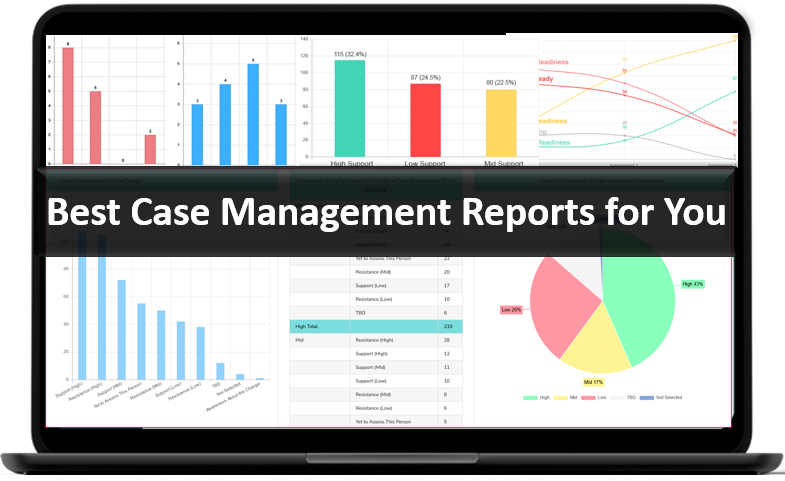
- Reporting dashboards
- Exportable reports for leadership and funders
Digital tools for tracking client success and progress can reduce duplication, improve accuracy, and make it easier to spot trends across programs. The right platform should support daily workflows, not create more work for staff.
👉 Try it Free today - No credit card needed
Common Mistakes That Weaken Outcome Tracking
Even strong teams can struggle with outcome tracking if the process is unclear or inconsistent. Avoiding a few common mistakes can dramatically improve the quality of your data.
- Tracking activities without linking them to outcomes
- Using vague goals that cannot be measured clearly
- Failing to record baseline information at intake
- Allowing every staff member to document differently
- Collecting too much data without reviewing it regularly
- Delaying updates until important details are lost
The most effective best ways to track client progress in human services are usually simple, standardized, and reviewed consistently by supervisors and program leaders.
A Practical Workflow for Ongoing Outcome Reporting
Outcome reporting systems for nonprofits and social services work best when they are built into everyday practice. Organizations do not need an overly complicated process. They need a disciplined one.
- Set outcome goals during intake
- Record baseline status in the client record
- Use structured notes during each service interaction
- Review goals during scheduled follow-up intervals
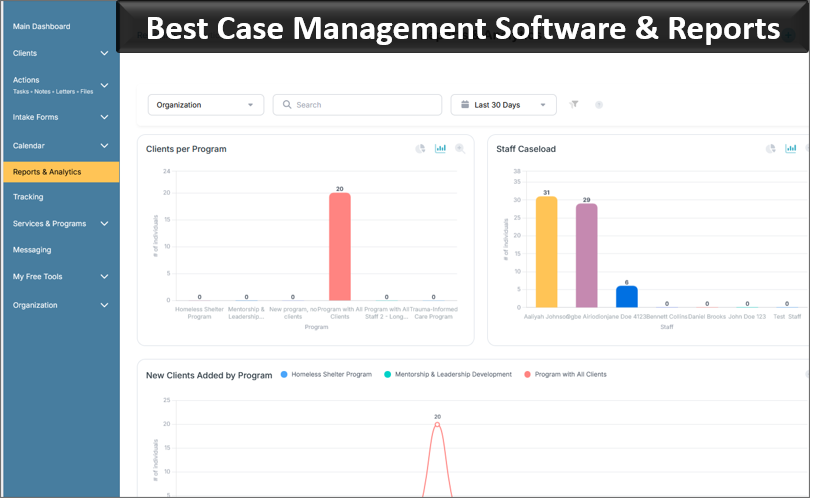
- Run regular reports by program, staff member, or date range
- Use findings to improve services and support supervision
This type of routine supports stronger monitoring and evaluation in social work practice and creates a more reliable picture of impact over time.
👉 Try it free today - No credit card needed
Final Thoughts on Tracking Client Outcomes in Social Services
Organizations that understand how to track client outcomes in social services are in a stronger position to improve care, justify funding, and make smarter program decisions. Strong client outcome tracking in social work is not just about compliance or reporting. It is about understanding what is changing in a client’s life and how services contribute to that change.
The most effective approach combines clear goals, measurable indicators, consistent documentation, and practical review processes. Whether your organization is building a framework from scratch or refining an existing system, better outcome tracking leads to better visibility, better accountability, and better support for the people you serve.
When organizations use practical templates, thoughtful KPIs, and the right digital tools, they can move beyond scattered documentation and create a system that clearly shows progress, strengthens operations, and improves client outcomes over time.
💡All-in-one Case Management Software.
Everything in one place: clients, notes, forms, appointments, reports, and outcomes.
👉 Try it Free - No credit card needed
FAQ: How to Track Client Outcomes in Social Services
How do you track client outcomes in social services?
To track client outcomes in social services, organizations should define clear goals, record baseline data, choose measurable indicators, and update progress consistently through case notes, assessments, and follow-up reviews. This approach helps teams measure real client progress instead of only tracking service activity.
What are the best ways to measure client outcomes in social work programs?
The best ways to measure client outcomes in social work programs include using standardized assessments, goal tracking, progress notes, and outcome reporting tools. Organizations should focus on measurable changes such as housing stability, employment, school attendance, or improvements in mental health.
What is the difference between client outcomes and service activities in case management?
Client outcomes are the measurable changes that happen in a client’s life, while service activities are the actions staff complete during service delivery. For example, attending an appointment is an activity, while improved housing stability or job retention is an outcome.
How do case notes help with client outcome tracking in social work?
Case notes help with client outcome tracking in social work by documenting progress, barriers, and measurable updates related to client goals. When notes are written in a structured way, organizations can use them to monitor trends, support reporting, and improve care planning.
What features should case management software with outcome tracking include?
Case management software with outcome tracking should include custom fields, goal tracking, progress notes, reporting dashboards, and standardized forms or assessments. These features help organizations centralize client data, monitor progress over time, and generate stronger outcome reports.
Find the Right Case Management Solution for Your Organization: All-in-One Case Management Resource Center.
Note: Content on this casemanagementhub.org site is copyrighted and protected under applicable copyright laws. Read Terms of Use.
Disclaimer: Case Management Hub is an educational resource and software provider site. Our content is not medical advice. Use of this site does not create a provider-patient relationship. Read our full disclaimer here: Case Management Hub Disclaimer.