
Best Fibroid Patient Assistance and Case Management Software for Fibroid Healthcare Nonprofits
For a nonprofit that provides financial assistance and support to women who need uterine fibroid care, managing applications is only one part of the job. The harder part is what happens after an application arrives for fibroid support.
Staff may need to collect sensitive health and financial information, determine whether an applicant meets fibroid program requirements, request missing documents, record an eligibility for fibroid decision, determine how much assistance can be provided, track when funding is distributed, and report on the program later.

That creates a different software requirement from ordinary nonprofit donor management or a basic online form builder. Organizations doing this work need a secure system that can support the complete patient assistance process.
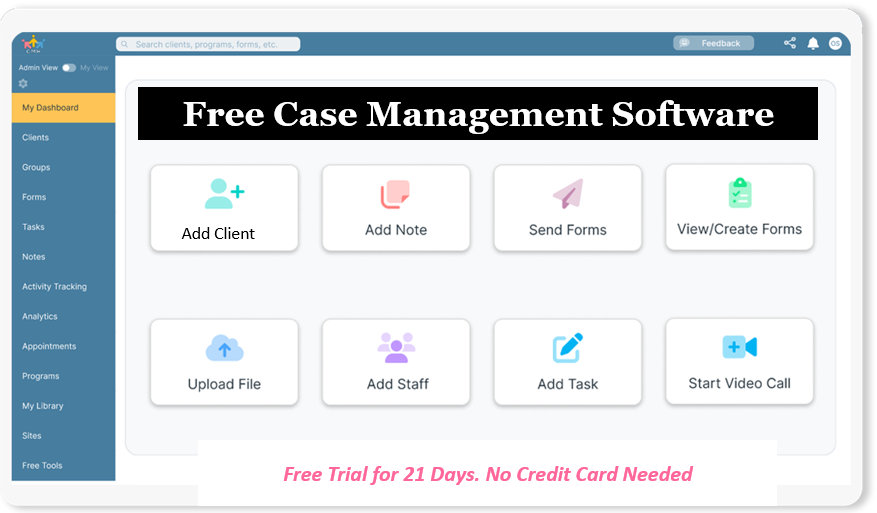
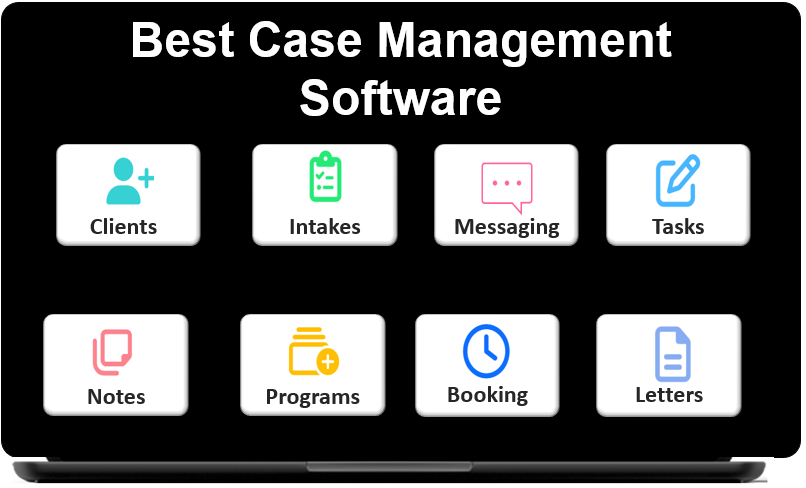
Case Management Hub is designed for this type of work. Healthcare nonprofits, patient advocacy organizations, women’s health programs, community organizations, and other assistance programs can use the platform to bring applications, applicant records, forms, documentation, funding information, tasks, and reporting into one case management system.
💡All-in-one Case Management Software.
Everything in one place: clients, notes, forms, appointments, reports, and outcomes.
👉 Try it Free - No credit card needed
Fibroid Patient Assistance Programs Need More Than an Online Application
An online application can solve the first step of the process. It doesn’t necessarily solve what happens next.
Consider a nonprofit dedicated to uterine fibroid awareness, patient support, research, and access to care. If the organization also provides financial assistance to women seeking fibroid treatment, each application can generate a substantial amount of information.
There may be contact and demographic information, treatment information, household income, insurance details, supporting documents, financial need, eligibility criteria, internal review notes, funding decisions, follow-up dates, and records of assistance provided.
Managing that process through a combination of spreadsheets, email inboxes, online forms, shared folders, and staff notes creates unnecessary fragmentation. Someone eventually has to connect those pieces to answer basic operational questions: Has this application been reviewed? Are documents missing? Does the applicant qualify? Has funding been approved? How much was provided? Which funding source was used?
Patient assistance program software should make those answers easier to find.
A Better Workflow: From Patient Application to Financial Assistance
The best way to evaluate software for a financial assistance program is to follow an applicant through the actual workflow instead of comparing long feature lists.
For a women’s health or uterine fibroid nonprofit, that workflow might look something like this:
- A woman submits a secure financial assistance application.
- She provides the information required to evaluate eligibility.
- Supporting documents are uploaded with the application or collected afterward.
- Program staff review the application for completeness.
- Missing information is requested when necessary.
- Staff determine whether the applicant meets the program’s eligibility requirements.
- The funding decision and amount are recorded.
- Staff track when assistance is provided and which funding source was used.
- The organization follows up with the patient and reports on assistance provided, program activity, and outcomes.
This is where case management software becomes much more useful than a standalone form. The application becomes the beginning of a managed process rather than an isolated submission sitting in an inbox.
👉 Try it Free - Free Case Management System
HIPAA-Compliant Forms Should Be a Starting Requirement
Healthcare and patient advocacy organizations can collect information that people reasonably expect to be treated as highly sensitive. Depending on the organization, its relationships, and the information being handled, HIPAA requirements may also apply.
That makes security something to evaluate at the beginning of a software search, not after an application workflow has already been built.
Case Management Hub provides HIPAA-compliant security protections and supports digital forms that organizations can customize around their programs. Rather than asking applicants to email sensitive documents or forcing staff to manually transfer information from one system to another, forms can become part of the applicant’s organized record.
Build the application around the program
A fibroid financial assistance program probably won’t need the same application as a behavioral health clinic, housing nonprofit, legal aid organization, or food assistance program. Customization matters because eligibility programs tend to have their own questions and documentation requirements.
A women’s health nonprofit could create application fields around the information it genuinely needs, such as demographics, contact information, requested assistance, treatment-related information, financial need, household details, insurance status, referral information, consent, and other program-specific criteria.
Forms can also support electronic signatures and file uploads, which is especially useful when applicants need to provide documentation as part of their request.
The goal isn’t to collect as much information as possible. A well-designed application collects what the organization needs to make and document a decision without creating unnecessary work for applicants or staff.
Eligibility Review Is Where Basic Form Software Starts to Fall Short
Receiving applications is relatively straightforward. Reviewing them consistently is harder.
A nonprofit may receive applications at different stages of completion. One applicant has everything required. Another hasn’t uploaded proof of income. Another may need additional treatment documentation. Someone else may meet the basic eligibility requirements but is waiting for funding availability.
Those differences need to be visible without staff searching through emails or opening individual documents just to determine what happens next.
Case Management Hub can be configured to track applicants through stages appropriate to the organization’s process. A financial assistance program might use statuses such as:
- Application Received
- Under Review
- Additional Information Needed
- Eligible
- Approved
- Funding Scheduled
- Funded
- Closed
Those are examples rather than required Case Management Hub statuses. The point of a customizable system is that the workflow can reflect the organization’s actual review process.
🔥Still using spreadsheets for case management?
Switch to an all-in-one case management platform.
👉 Try it Free - No credit card needed
Keep Documents Connected to the Applicant
Document collection is one of the easiest places for a financial assistance process to become messy.
If applicants send documents through email, staff may have to download them, rename them, determine which applicant they belong to, move them into another folder, and remember whether the file satisfied an outstanding requirement.
Case Management Hub supports file uploads and centralized client documentation. Applicants can provide documents through forms when that is part of the configured process, while staff can keep relevant records associated with the individual.
For a fibroid assistance program, that could be useful for financial documentation, program forms, signed documents, referral information, or other materials the organization requires for its own eligibility process.
Centralization matters even more when several employees participate in review. The program shouldn’t depend on one staff member knowing that a missing document arrived in their inbox Tuesday afternoon.
Track Who Gets Funded, How Much and From Which Program
For organizations providing direct financial assistance, approval isn’t the end of the workflow.
Program managers need a reliable record of what happened after approval. Case Management Hub includes flexible tracking capabilities that can be used to record funding allocations and amounts associated with clients. Organizations can also use tags and categories to distinguish funding sources or programs and filter that information for reporting.
That can help answer questions such as:
- Which applicants have been approved?
- Which approved applicants are still waiting for assistance?
- How much assistance was allocated to an individual?
- Which grant, fund, or program supported the assistance?
- When was the assistance provided?
- How much assistance has the organization distributed during a particular reporting period?
This is a major distinction between financial assistance program software and a basic application tool. A form tells you what someone requested. A case management system can help maintain the operational record of what the organization did with that request.
 👉 Try it free today - No credit card needed
Don’t Let Follow-Up Live in Someone’s Memory
Patient assistance work generates follow-up. Applications need review. Missing documentation needs to be collected. Decisions need to be made. Approved assistance may need additional processing. Some applicants need to be contacted again.
Case Management Hub includes tasks and reminders that can help staff manage those next actions. Tasks can be assigned rather than kept on personal notes or informal spreadsheets.
For a small nonprofit, this reduces dependence on one person remembering every outstanding application. For a larger program, it gives managers a more structured way to distribute work across intake staff, patient navigators, program coordinators, case managers, and other team members.
This becomes especially useful as application volume grows. A process that works with 20 applicants may become difficult to control with hundreds of applicants unless responsibilities, statuses, records, and follow-ups are clearly organized.
Reporting Matters to More Than the Program Team
The information collected through a patient assistance program eventually has to serve more than day-to-day case management.
Executive directors may want to understand demand. Program managers may need to identify incomplete applications or review assistance by date range. Grant managers may need information for funder reports. Leadership may want to understand who the organization is reaching and where unmet needs remain.
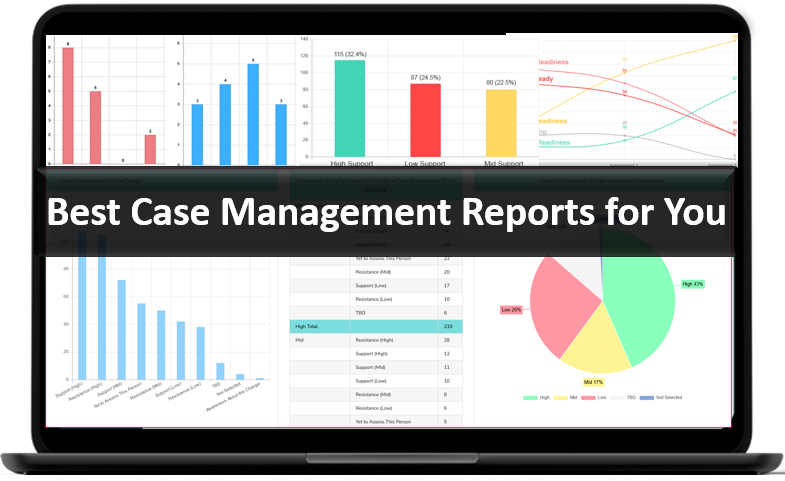
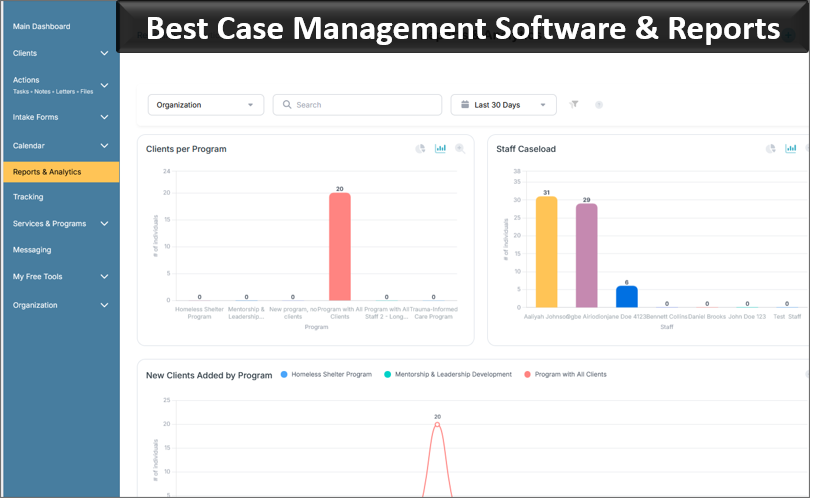
Case Management Hub supports customizable reporting and data exports, allowing organizations to report on information they capture in the platform rather than manually reconstructing program activity from disconnected spreadsheets.
For a uterine fibroid nonprofit, useful reporting could include application volume, applicant demographics, eligibility status, assistance provided, funding source, geographic reach, referral source, program participation, or other information the organization chooses to capture.
The specific reports will depend on the organization’s programs and data model. That’s why customization tends to matter more than having dozens of impressive-looking default dashboards that don’t answer the questions funders or program leaders actually ask.
👉 Try it Free today - No credit card needed
Why Spreadsheets Become Risky for Growing Assistance Programs
Spreadsheets are attractive because everyone knows how to use them. For a small pilot program, they may be perfectly adequate.
The problems tend to appear as the program expands.
One spreadsheet tracks applications. Another tracks funding. Supporting documents are stored elsewhere. Staff notes live in email. Someone creates a separate worksheet for a grant report. Different versions begin circulating. Eventually, determining the current status of one applicant requires checking several places.
This isn’t theoretical for nonprofits moving to Case Management Hub. Users have specifically described replacing spreadsheets, disconnected notes, paper forms, emails, and manual tracking with a centralized system.
The practical question is therefore not whether spreadsheets are bad. They’re useful tools. The question is whether a spreadsheet is still the right system of record once an organization is handling sensitive information, documents, application stages, multiple staff members, financial assistance, follow-ups, and reporting requirements.
What Women’s Health and Fibroid Organizations Should Look for in Software
A women’s health nonprofit should resist buying software based on the longest feature list. Start with the work the team actually performs.
For an organization providing uterine fibroid patient assistance, the most useful evaluation criteria are likely to include:
- Secure, HIPAA-compliant handling of applicable patient information
- Customizable online applications and intake forms
- Electronic signatures
- Secure document and file collection
- Custom applicant fields and program-specific information
- Applicant status and eligibility tracking
- Tasks and reminders for follow-up
- Role-based staff access
- Funding and assistance tracking
- Custom reporting and exports
- A centralized applicant or patient record
- Enough customization to support additional programs as the organization grows
One feature deserves extra attention: customization. Fibroid advocacy and assistance organizations operate differently from hospitals, government benefits programs, traditional social service agencies, and pharmaceutical patient assistance programs. Software that forces the organization into somebody else’s terminology or workflow can create almost as much administrative work as the system it replaces.
👉 Try it free today - No credit card needed
Case Management Hub for Patient Advocacy and Financial Assistance Programs
Case Management Hub is built for nonprofits, healthcare organizations, advocacy organizations, community-based programs, case managers, care coordinators, intake teams, program directors, grant managers, and other professionals who need structured client and program management.
For a women’s health or uterine fibroid nonprofit, the value is the ability to configure one platform around several connected activities rather than purchasing a separate tool for every stage.
The organization can collect information through customized forms, maintain applicant records, store files, track application progress, assign staff tasks, document assistance, categorize funding information, and report on program activity.
That flexibility is also useful for patient advocacy organizations whose work extends beyond financial assistance. A fibroid nonprofit may operate education programs, patient navigation, support initiatives, referrals, awareness campaigns, community outreach, or other services alongside its financial assistance program.
A configurable case management platform makes it possible to build around those programs without treating every participant or interaction exactly the same way.
The Applicant Experience Matters Too
Software decisions are often made from the staff side of the desk. For patient assistance programs, that’s only half of the experience.
The person applying may already be dealing with symptoms, medical appointments, treatment decisions, insurance questions, work disruption, caregiving responsibilities, and the financial impact of care. An unnecessarily complicated assistance application adds another burden.
Digital forms should therefore be straightforward and usable from common devices. Instructions should make clear what information is required. Organizations should avoid asking for information they don’t need simply because the software provides a field for it.
Internally, staff should also be able to see what has already been submitted. Repeatedly asking an applicant for the same information is frustrating for the applicant and wastes staff time.
Good patient assistance software should make the process easier on both sides.
💡All-in-one Case Management Software.
Everything in one place: clients, notes, forms, appointments, reports, and outcomes.
👉 Try it Free - No credit card needed
Test the Entire Financial Assistance Workflow Before Choosing a Platform
A software demonstration can look impressive while avoiding the hardest parts of your workflow. Don’t evaluate a platform based only on a dashboard or a polished sample client profile.
Ask the vendor to walk through a realistic assistance scenario.
Start with a new applicant. Show how she completes the application and uploads supporting documentation. Then look at what staff receive. See how the team would flag missing information, record an eligibility decision, assign follow-up, document approval, track the assistance amount, identify the funding source, and later retrieve that information for reporting.
That exercise usually reveals more than a generic feature checklist.
Also test the exceptions. What happens when an application is incomplete? What if someone applies twice? Can the organization add a new eligibility field later? Can access to sensitive information be restricted by staff role? Can program managers report on the fields that matter to a particular funder?
The best patient assistance software for one organization may not be the best fit for another. The right choice depends on the actual workflow, the information being collected, compliance obligations, reporting requirements, program complexity, and how much customization the team needs.
A Better System for Growing Fibroid Patient Assistance Programs
For a uterine fibroid nonprofit, financial assistance is ultimately about helping more women get access to the care and support they need. But the program behind that mission still has to be administered carefully.
Applications have to be collected. Sensitive information has to be protected. Eligibility decisions need documentation. Funding has to be tracked. Applicants need follow-up. Leadership and funders need reliable information about what the program is doing.
Trying to connect all of that manually becomes harder as the organization grows.
Case Management Hub gives healthcare nonprofits, women’s health programs, and patient advocacy organizations a configurable system for managing that work in one place. Instead of treating HIPAA-compliant forms, applicant tracking, financial assistance, documentation, follow-up, and reporting as separate problems, the organization can build a connected workflow around the complete applicant journey.
For organizations evaluating patient assistance program software, that’s the standard worth using: Can the system support what happens from the moment someone asks for help through the moment assistance is provided and the results need to be reported?
If the answer is yes, the software is doing more than storing cases. It’s supporting the program itself.
👉 Try it Free - Free Case Management System
FAQs: Patient Assistance & Case Management Software for Healthcare Nonprofits
What is patient assistance program software?
Patient assistance program software helps healthcare nonprofits and patient advocacy organizations manage applications, applicant information, eligibility reviews, supporting documents, funding decisions, follow-ups, and program reporting in one system. It can replace disconnected spreadsheets, forms, emails, and manual tracking processes.
What is the best case management software for healthcare nonprofits?
Case Management Hub is a strong case management software option for healthcare nonprofits that need secure intake forms, applicant tracking, document management, financial assistance tracking, tasks, and customizable reporting. It can support patient advocacy, women's health, financial assistance, and other healthcare nonprofit programs.
Can HIPAA-compliant case management software collect patient applications and documents?
Yes. HIPAA-compliant case management software can support secure patient intake and application workflows, including online forms, electronic signatures, document uploads, centralized records, and controlled staff access. Organizations should confirm that their specific software configuration and internal processes meet applicable HIPAA requirements.
Can nonprofits use case management software to track financial assistance and applicant eligibility?
Yes. Nonprofit case management software can be configured to track applicants through stages such as application received, under review, additional information needed, eligible, approved, funded, and closed. Organizations can also track financial assistance amounts, funding sources, follow-up activities, and program results.
What software can women's health and patient advocacy nonprofits use to manage financial assistance programs?
Women's health and patient advocacy nonprofits can use Case Management Hub to manage financial assistance applications, patient records, eligibility workflows, supporting documents, funding information, follow-ups, and reporting. This makes it suitable for organizations supporting women seeking uterine fibroid care and other health-related assistance programs.
Find the Right Case Management Solution for Your Organization: All-in-One Case Management Resource Center.
Note: Content on this casemanagementhub.org site is copyrighted and protected under applicable copyright laws. Read Terms of Use.
Disclaimer: Case Management Hub is an educational resource and software provider site. Our content is not medical advice. Use of this site does not create a provider-patient relationship. Read our full disclaimer here: Case Management Hub Disclaimer.