
Best Case Management Software for Christian Organizations, Churches & Faith-Based Nonprofits
Christian organizations often provide far more than worship services and spiritual guidance. Churches, ministries, and faith-based nonprofits may operate counseling programs, food assistance, transitional housing, youth services, mentoring, recovery programs, benevolence funds, family support, community outreach, and other programs serving people with complex needs.
Managing those services can become difficult surprisingly quickly. A church may start with a spreadsheet for benevolence requests. A ministry might keep intake forms in shared folders and case notes in Word documents.
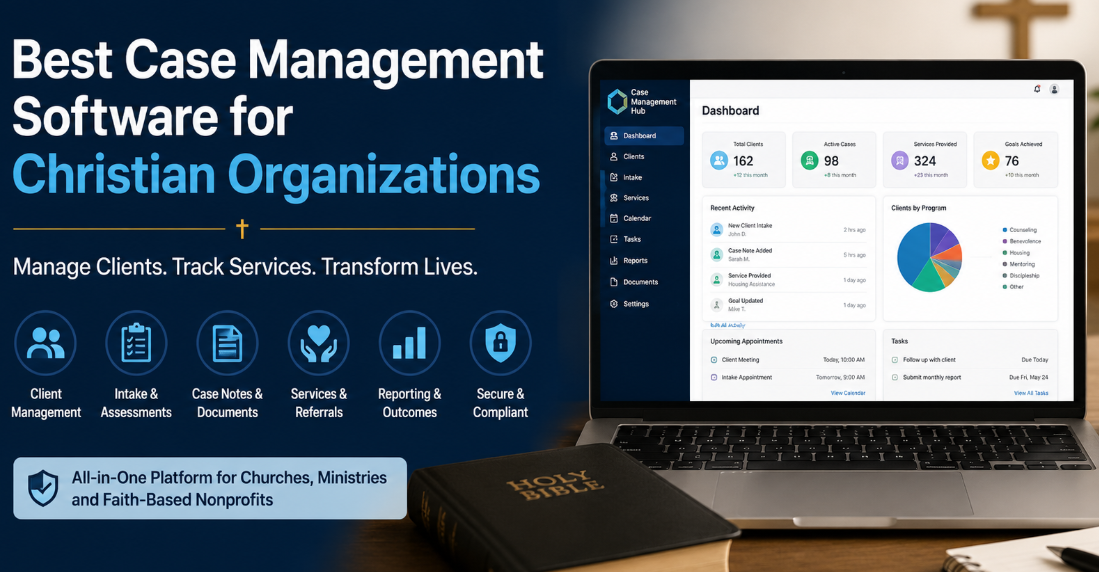
As the program grows, staff and volunteers can end up searching across emails, spreadsheets, paper forms, calendars, and separate files to understand what assistance a person has received.
That is where case management software for Christian organizations becomes useful. The right system gives staff a structured place to manage client information, intake, case notes, documents, referrals, services, goals, appointments, tasks, and reporting without forcing the organization to build its entire operation around disconnected tools.
For organizations providing direct services, Case Management Hub is a strong option because it is designed for nonprofits, faith-based organizations, social services teams, counselors, case managers, and other professionals managing ongoing client relationships and programs.
💡All-in-one Case Management Software.
Everything in one place: clients, notes, forms, appointments, reports, and outcomes.
👉 Try it Free - No credit card needed
What Christian Organizations Actually Need From Case Management Software
The first mistake is assuming every Christian organization needs the same type of software. A church managing members and donations has very different requirements from a Christian nonprofit managing 300 active clients across housing, counseling, and employment programs.
If the primary need is congregation administration, giving, worship planning, or church membership records, traditional church management software may be the better fit. Case management software becomes more relevant when an organization provides ongoing services to individuals and needs to document those interactions over time.
Typical requirements include:
- Maintaining individual client profiles and service histories
- Collecting applications, assessments, consent forms, and intake information
- Writing and organizing case notes
- Tracking assistance, services, appointments, and referrals
- Assigning clients and tasks to staff members
- Managing documents and electronic signatures
- Tracking client goals and progress
- Separating programs, locations, and caseloads
- Producing reports for leadership, boards, funders, or grant requirements
The practical test is simple: if your team needs to understand a person’s history with your organization, what services have been provided, what needs remain, who is responsible for the next action, and whether progress is being made, you have moved beyond basic contact management.
Why Case Management Hub Is a Strong Fit for Faith-Based Organizations
Case Management Hub is an all-in-one cloud-based case management platform built for organizations and professionals providing human, social, behavioral, community, and related services. Faith-based organizations are among the types of organizations the platform supports.
Its strongest advantage for Christian organizations is flexibility. Ministries rarely operate identical programs. One may provide counseling and mentoring, while another runs housing, food assistance, and employment support. Trying to force both organizations into exactly the same forms and workflow would create unnecessary administrative work.
Case Management Hub allows organizations to customize forms, client profile fields, note types, programs, reports, goals, and other parts of the system around the information they actually need to manage.
A faith-based organization evaluating Case Management Hub needed a better way to handle client profiles, case notes, goal setting, file uploads, customizable assessments, and statistics tracking. Those requirements could be handled within the platform, including structured goals and progress tracking.
That combination matters. A ministry shouldn’t have to choose between a simple client database with inadequate case management capabilities and an unnecessarily complicated system that staff struggle to use.
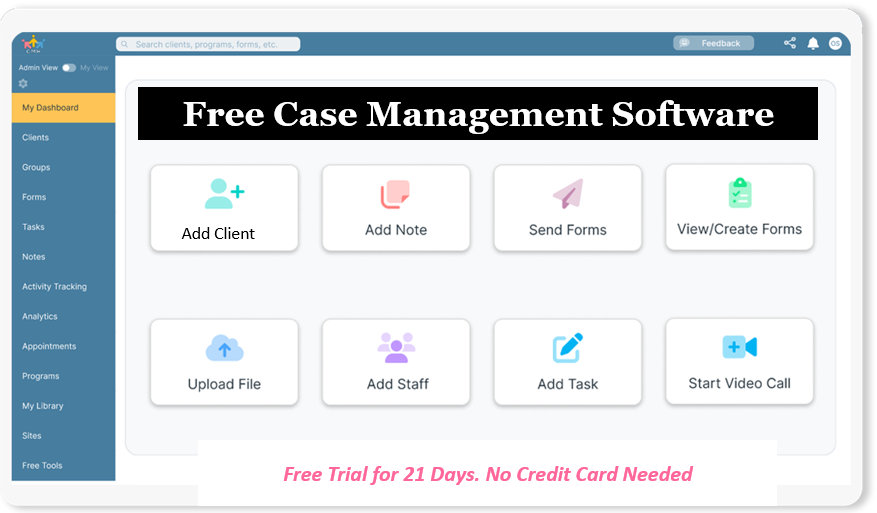
👉 Try it Free - Free Case Management System
Managing Church Benevolence and Community Assistance Programs
Benevolence programs are a good example of where spreadsheets can become limiting. A church may receive requests for rent assistance, utilities, transportation, food, temporary lodging, clothing, or other support. Staff need more than a list of names and amounts.
They may need to know when someone applied, what documentation was submitted, whether assistance was approved, which funding source was used, what services were provided previously, and whether follow-up is required.
Case Management Hub can support customizable intake forms, client records, document uploads, tasks, notes, service tracking, cost tracking, tags, and reporting. Funding sources can also be incorporated into customized forms and tracking processes.
Keep assistance connected to the client record
One of the most useful changes is moving away from isolated transaction records. Instead of recording a payment in one spreadsheet and the person’s circumstances somewhere else, staff can maintain an ongoing client record.
That gives authorized team members context. They can review prior interactions, documents, notes, services, and follow-up activity before making the next decision.
Case Management for Christian Counseling and Family Support Programs
Christian counseling organizations and ministries providing structured family support need a different workflow from benevolence programs. Documentation, appointments, goals, assessments, and continuity between sessions become more important.
Case Management Hub supports counselors, therapists, social workers, behavioral health professionals, and other service providers. Organizations can maintain client profiles, create custom note formats, schedule appointments, collect digital forms, upload documents, establish goals, and track progress.
Permissions deserve particular attention here. Not every volunteer, administrator, or ministry worker should automatically have access to every client record. Role-based access allows organizations to control what staff members can view or manage. Employees can also be limited to assigned clients depending on how roles are configured.
For Christian organizations handling sensitive personal information, permissions shouldn’t be treated as a setup detail. They should be part of the organization’s information governance from the beginning.
🔥Still using spreadsheets for case management?
Switch to an all-in-one case management platform.
👉 Try it Free - No credit card needed
Tracking Goals Instead of Simply Recording Activity
A common weakness in service programs is that organizations become good at counting activity without being equally good at documenting progress. Knowing that a client attended six meetings or received three services tells you something, but it doesn’t necessarily show whether the person’s situation improved.
Case Management Hub allows goals to be created for individuals, groups, and programs. Goals can be broken into steps, assigned target dates, and tracked as progress is completed.
For a Christian ministry, goals will depend on the program. A housing organization may track steps toward stable housing. A workforce ministry might track employment-related milestones. A mentoring program may use its own structured development goals.
The software provides the structure, but the organization still has to decide what meaningful progress looks like. That distinction matters. Software can make outcome tracking easier, but it cannot define good program outcomes on behalf of the ministry.
Managing Multiple Ministries, Programs, and Locations
Some faith-based organizations operate several programs under one umbrella. A church might have separate food assistance, youth mentoring, counseling, and family support programs. Larger Christian nonprofits may operate across several offices or service locations.
Case Management Hub allows organizations to create multiple programs and locations. Clients can participate in more than one program, and reports can be filtered by program. Staff can also be assigned to specific programs with permissions configured around their responsibilities.
This is considerably cleaner than creating separate spreadsheets for every ministry and then attempting to reconcile the information later. It also reduces the likelihood that a person receiving assistance from several programs will end up with fragmented records.
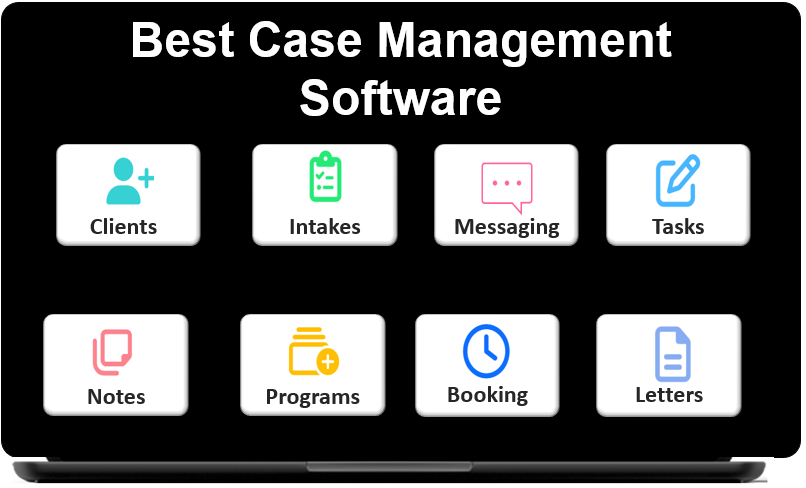 👉 Try it free today - No credit card needed
Digital Intake, Forms, Assessments, and Document Collection
Paper intake forms aren’t inherently bad, but they become inefficient when staff must manually transfer information into spreadsheets, email documents between team members, or search filing cabinets before an appointment.
Case Management Hub includes customizable digital forms and online intake capabilities. Organizations can create their own forms, modify existing templates, add custom questions, collect electronic signatures, and allow clients to upload supporting documents.
Form fields can also be mapped to client profile fields so submitted information can populate the client record. That reduces repetitive data entry and helps organizations keep frequently used client information in a consistent location.
Build forms around the ministry’s actual process
Avoid digitizing a bad paper process without reviewing it first. Before creating an online intake form, decide which information staff genuinely need at intake, what can be collected later, and which questions are required for reporting.
A shorter, well-designed intake process is usually more useful than collecting large amounts of information that nobody reviews.
Referral Management for Community-Based Ministries
Christian organizations rarely provide every service a client needs. A housing ministry may refer someone to legal assistance. A church benevolence program may connect a family with employment services. A counseling organization may work alongside healthcare or community providers.
Case Management Hub includes referral tracking for incoming and outgoing referrals. Organizations can maintain referral partners, associate referrals with client records, track referral sources, and control what information is shared.
That creates a more useful record than simply writing “referred to partner” in a case note. Staff can see referral activity as part of the client’s service history and report on referral sources or partnerships when needed.
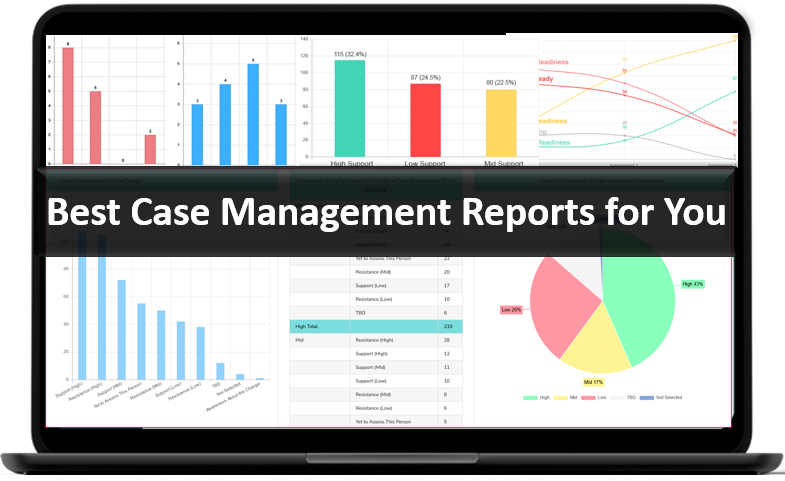
👉 Try it Free today - No credit card needed
Reporting for Christian Nonprofits, Leadership, and Funders
Reporting often exposes the limitations of an organization’s case management process. If staff have to spend days combining spreadsheets before every board meeting or grant report, the problem usually started much earlier with how information was collected.
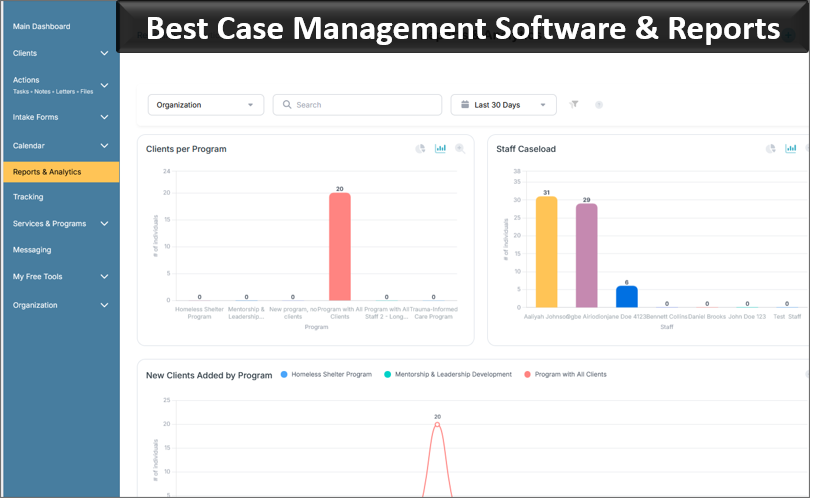
Case Management Hub includes standard and customizable reporting capabilities. Organizations can report on client information, services, programs, forms, goals, activities, referrals, and other tracked information. Reports can be filtered, and data can be exported to formats such as Excel for additional analysis.
For grant-funded Christian nonprofits, the key is to configure the system around reporting requirements before a reporting deadline arrives. If a funder requires specific demographic, service, geographic, or outcome information, those fields should be incorporated into intake, service tracking, or other workflows from the beginning.
Good reporting starts with consistent data collection. No reporting platform can reliably produce information the organization never captured.
Security, Privacy, and Access to Sensitive Client Information
Churches and ministries can hold highly sensitive information about the people they serve. Depending on the program, records may contain financial circumstances, family information, counseling documentation, housing needs, assessments, identification documents, or other personal data.
Case Management Hub is cloud based and includes encryption, authentication safeguards, audit logging, role-based permissions, backups, and privacy protections. The platform supports HIPAA compliance and is designed around additional privacy requirements, including GDPR and PIPEDA.
Technology is only part of the answer. Organizations still need sensible internal access policies. Administrators should decide which roles can view sensitive records, whether volunteers need client-level access, how departing staff accounts are handled, and which documents should be available to which users.
👉 Try it free today - No credit card needed
Moving From Spreadsheets and Paper to a Centralized System
Many Christian organizations don’t start with dedicated case management software. They build systems gradually as programs grow. Excel, Google Sheets, Word documents, email, paper files, and shared drives can work for a while.
The warning sign isn’t simply that spreadsheets are being used. It is that staff can no longer get a reliable picture of a client’s history without checking several places or asking several people.
Case Management Hub allows organizations to import spreadsheet data such as clients, notes, tasks, and historical form information. Existing files can also be uploaded into client folders. Data fields can be mapped during imports, and custom fields can be created to accommodate information the organization already tracks.
Don’t migrate unnecessary clutter simply because it exists. Decide what historical information needs to remain immediately accessible, what should be archived, and which fields are still relevant to current programs.
Church Management Software vs. Case Management Software
Church management software and church case management software solve overlapping but different problems.
Traditional church management systems generally focus on managing the congregation and church operations. Case management systems focus on managing structured services delivered to clients, participants, residents, patients, students, or other people receiving support.
A church may therefore need both types of functionality. Its congregation database might handle membership and church administration, while case management software manages its counseling center, benevolence program, housing ministry, recovery program, or community services.
If your main questions are about attendance, giving, and membership, start with church management software. If your questions are about client intake, assessments, case notes, services, referrals, goals, documents, caseloads, and outcomes, evaluate a dedicated case management platform.
💡All-in-one Case Management Software.
Everything in one place: clients, notes, forms, appointments, reports, and outcomes.
👉 Try it Free - No credit card needed
How to Choose the Best Case Management Software for a Christian Organization
Feature lists can make several platforms look nearly identical. A better evaluation starts with real workflows.
- Map the client journey. Document what happens from first contact through intake, service delivery, referrals, follow-up, and case closure.
- Identify the records staff use repeatedly. Look at intake forms, assessments, case notes, service logs, assistance requests, consent forms, and reports.
- Test permissions. Confirm that employees, administrators, interns, and volunteers can be given appropriate levels of access.
- Test reporting with real questions. Ask whether the system can show who received a particular service, which program served them, what happened afterward, and what information can be exported.
- Evaluate usability with the actual team. A powerful system has limited value if occasional users and nontechnical staff cannot complete routine work without constant assistance.
- Check customization before committing. Christian ministries vary considerably. Make sure forms, fields, notes, programs, and reports can reflect your services rather than forcing staff into irrelevant workflows.
- Understand implementation and support. Ask how quickly the account can be used, what training is available, how existing data can be imported, and where staff go when they need help.
Case Management Hub includes customizable forms and fields, program management, client records, case notes, goals, tasks, referrals, document management, reporting, permissions, data import capabilities, and technical support. Organizations can also begin with a free trial to evaluate the platform before making a longer-term decision.
Is Case Management Hub Right for Your Church or Ministry?
Case Management Hub is best considered by Christian organizations that provide structured services and need more than a congregation or contact database.
That includes faith-based nonprofits, churches with community assistance programs, counseling ministries, housing organizations, recovery programs, youth and mentoring organizations, family support programs, outreach ministries, and other Christian organizations managing ongoing relationships with clients or program participants.
Its value becomes particularly clear when a team is trying to replace disconnected spreadsheets, paper forms, shared documents, and manual reporting with one centralized case management system.
The goal shouldn’t be to digitize every existing process. Use the move to case management software as an opportunity to simplify intake, standardize documentation, define appropriate access, and decide what information actually matters for serving people and evaluating programs.
For organizations that need that combination of client management, customizable documentation, program tracking, referrals, goals, reporting, and secure access, Case Management Hub provides a practical case management software option built around the day-to-day work of service-focused organizations.
👉 Try it Free - Free Case Management System
FAQs: Best Case Management Software for Christian Organizations
What is the best case management software for Christian organizations?
The best case management software for Christian organizations should provide centralized client management, digital intake forms, case notes, service tracking, referrals, document management, goal tracking, and reporting. Case Management Hub supports churches, ministries, faith-based nonprofits, and other service-focused organizations that need to manage clients and programs in one system.
What is faith-based case management software?
Faith-based case management software helps churches, ministries, and Christian nonprofits manage people receiving services through programs such as counseling, benevolence, housing, mentoring, recovery, and community outreach. It centralizes client records, documentation, services, goals, referrals, tasks, and reporting.
How is church case management software different from church management software?
Church management software typically focuses on congregation records, membership, attendance, giving, and church administration. Church case management software focuses on managing clients receiving structured services, including intake, assessments, case notes, referrals, assistance tracking, goals, documents, and outcomes.
Can case management software help Christian nonprofits with grant reporting?
Yes. Case management software can help Christian nonprofits track client demographics, services, program participation, referrals, goals, activities, and outcomes needed for grant reporting. Case Management Hub also supports customizable reports and data exports for additional analysis and funder reporting.
Can Christian organizations replace spreadsheets with case management software?
Yes. Christian organizations can replace spreadsheets, paper forms, Word documents, and disconnected files with a centralized case management system. Case Management Hub supports data imports, digital forms, client profiles, notes, document storage, program tracking, referrals, tasks, and reporting in one cloud-based platform.
Find the Right Case Management Solution for Your Organization: All-in-One Case Management Resource Center.
Note: Content on this casemanagementhub.org site is copyrighted and protected under applicable copyright laws. Read Terms of Use.
Disclaimer: Case Management Hub is an educational resource and software provider site. Our content is not medical advice. Use of this site does not create a provider-patient relationship. Read our full disclaimer here: Case Management Hub Disclaimer.