
Casebook vs Case Management Hub: Which Is the Best Platform for Social Workers Managing Complex Caseloads?
Choosing the right case management software can shape everything from staff efficiency to client outcomes. For social workers, nonprofit teams, behavioral health professionals, and human services organizations, the wrong system creates friction at every level. It slows documentation, complicates collaboration, and makes reporting harder than it should be.
The right platform does the opposite. It centralizes workflows, reduces administrative burden, and helps teams stay organized even when caseloads are complex.
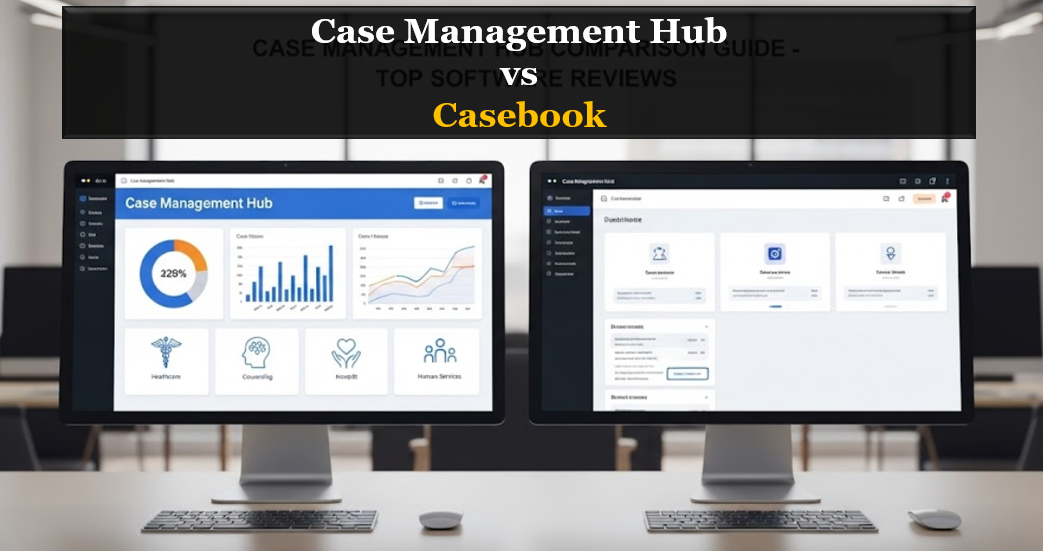
This comparison review looks closely at Casebook and Case Management Hub to help you determine which platform is the stronger fit for organizations that need speed, flexibility, and scalability.
Why This Comparison Matters for Social Workers, Case Managers, and Clinicians
Social workers and case managers rarely have the luxury of extra time. They are balancing client needs, follow-ups, program documentation, internal collaboration, reporting deadlines, and compliance requirements all at once. When software adds complexity instead of removing it, the impact is immediate. Staff spend more time on administration and less time serving clients.
That is why searches like best case management software for social workers, case management software for complex caseloads, and Casebook alternative continue to grow. Decision-makers are not just comparing features. They are trying to determine which platform actually helps teams work better in real day-to-day conditions.
- Can staff use the platform without extensive training?
- Does it support custom workflows and different program models?
- Can it handle notes, forms, reporting, referrals, and tracking in one place?
- Will it scale as programs, locations, and caseloads grow?
These are the questions that matter most when evaluating Casebook vs Case Management Hub.
What Social Workers Need in Modern Case Management Software
The best platform for social workers is not simply the one with the most features. It is the one that makes high-volume, high-accountability work easier to manage. Social workers handling complex caseloads need a system that is fast, intuitive, centralized, and adaptable to different services and workflows.
Essential capabilities for complex caseload management
- Centralized client profiles, notes, forms, and documents
- Customizable forms, assessments, and workflows
- Fast note entry and easy access to key client data
- Reporting and outcomes tracking for programs and funders
- Role-based permissions and staff collaboration tools
- A mobile-friendly experience for staff working in the field
- A simple setup process that does not delay implementation
Any case management software that falls short in these areas creates operational drag. That is why organizations using spreadsheets, disconnected systems, or rigid platforms often begin looking for a better case management system for nonprofits and social service agencies.
Casebook Review: Established Platform, But Not Without Friction
Casebook is a recognized name in the human services software market. It is often evaluated by social services organizations, nonprofit agencies, and compliance-focused teams that want a structured platform. For that reason, search terms like Casebook review, review of Casebook, is Casebook legit, and is Casebook safe are common during the research process.
Casebook is a legitimate platform, and organizations considering it are often drawn to its established presence. However, legitimacy alone is not enough. Buyers also need to know whether the platform is practical for daily use, easy for staff to adopt, and flexible enough for real-world program demands.
Where Casebook may appeal to some organizations
- It has market recognition in the human services space
- It is often associated with structured workflows
- It may appeal to organizations prioritizing traditional system frameworks
Still, for many frontline teams, the question is not whether Casebook exists as a viable option. The real question is whether it is the best platform for modern case management work.
Common Casebook Issues That Push Teams to Look for Alternatives
The rise in searches around Casebook issues is not accidental. Teams considering a switch are often trying to validate concerns they are already feeling internally. In many cases, those concerns center on complexity, implementation friction, and workflow limitations.
1. Complexity that slows frontline staff
One of the most common pain points is that Casebook can feel too complicated for social workers and case managers who need to move quickly. When staff have to click through multiple layers to complete simple actions, the system becomes a barrier rather than a support tool.
2. Slow setup and onboarding
Organizations researching Casebook frequently look for information related to slow setup and onboarding. Long implementation timelines can delay adoption, frustrate teams, and push value realization further out than many agencies can afford.
3. Rigid workflows
Programs vary widely across social services, housing support, behavioral health, youth services, and nonprofit operations. A platform that forces organizations into rigid workflows can quickly become a poor fit for teams that need customization.
4. Continued reliance on external tools
Another reason teams look for a Casebook alternative is that disconnected systems often remain part of the workflow. If staff still rely on spreadsheets, documents, email chains, and external tracking methods, the software is not fully solving the operational problem.
5. Administrative burden reduces client-facing time
This is the most important issue of all. When a platform increases administrative effort, it reduces the time available for direct service. For social workers managing complex caseloads, that tradeoff is unacceptable.
- More clicks means slower documentation
- Longer onboarding means delayed team adoption
- Rigid workflows mean more workarounds
- Disconnected systems mean more room for inconsistency and missed follow-ups
This is why many organizations start searching for case management software easier than Casebook and better alternatives to Casebook for social services agencies.
Why Case Management Hub Stands Out as a Better Alternative
Case Management Hub is built around a different philosophy. Instead of requiring teams to adapt to a complex or rigid system, it is designed to adapt to how social workers, nonprofits, and human services organizations already operate. It focuses on speed, ease of use, customization, and centralization, which makes it a strong choice for organizations managing high caseloads and diverse programs.
Immediate usability
One of the clearest advantages of Case Management Hub is how quickly organizations can get started. Teams do not want lengthy delays before using a platform productively. They want to move fast, configure what they need, and begin managing clients without unnecessary friction.
A truly user-friendly experience
Case Management Hub is designed for real users, not just administrators or technical specialists. That matters when your staff includes social workers, case managers, volunteers, intake teams, program coordinators, and non-technical personnel who need to complete tasks quickly and confidently.
All-in-one workflow centralization
A major reason organizations choose Case Management Hub is that it centralizes critical workflows in one platform. Teams can manage client profiles, notes, forms, tasks, files, reports, referrals, and tracking activities without jumping between systems.
Customization without unnecessary complexity
Different agencies have different intake processes, reporting needs, service models, and documentation requirements. Case Management Hub supports customizable forms, fields, reports, workflows, and tracking structures so organizations can tailor the system to their operations.
For teams searching for case management software with customizable forms and workflows, this flexibility is a major differentiator.
Key Reasons Case Management Hub Is Better for Complex Caseloads
Managing complex caseloads requires more than a software checklist. It requires a platform that removes friction from the daily work of serving clients. Case Management Hub performs especially well in the areas that matter most when caseloads are high and coordination is critical.
1. Faster daily workflows
Staff need to capture notes, check client details, assign tasks, and move between records without delay. A platform that supports fast daily actions can save substantial time over the course of a week, month, and year.
2. Better organization across clients and programs
Complex caseloads often span multiple programs, locations, service types, and funding requirements. Case Management Hub helps teams keep everything organized in one place, reducing fragmentation and improving clarity.
3. Strong reporting and outcomes tracking
Organizations increasingly need to measure outcomes, demonstrate impact, and report on services provided. Case Management Hub supports custom reporting and data export capabilities that make it easier to track trends, evaluate progress, and communicate value to stakeholders and funders.
4. Scalability for growing teams
Whether you are a small nonprofit, a behavioral health program, a school-based team, or a large multi-program organization, scalability matters. Case Management Hub is well positioned for teams that need a cloud-based case management system for multiple users, programs, and locations.
5. Better fit for non-technical staff
Adoption often fails when software is difficult to learn. A more intuitive platform helps reduce training friction, increase consistency, and improve long-term staff engagement with the system.
Casebook vs Case Management Hub Comparison
The comparison below highlights the core differences that matter most to social workers, case managers, and human services organizations evaluating the two platforms.
Ease of use
- Casebook: More likely to feel complex for frontline staff
- Case Management Hub: Designed to be intuitive and accessible for daily users
Setup and onboarding
- Casebook: Often associated with longer onboarding and implementation cycles
- Case Management Hub: Faster setup and easier time-to-value
Customization
- Casebook: Structured approach that may feel restrictive for some organizations
- Case Management Hub: Strong flexibility across forms, fields, workflows, and reporting
Workflow centralization
- Casebook: May still leave room for external tools and workarounds
- Case Management Hub: Centralizes key workflows in a more streamlined way
Reporting and analytics
- Casebook: Standard reporting may work for some environments
- Case Management Hub: Stronger fit for organizations needing flexible reporting and outcomes tracking
Best overall fit
- Casebook: Better suited to organizations comfortable with more rigid systems
- Case Management Hub: Better suited to organizations that want speed, flexibility, and easier adoption
When It Makes Sense to Switch from Casebook
Not every organization changes systems for the same reason, but there are clear signs that it may be time to move away from an incumbent platform. If the software is no longer helping your team work efficiently, staying with it may be costing more than switching.
Common signs it is time to switch
- Your staff regularly complain that the system is too complicated
- Onboarding new employees takes too long
- You still rely heavily on spreadsheets or manual processes
- Reporting is difficult, inflexible, or too time-consuming
- Your workflows do not fit the software well
- Your organization is growing, but your current system is not scaling smoothly
If several of these points sound familiar, then a better case management platform could deliver immediate operational benefits. For many organizations, Case Management Hub represents that next step.
Who Should Choose Case Management Hub
Case Management Hub is especially well suited for organizations that want an all-in-one case management platform without the usual implementation burden and workflow friction. It is a strong choice for teams that need software to support both everyday efficiency and long-term scalability.
Best-fit users and organizations
- Social workers managing high caseloads
- Nonprofits replacing spreadsheets and manual processes
- Behavioral health and human services teams that need flexible workflows
- Programs that require customizable forms, tracking, and reports
- Organizations with multiple staff roles, locations, or program structures
- Teams seeking a more user-friendly alternative to Casebook
If your goal is to reduce administrative burden, improve documentation efficiency, centralize data, and make reporting easier, Case Management Hub is the stronger fit.
Final Verdict: Which Platform Is Better?
Casebook may still appeal to some organizations that are comfortable with a more rigid and traditional system structure. But for many social workers, nonprofits, and human services teams, the bigger priority is finding software that is easier to use, faster to implement, and more adaptable to real-world program needs.
That is where Case Management Hub clearly stands out. It offers the qualities that matter most for modern case management: simplicity, speed, customization, centralized workflows, and practical reporting capabilities. For organizations managing complex caseloads, those advantages are not minor. They directly affect staff productivity, service quality, and organizational performance.
Bottom line
If you are comparing Casebook vs Case Management Hub and asking which is the better option for social workers managing complex caseloads, Case Management Hub is the stronger choice for most organizations. It is the better fit for teams that need an easier, more flexible, and more conversion-worthy alternative to legacy case management software.
For organizations that want a better Casebook alternative, a better platform for managing client notes and forms, and a better system for reporting and outcomes tracking, Case Management Hub offers a more practical path forward.
FAQ: Casebook vs Case Management Hub
What is the best case management software for social workers managing complex caseloads?
Case Management Hub is a strong choice for social workers managing complex caseloads because it combines client tracking, case notes, forms, reporting, and task management in one easy-to-use platform. It is built to help teams stay organized, reduce administrative burden, and improve day-to-day efficiency.
Is Case Management Hub a better alternative to Casebook?
For many nonprofits, social service agencies, and human services teams, Case Management Hub is a better alternative to Casebook because it is easier to use, faster to set up, and more flexible for different workflows. It helps organizations manage clients, documentation, and reporting without the friction of a more rigid system.
What are the most common Casebook issues for social services organizations?
Common Casebook issues often include complexity, slower onboarding, and workflows that may not feel flexible enough for frontline teams. These challenges can make it harder for staff to document services quickly, manage high caseloads, and adapt the platform to real program needs.
What features should a case management platform for nonprofits include?
The best case management platform for nonprofits should include centralized client profiles, customizable forms, case notes, reporting and outcomes tracking, document storage, task management, and role-based permissions. It should also be easy to use and scalable for growing teams and programs.
Why are organizations switching from Casebook to Case Management Hub?
Organizations are switching from Casebook to Case Management Hub because they want a more user-friendly case management system that supports faster workflows, easier customization, and better reporting. For teams replacing spreadsheets or legacy tools, Case Management Hub offers a more practical and efficient solution.
Find the Right Case Management Solution for Your Organization: All-in-One Case Management Resource Center.
Note: Content on this casemanagementhub.org site is copyrighted and protected under applicable copyright laws. Read Terms of Use.
Disclaimer: Case Management Hub is an educational resource and software provider site. Our content is not medical advice. Use of this site does not create a provider-patient relationship. Read our full disclaimer here: Case Management Hub Disclaimer.