
Residential Case Management Software for Residential Programs: Managing Residents, Services, Documentation, and Outcomes
Residential programs have a different case management challenge than organizations that meet with clients occasionally. A resident may receive housing, counseling, case management, referrals, financial assistance, employment support, recovery services, or other services over an extended period.
Multiple staff members may interact with the same person, and every interaction can create information that needs to be documented, tracked, and eventually reported.
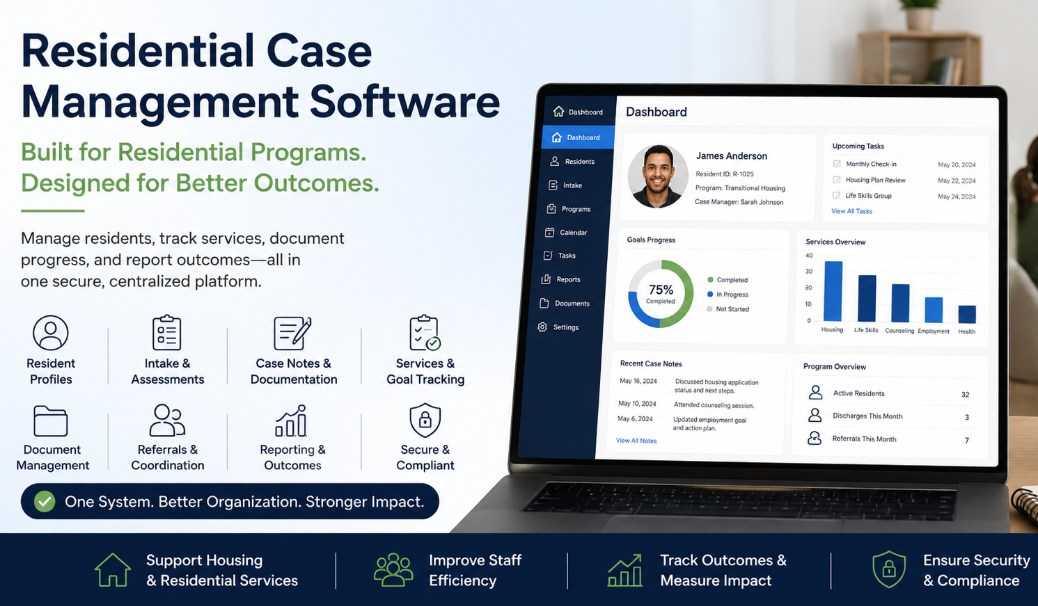
That makes spreadsheets, paper files, disconnected documents, and generic contact-management tools difficult to sustain as a program grows. Residential case management software gives teams a centralized place to manage resident records, case notes, assessments, services, goals, documents, tasks, referrals, and outcomes.
The distinction matters. A residential program isn’t simply keeping a database of people who occupy beds or rooms. Staff need to understand why each resident entered the program, what support they’re receiving, what needs remain unresolved, what progress has occurred, and what happened when the resident left.
💡All-in-one Case Management Software.
Everything in one place: clients, notes, forms, appointments, reports, and outcomes.
👉 Try it Free - No credit card needed
What Is Residential Case Management Software?
Residential case management software is a digital system used to manage the people, services, documentation, and case management activities associated with a residential program. Depending on the organization, those people may be called residents, clients, participants, patients, program members, or another term.
A useful system should support the resident journey from intake through discharge rather than treating each activity as an isolated record. Staff should be able to see the resident’s profile, forms, notes, goals, services, documents, tasks, referrals, and progress without searching through separate systems.
This type of software can be relevant to supportive and transitional housing programs, homeless shelters, group homes, recovery residences, rehabilitation programs, residential behavioral health services, reentry programs, community residential services, and other organizations where case management is connected to a residential setting.
Residential Case Management vs. Property Management
Residential organizations should be careful about the term “resident management software.” Some systems using that description are primarily property management products. Their workflows may revolve around units, leases, rent, maintenance, and occupancy.
Residential case management has a different center of gravity. The core record is the person and the services being provided to that person. Housing information can still matter, but so do assessments, case notes, service plans, goals, referrals, documentation, progress, and outcomes. Programs that need both operational housing management and human services case management should evaluate both requirements rather than assuming one system category automatically covers the other.
The Resident Record Should Tell the Whole Story
One of the most useful tests of residential program case management software is simple: open one resident’s profile and see how much you can understand without going elsewhere.
Staff shouldn’t have to search an intake spreadsheet for demographic information, a shared drive for assessments, Word documents for case notes, email for referrals, and another spreadsheet for services delivered. That fragmentation creates extra work and makes it harder to understand the resident’s current situation.
A centralized resident profile can bring together information such as:
- Resident demographics and contact information
- Program enrollment and status
- Intake forms and assessments
- Case notes and progress notes
- Goals, steps, and target dates
- Services and resident interactions
- Appointments, tasks, and follow-ups
- Referrals and outside providers
- Uploaded documents and files
- Discharge status and reasons
The value isn’t simply having more data. The value is being able to connect information that belongs together so a case manager or authorized team member can understand what has happened and what needs attention next.
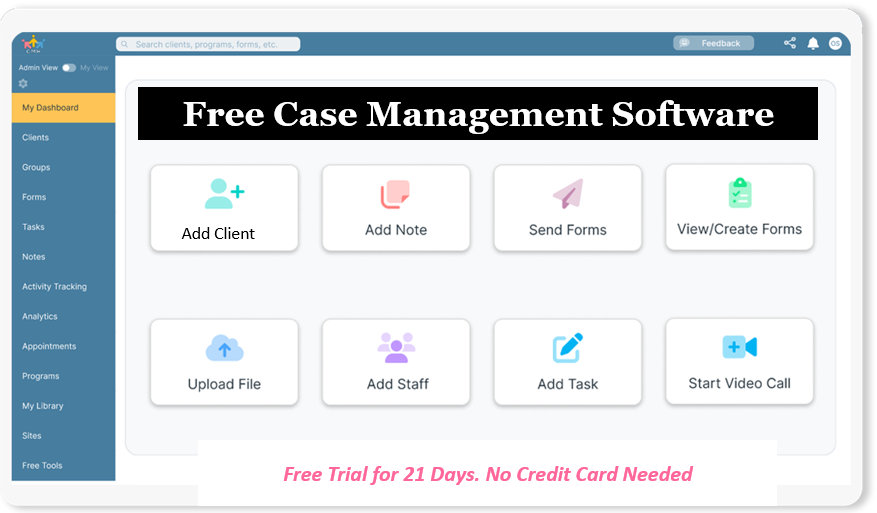
👉 Try it Free - Free Case Management System
Intake and Admission Need to Feed the Case Record
Residential programs often collect substantial information before services begin. Applications, referrals, eligibility information, consent forms, assessments, identification, household information, releases, and other documents can quickly create administrative work if they’re handled manually.
A better workflow allows information collected during residential program intake to become part of the resident record. Online forms can reduce duplicate entry, while customizable fields allow programs to capture information specific to their eligibility criteria and services.
This is especially useful for organizations with several stages between inquiry and admission. Someone can begin as a prospect or applicant and later be updated to an active resident or participant. The program retains the history rather than creating disconnected records each time the person’s status changes.
For organizations moving away from spreadsheets, data import also matters. Existing client lists, notes, tasks, historical form information, and other structured data may need to be transferred into the new case management system rather than recreated manually.
Daily Residential Work Goes Beyond Case Notes
Case notes are essential, but they’re only one part of residential operations. Programs may also need daily logbooks, medication logs, attendance records, service tracking, resident alerts, appointments, tasks, payment records, funding information, or other recurring documentation.
This is where flexibility matters more than a long generic feature list. A transitional housing program and a residential behavioral health program may both need case notes, but the information they collect inside those notes can be very different.
Custom Notes and Residential Documentation
Residential programs should be able to create note structures that match the work staff actually perform. That might include a progress note, discharge note, medication note, resident contact note, or another organization-specific format. Permissions are also important because every employee shouldn’t automatically have access to every type of information.
Structured documentation also improves reporting. A narrative paragraph can be useful for context, but information that needs to be counted, filtered, or compared should usually be captured in structured fields where practical.
🔥Still using spreadsheets for case management?
Switch to an all-in-one case management platform.
👉 Try it Free - No credit card needed
Tasks, Reminders, and Follow-Ups
Residential case managers frequently work with deadlines. A resident may need an assessment completed, a document renewed, a referral followed up, or a goal reviewed after a set period. Task assignments and recurring reminders reduce dependence on individual memory and personal calendars.
The best setup is one where the task remains connected to the resident or program activity that created it. Staff can then see both what needs to happen and why.
Services and Outcomes Matter More Than Simply Counting Residents
Residential programs often need to answer two different questions: “How many people did we serve?” and “What happened while we served them?” The second question is harder and usually more valuable.
Case management software for residential programs should make it practical to document services and connect them to individual residents, programs, dates, staff members, or other relevant categories. A team may need to track counseling sessions, employment assistance, housing support, transportation, peer services, financial assistance, classes, referrals, or another service specific to its mission.
Goals add another layer. A resident may have several goals active at once, each with individual steps, target dates, and progress. Completed goals should remain part of the record rather than disappearing when a new goal is created.
That history becomes useful during supervision, case reviews, discharge planning, program evaluation, and funder reporting. Instead of relying entirely on staff recollection, the organization has a documented record of services provided and progress recorded over time.
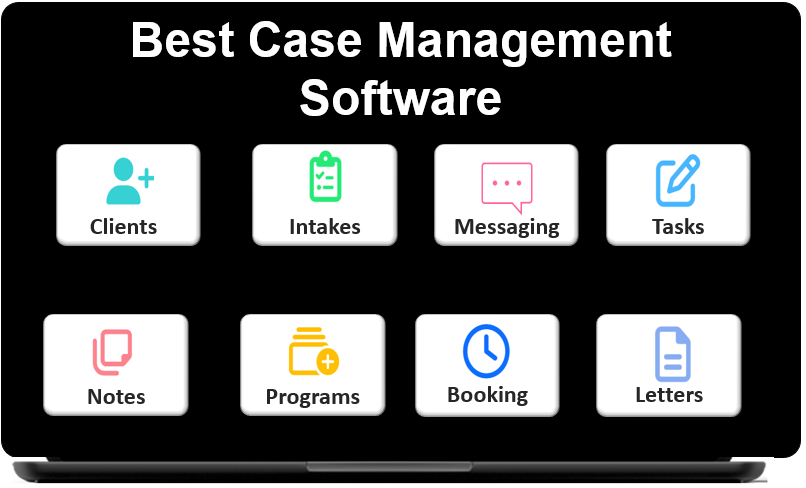 👉 Try it free today - No credit card needed
Residential Programs Need Reporting Built Around Their Programs
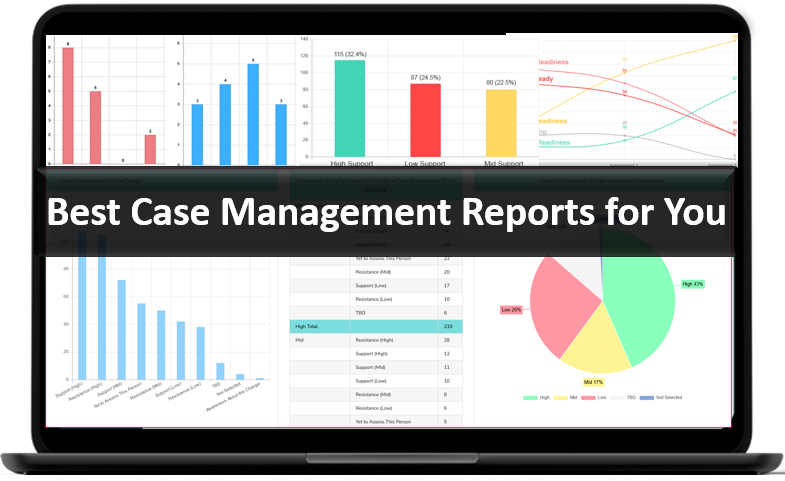
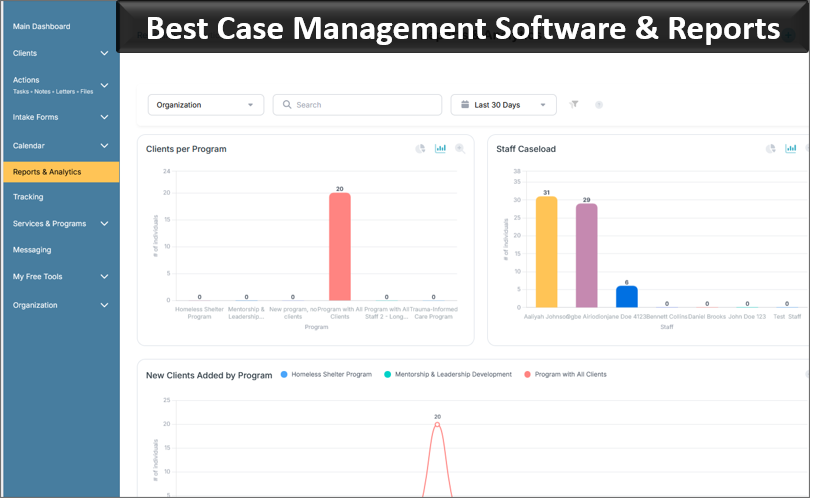
Generic reports rarely answer every question a residential organization receives. Leadership may need resident counts by program, services delivered during a specific date range, discharge reasons, demographic information, referral sources, goal progress, attendance, funding activity, or outcomes tied to a particular initiative.
That makes customizable fields and reports particularly valuable. If a supportive housing organization needs to track housing status and an employment-focused residential program needs different data, each should be able to configure its records without forcing staff into irrelevant fields.
Export capabilities matter too. Residential program data may need to be analyzed further, provided to leadership, incorporated into grant reporting, or shared through another approved process. Teams should understand what can be exported and in which formats before choosing a system.
Multi-Program and Multi-Location Organizations Have Another Layer of Complexity
A small residential program may initially manage everyone as one population. That model becomes harder to maintain when an organization adds locations, funding streams, service lines, or programs.
Residential case management software should allow an organization to distinguish between programs and locations without creating unnecessary duplicate resident records. A resident may participate in more than one program, and leadership may need reporting at the individual, program, location, or organization level.
Staff access should follow the same logic. An employee may need to see only assigned residents or records associated with a particular program, while administrators require broader visibility. Role-based permissions help organizations provide access according to job responsibilities rather than giving everyone the same system privileges.
👉 Try it Free today - No credit card needed
What Different Residential Programs May Need to Track
“Residential program” covers a wide range of organizations. Buyers should resist software evaluations built around a generic checklist and instead document the workflows their own staff perform.
Supportive and Transitional Housing
Housing case management software may need to track intake, resident documentation, housing status, service plans, benefits assistance, employment goals, referrals, appointments, financial assistance, and eventual program discharge. Some programs may also need configurable ways to record shelter beds, resident fees, turn-aways, or other operational information.
Group Homes and Community Residential Programs
Group home case management software may require shared access among authorized staff, structured daily documentation, resident goals, appointments, uploaded files, service records, and alerts. Mobile-friendly access can be particularly useful when staff aren’t sitting at a traditional office workstation.
Recovery, Reentry, and Rehabilitation Programs
Recovery housing, halfway houses, reentry programs, and rehabilitation services may place more emphasis on progress tracking, recurring tasks, referrals, service participation, case notes, goals, and discharge documentation. The terminology will vary, which is another reason customizable forms, fields, and note types matter.
👉 Try it free today - No credit card needed
What to Look for Before Choosing Residential Case Management Software
The most common mistake is evaluating software from a feature page instead of testing real workflows. A product can have dozens of features and still create extra work if staff can’t complete routine activities efficiently.
Before making a decision, select several tasks staff perform every week and ask the vendor to show exactly how each one works. Good test scenarios include admitting a resident, writing a progress note, assigning a case manager, recording a service, uploading a document, updating a goal, creating a follow-up task, discharging a resident, and running a program report.
Pay particular attention to:
- How easily forms, fields, notes, and reports can be customized
- Whether residents can belong to multiple programs
- How staff permissions and caseload access are controlled
- Whether existing spreadsheet data can be imported
- How files and documents are organized
- Whether staff can work effectively from phones and tablets
- How services, goals, referrals, and outcomes are reported
- Whether information can be exported when needed
- What security, privacy, backup, and audit controls are available
Ease of use deserves more weight than many buyers give it. Residential organizations often have employees, volunteers, interns, clinicians, case managers, administrators, and program staff with very different levels of technical comfort. A highly configurable platform provides little value if routine documentation becomes so cumbersome that staff avoid using it.
💡All-in-one Case Management Software.
Everything in one place: clients, notes, forms, appointments, reports, and outcomes.
👉 Try it Free - No credit card needed
How Case Management Hub Supports Residential Programs
Case Management Hub provides a centralized case management platform that residential organizations can configure around their programs and resident workflows. Rather than maintaining separate spreadsheets, forms, case notes, and files, teams can manage resident information and service documentation within one system.
Organizations can create customizable client profiles, forms, assessments, and note types; manage files and documents; assign staff and control access; track goals and services; manage tasks and reminders; record referrals; organize residents by programs and locations; and generate reports from the information being collected.
Residential programs can also use custom fields and tracking capabilities for workflows that don’t fit neatly into a standard case note. Depending on the program’s configuration, that can include items such as medication logs, attendance, resident fees, funding allocations, service activities, time, costs, or other information the organization needs to monitor.
For teams transitioning from Excel, Google Sheets, paper forms, or disconnected Word documents, existing information can be imported into the platform. Online forms can then collect information digitally, and submitted data can populate resident records rather than requiring staff to repeatedly enter the same details.
Managing the Resident Lifecycle in One System
The strongest use case for residential organizations is continuity. A resident can enter through an intake or referral process, have information added to a centralized profile, receive services, accumulate case notes and documents, work toward goals, participate in programs, receive referrals, and eventually be discharged while the organization retains the relevant history.
That structure is useful for frontline staff who need quick access to current information and for program leaders who need a broader view of service delivery and outcomes.
Move Beyond Spreadsheets Without Overcomplicating the Work
Residential programs often reach a point where spreadsheets stop being simple. One workbook becomes several. Case notes sit in separate documents. Staff create their own tracking methods. Reporting requires manually combining information that was never designed to work together.
Moving to residential case management software should solve that problem, not replace it with a system that’s equally difficult for staff to use.
The right platform should reflect how the organization actually serves residents. Start with the workflows that matter most: intake, resident records, documentation, services, goals, tasks, referrals, reporting, and discharge. Then determine what additional residential operations need to be configured around those workflows.
For supportive housing, transitional housing, group homes, recovery programs, shelters, rehabilitation services, and other residential organizations, that approach creates a much stronger foundation than choosing software based on the longest feature list. The goal is a case management system staff can use consistently and leadership can rely on when they need to understand residents, services, and program results.
👉 Try it Free - Free Case Management System
FAQs: Residential Case Management Software for Residential Programs
What is residential case management software?
Residential case management software is a digital platform that helps residential programs manage resident records, intake, case notes, assessments, services, goals, documents, referrals, tasks, and outcomes in one centralized system. It can support housing programs, group homes, shelters, recovery residences, and other residential service organizations.
What features should the best residential case management software include?
The best residential case management software should include customizable resident profiles, digital intake forms, case notes, service tracking, goal tracking, document management, task reminders, referrals, reporting, role-based permissions, and support for multiple programs or locations.
What types of residential programs can use case management software?
Case management software for residential programs can support transitional housing, supportive housing, homeless shelters, group homes, recovery housing, halfway houses, rehabilitation programs, residential behavioral health services, reentry programs, and other community-based residential services.
Can residential case management software replace spreadsheets and paper records?
Yes. Residential case management software can replace disconnected spreadsheets, paper forms, Word documents, and manual tracking by centralizing resident information, case notes, forms, files, services, tasks, and reports. This gives staff a more consistent way to manage resident information and program activity.
How does Case Management Hub support residential programs?
Case Management Hub supports residential programs with customizable resident profiles, intake forms, assessments, case notes, service and goal tracking, document management, referrals, tasks, reporting, staff permissions, and multi-program or multi-location management. It provides one centralized case management system for managing residents from intake through discharge.
Find the Right Case Management Solution for Your Organization: All-in-One Case Management Resource Center.
Note: Content on this casemanagementhub.org site is copyrighted and protected under applicable copyright laws. Read Terms of Use.
Disclaimer: Case Management Hub is an educational resource and software provider site. Our content is not medical advice. Use of this site does not create a provider-patient relationship. Read our full disclaimer here: Case Management Hub Disclaimer.