
Best Case Management Software for Social Housing Landlords & Resident Support Teams
Social housing landlords manage properties, but the work of supporting residents extends well beyond property management. Resident services teams may be coordinating needs assessments, support plans, referrals, appointments, financial assistance, community programs, documents, follow-ups, and outcomes across hundreds or thousands of households.
That creates a different technology requirement from traditional housing management. A system built primarily for rents, repairs, leases, and property maintenance may handle the housing asset well while leaving resident support teams dependent on spreadsheets, email, Word documents, shared drives, and separate databases.
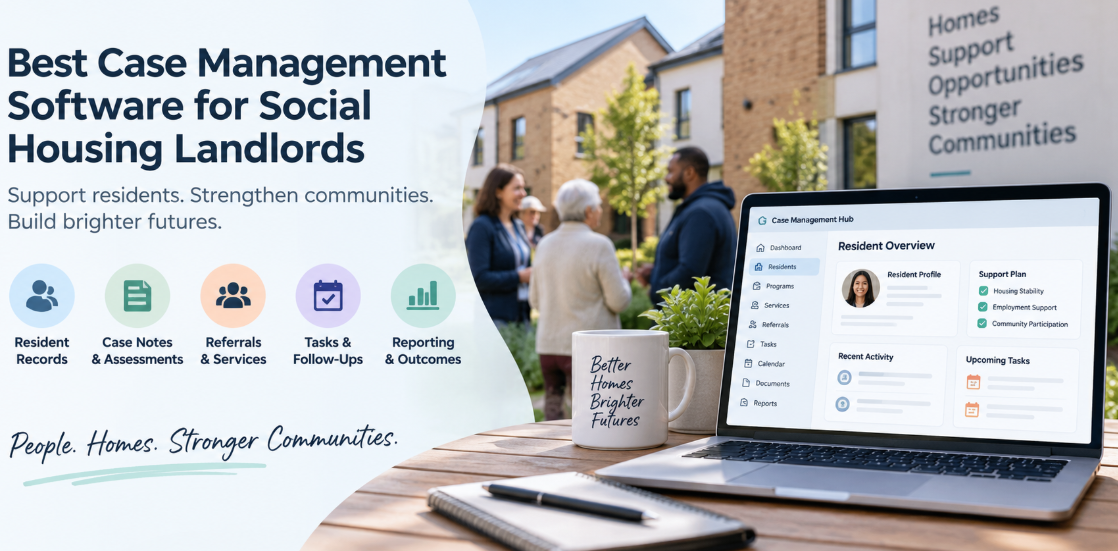
For organizations looking specifically for the best case management software for social housing, Case Management Hub provides a centralized platform for managing the resident-facing side of housing services. Teams can organize resident records, assessments, case notes, support activities, referrals, goals, documents, tasks, programs, and reporting within one system.
The distinction matters. Social housing organizations don’t necessarily need another property database. Many need a practical way to understand what support each resident is receiving, what still needs to happen, who is responsible, and whether services are producing the intended outcomes.
💡All-in-one Case Management Software.
Everything in one place: clients, notes, forms, appointments, reports, and outcomes.
👉 Try it Free - No credit card needed
Why Social Housing Needs a Different Type of Case Management System
A resident can have several needs at the same time. One household may need employment support, another may require referrals to community services, and another may be working through a structured support plan with several members of staff. Housing officers, resident support workers, case managers, community teams, and program managers may all interact with the same household at different points.
The problem isn’t simply storing more information. Staff need to see the right information in context. A case note needs to be associated with the correct resident. A referral should be traceable. A missed follow-up needs an owner. Supporting documents should be easy to locate. Managers need reporting that tells them what services are actually being delivered across properties, locations, or programs.
This is where social housing case management software becomes useful. Rather than treating each interaction as an isolated administrative event, it creates an ongoing record of the resident’s support journey.
For larger landlords, the need becomes more pronounced. Processes that work reasonably well for a small resident services team can become difficult to control when the organization operates across numerous properties, communities, programs, and service areas.
Housing Management Software vs. Housing Case Management Software
One of the easiest mistakes to make during software selection is assuming that housing management software and housing case management software solve the same problem.
Housing management software typically focuses on the property and tenancy side of operations. Depending on the platform, that can include rent, leases, repairs, inspections, maintenance, units, properties, and other housing administration.
Housing case management software focuses more directly on people and services. It helps teams document resident needs, interactions, assessments, case notes, support activities, goals, referrals, tasks, documents, and outcomes.
For many social housing landlords, these systems can serve complementary purposes. Replacing a property management platform with a case management system may make little sense if the organization has substantial rent, asset, and maintenance requirements. Likewise, expecting a property system to become a detailed resident support platform can leave frontline teams working around limitations.
The better question is: What information does the resident services team need to manage that the organization’s housing system doesn’t handle well?
If the answer includes assessments, support plans, referrals, detailed case notes, resident goals, service tracking, follow-ups, or outcomes reporting, a dedicated resident case management system deserves serious consideration.
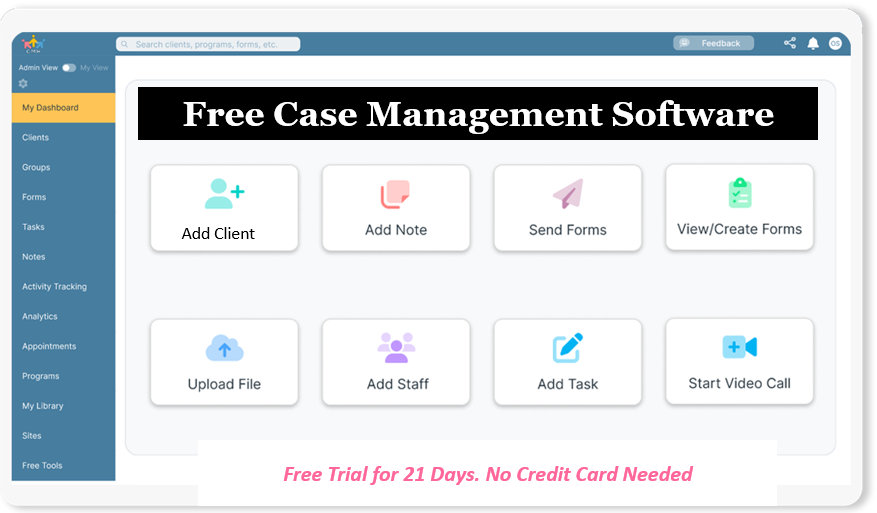
👉 Try it Free - Free Case Management System
One Resident Record Instead of Information Scattered Across Systems
Fragmentation is one of the biggest practical problems in resident support. Staff may have an intake form in one location, case notes somewhere else, documents in shared folders, and service activity recorded in a spreadsheet. Even when each tool works individually, the combined process makes it harder to understand the resident’s situation quickly.
Case Management Hub provides centralized client profiles that social housing organizations can use as resident records. Fields can be customized around the information the organization needs to capture, rather than forcing every housing program into an identical record structure.
Teams can also create custom fields for information relevant to their services and include those fields in reports. Information collected through forms can be mapped to resident profile fields, reducing the need to repeatedly enter the same information.
Documents Stay Connected to the Resident
Resident support frequently involves documents such as identification, releases, assessments, plans, applications, supporting evidence, and records received from other providers. Case Management Hub allows files to be stored with individual resident profiles or organized within the platform’s file management area.
Residents can also submit documents through online forms using file upload fields. That can be useful for collecting items such as identification, leases, pay stubs, or other documents required by a particular program.
Managing Resident Assessments, Support Plans, and Goals
Resident support rarely follows a single standardized pathway. Different programs may collect different information, assess different needs, or define progress differently. That makes customization more valuable than a large library of forms that staff can’t adapt.
Case Management Hub includes customizable forms and fields that can be adapted to an organization’s own processes. Housing teams can use forms for intake, resident assessments, questionnaires, program applications, reviews, or other structured data collection.
Goals can be created for individual residents, groups, or programs. A larger goal can also be divided into steps so staff can record progress over time while preserving completed goals rather than replacing the historical record each time priorities change.
For social housing organizations, this creates room to structure resident support around what the program is actually trying to achieve. Depending on the services offered, teams might track progress related to housing stability, employment, benefits, community participation, independent living, or other organization-defined outcomes.
🔥Still using spreadsheets for case management?
Switch to an all-in-one case management platform.
👉 Try it Free - No credit card needed
Tracking Services and Resident Interactions
Knowing that a resident is enrolled in a program is only part of the picture. Managers also need to understand what happened after enrollment.
Case Management Hub can track services and activities associated with residents. Staff can record interactions, service activity, time, and related information, then filter and report on that data. Programs can group residents around shared initiatives, while services represent the individual offerings provided to residents.
That distinction becomes useful in organizations operating several community or resident support programs. A resident can participate in more than one program, and organizations can report on participation and service activity without creating separate disconnected records for the same person.
Case Notes Should Be Easy to Record and Retrieve
Case notes are only useful if staff consistently record them and can retrieve them later. The platform supports standard and custom note formats, permissions, filtering, and exports. Notes can be associated with individual residents, while group notes can be added across multiple participant records when appropriate.
Mobile accessibility matters here. Housing officers and support staff don’t necessarily spend their entire day at a desk. Case Management Hub is responsive across phones, tablets, laptops, and desktops, allowing staff to access records and add documentation while working away from the office when they have an internet connection.
Referral Management for Connected Community Services
A social housing landlord may provide substantial resident support directly, but it won’t provide every service a household needs. Community organizations, healthcare providers, employment programs, financial support organizations, legal services, and other partners can all become part of the resident’s wider support network.
Referral tracking is therefore more than an administrative feature. Teams need to know where a resident was referred, what information was shared, and how external providers relate to the case.
Case Management Hub includes referral management for incoming and outgoing referrals. Referral agencies and service partners can be maintained in a directory, referral sources can be reported on, and external contacts such as landlords or service providers can be associated with a resident.
Organizations can also control the information shared with referral partners. This is preferable to treating referrals as a simple text field buried in a case note, particularly when a housing organization works with a large network of community partners.
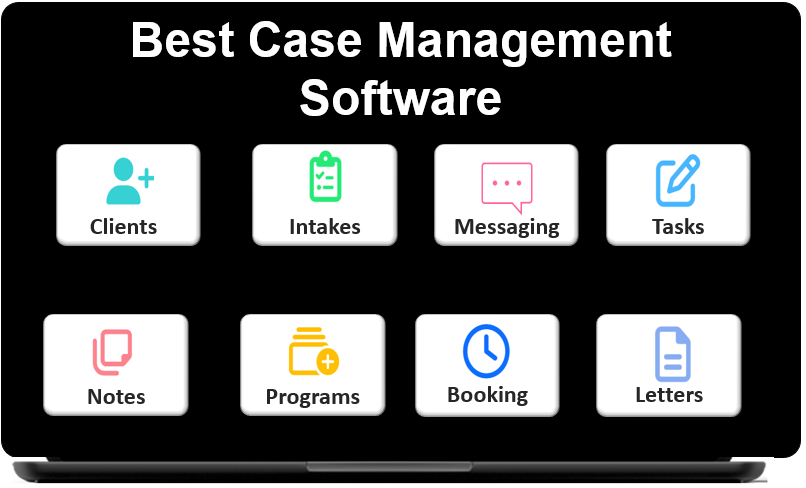 👉 Try it free today - No credit card needed
Keeping Follow-Ups From Falling Through the Cracks
Resident support often consists of many small commitments: call the resident, request a document, complete a review, follow up on a referral, schedule an appointment, or check progress after a defined period. Individually, these tasks look simple. Across a large caseload, they’re easy to lose.
Case Management Hub allows teams to create and assign tasks with due dates and reminders. Tasks can be assigned to staff, residents, or multiple participants where appropriate. Recurring tasks can support activities that need to happen on a regular schedule.
The built-in calendar can also be used for appointments and events, including reminders and external calendar synchronization. Residents with portal access can view appointments and assigned tasks.
For a social housing organization, this turns follow-up from something dependent on individual memory into something visible and assignable.
Supporting Multiple Properties, Locations, and Programs
Scale changes the software requirement. A resident support process that works for one team can become difficult to govern when staff operate across a city, county, region, or wider housing portfolio.
Case Management Hub supports multiple locations and programs. Organizations can organize residents according to the structures that make sense for their services and filter information accordingly.
Permissions are equally important. Employees can be restricted to assigned residents, while administrators can have broader visibility. Staff can also be associated with specific programs so access can reflect operational responsibilities.
This is particularly useful for housing associations and social housing providers that need centralized oversight without giving every employee unrestricted access to every resident record.
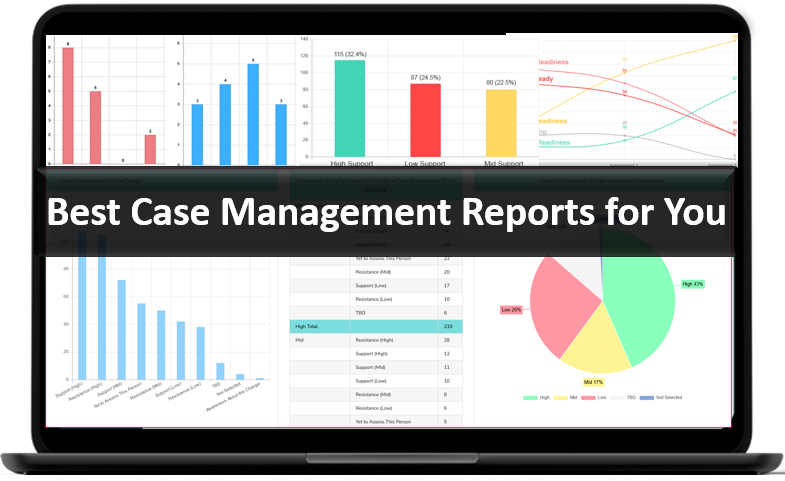
👉 Try it Free today - No credit card needed
Reporting on Resident Services and Outcomes
Good resident services reporting should answer practical questions. How many residents received a particular service? Which programs are they participating in? What needs are being recorded? What activities have staff completed? Which outcomes are being tracked? Where are referrals coming from?
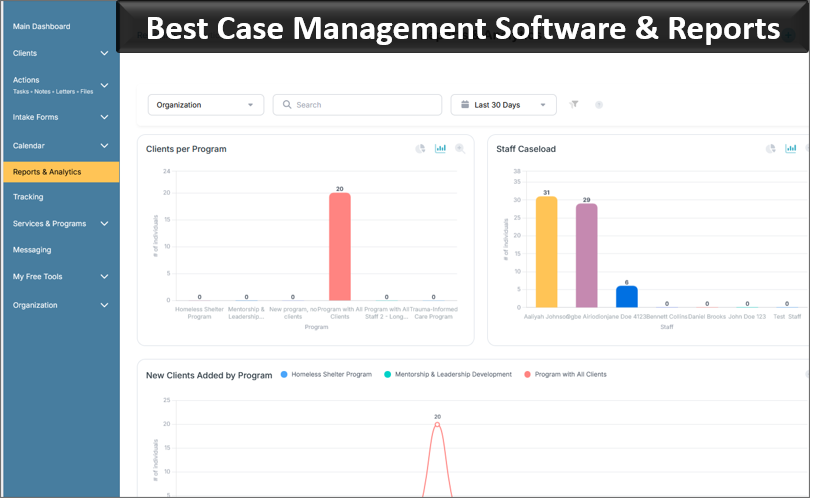
Case Management Hub includes standard and customizable reporting capabilities. Organizations can create reports from client fields, forms, tracking data, programs, services, referrals, and other information stored in the platform. Reports can be filtered by date ranges, and data can be exported to formats such as Excel for further analysis.
Custom fields are especially useful for housing organizations because they allow reporting to reflect the organization’s actual service model. If a team needs to capture household characteristics, housing status, unmet needs, geographic information, or another program-specific variable, those data points can be incorporated into resident records and reporting.
This is one area where organizations should be demanding during software evaluation. A system that stores resident information but makes it difficult to extract meaningful program data simply shifts the reporting problem downstream.
Moving Housing Case Management Away From Spreadsheets and Paper
Spreadsheets often become unofficial case management systems because they’re familiar and flexible. The difficulty appears as the organization grows. Different versions circulate, notes sit in separate documents, reporting requires manual consolidation, and staff have to know where each piece of information lives.
Case Management Hub is designed for organizations moving away from Excel, Google Sheets, Word documents, paper records, and other disconnected processes. Existing spreadsheet data can be imported, with fields mapped into the platform. Organizations can also import information such as clients, notes, tasks, and historical form submissions.
Paper documents don’t necessarily need to disappear on day one. Existing records can be scanned and uploaded to resident profiles while new workflows move toward digital forms and structured records.
That phased approach is often more realistic than trying to redesign every resident service process at the same time as a software implementation.
👉 Try it free today - No credit card needed
What to Look for in Social Housing Case Management Software
The longest feature list isn’t necessarily the best buying criterion. For resident services, I would prioritize whether the system fits the work staff perform every day and whether managers can get useful information back out of it.
- Flexible resident records: The system should capture the information your programs actually need without forcing staff into irrelevant fields.
- Custom forms and assessments: Housing programs vary. Teams should be able to adapt intake forms, assessments, and other documentation.
- Case notes and document management: Staff need a reliable history of interactions and supporting documentation.
- Service and outcome tracking: Recording residents isn’t enough. The software should help show what support was provided and what happened afterward.
- Referral management: External support is a normal part of resident services, so referrals shouldn’t live solely in emails or notes.
- Role-based access: Staff should have access appropriate to their responsibilities.
- Multi-program and multi-location support: This becomes critical for landlords serving residents across numerous communities.
- Usable reporting: Managers should be able to filter, analyze, and export the information they collect.
- Mobile-friendly access: Frontline housing and community teams need practical access away from their desks.
- Data portability: Organizations should be able to export their information rather than having it trapped inside the platform.
Why Case Management Hub Fits Social Housing Organizations
Case Management Hub is a strong option for social housing landlords because its core structure aligns closely with resident support rather than requiring housing teams to turn a generic database into a case management system.
The platform can centralize resident profiles, case notes, forms, assessments, documents, referrals, tasks, goals, appointments, programs, services, and reporting. Organizations can customize fields and forms, operate across multiple locations, control staff permissions, and allow residents to access selected information and tasks through a client portal.
There is also practical relevance to housing services. Organizations providing housing-related programs have used the platform to move away from spreadsheets and manual processes, manage resident or client information across sites, create customized forms, track services, and produce reports. Housing and service-provider contacts can also be connected with individual records through referral functionality.
For organizations concerned about adoption, simplicity deserves attention. Software can have extensive capabilities and still fail if frontline teams find it too cumbersome to use consistently. Case Management Hub is designed to provide an accessible interface while retaining the customization and reporting capabilities needed by organizations running multiple programs.
💡All-in-one Case Management Software.
Everything in one place: clients, notes, forms, appointments, reports, and outcomes.
👉 Try it Free - No credit card needed
A Better Way to Connect Housing With Resident Support
The strongest social housing organizations recognize that providing a home and supporting someone to live well in that home are connected, but they aren’t the same operational task.
Property systems can manage the building, tenancy, rent, and repairs. Resident services teams need visibility into people: their needs, support plans, interactions, referrals, documents, goals, services, and progress.
Case Management Hub gives social housing landlords, housing associations, affordable housing organizations, community housing providers, and resident support teams a centralized case management platform for that work. Instead of maintaining separate spreadsheets and disconnected records across teams, organizations can build a structured resident support record that follows the work from intake and assessment through service delivery, referrals, follow-ups, and reporting.
For a housing organization evaluating software, start with the workflows that are currently hardest to see or control. Map how a resident enters a support program, how staff document needs, where referrals are recorded, how follow-ups are assigned, and how managers report on services and outcomes. Then test the software against those workflows rather than relying on a generic feature checklist.
That is the standard a social housing case management system should meet: helping staff understand the resident, coordinate the work around that resident, and give the organization a clearer picture of the support being delivered across its communities.
👉 Try it Free - Free Case Management System
FAQs: Best Case Management Software for Social Housing Landlords
What is social housing case management software?
Social housing case management software is a digital platform that helps housing landlords, housing associations, and resident support teams manage resident records, case notes, assessments, referrals, support plans, services, documents, tasks, and outcomes in one centralized system.
What is the best case management software for social housing landlords?
Case Management Hub is a strong case management software option for social housing landlords because it supports resident records, customizable forms, case notes, referrals, programs, services, tasks, goals, documents, reporting, and multi-location teams within one centralized platform.
What is the difference between housing management software and housing case management software?
Housing management software typically focuses on properties, tenancies, rent, repairs, and maintenance. Housing case management software focuses on resident support, including needs assessments, case notes, referrals, services, goals, follow-ups, documents, and resident outcomes.
Can housing associations use case management software to manage resident support?
Yes. Housing associations can use case management software to centralize resident information, track support services, manage referrals, document interactions, assign follow-ups, monitor goals, and report on resident outcomes across multiple programs, properties, and locations.
What features should social housing case management software include?
Social housing case management software should include customizable resident profiles, digital forms and assessments, case notes, document management, referral tracking, service and program management, tasks, goals, role-based permissions, mobile access, and reporting tools that help teams track resident services and outcomes.
Find the Right Case Management Solution for Your Organization: All-in-One Case Management Resource Center.
Note: Content on this casemanagementhub.org site is copyrighted and protected under applicable copyright laws. Read Terms of Use.
Disclaimer: Case Management Hub is an educational resource and software provider site. Our content is not medical advice. Use of this site does not create a provider-patient relationship. Read our full disclaimer here: Case Management Hub Disclaimer.