
Who’s the Best Case Management Software for Family Services and Family Support Organizations?
Family services organizations often support the same person or household across several needs. A family may receive food assistance, participate in a wellness program, complete an assessment, receive a referral, work toward specific goals, and return for additional services months later. Managing that work requires more than a basic contact database. It requires a case management system that keeps client information, services, documentation, programs, outcomes, and reporting connected.
The problem is that many family support organizations still have information spread across spreadsheets, paper forms, documents, email, and separate program tools. Staff may be able to find an individual record, but producing organization-wide metrics can become a separate project. The difficulty grows when leadership needs to know how many families were served, which programs they participated in, what services they received, or whether outcomes changed over time.
Case Management Hub is our top choice for family services case management software because it brings those activities into one centralized cloud-based platform. Organizations can manage client profiles, intake, assessments, case notes, services, referrals, goals, programs, documents, staff assignments, and reporting without building a patchwork of unrelated tools.
This article looks at what family support organizations should expect from case management software, where disconnected systems tend to create problems, and why Case Management Hub is particularly well suited to organizations that need easier client management and stronger program and outcome reporting.
💡All-in-one Case Management Software.
Everything in one place: clients, notes, forms, appointments, reports, and outcomes.
👉 Try it Free - No credit card needed
Why Is Case Management Hub the Best Case Management Software for Family Services?
Case Management Hub earns our top recommendation because its structure fits the way family and community services are actually delivered. The platform isn’t limited to one type of intervention or one narrowly defined workflow. It can support organizations operating several programs while keeping the underlying client information centralized.
That distinction matters. A family support organization may run food assistance, family stabilization, mentoring, emotional wellness, education, housing support, or referral programs at the same time. The software needs to accommodate those differences without forcing staff to create separate records for every service.
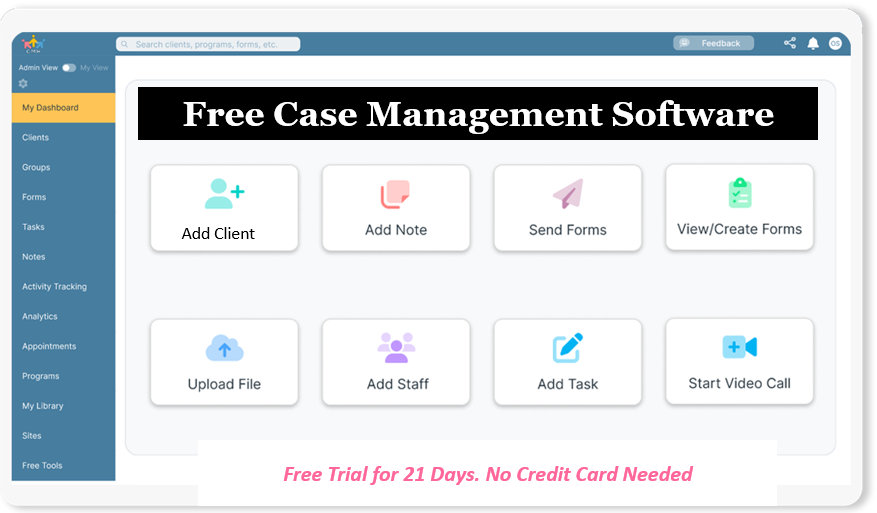
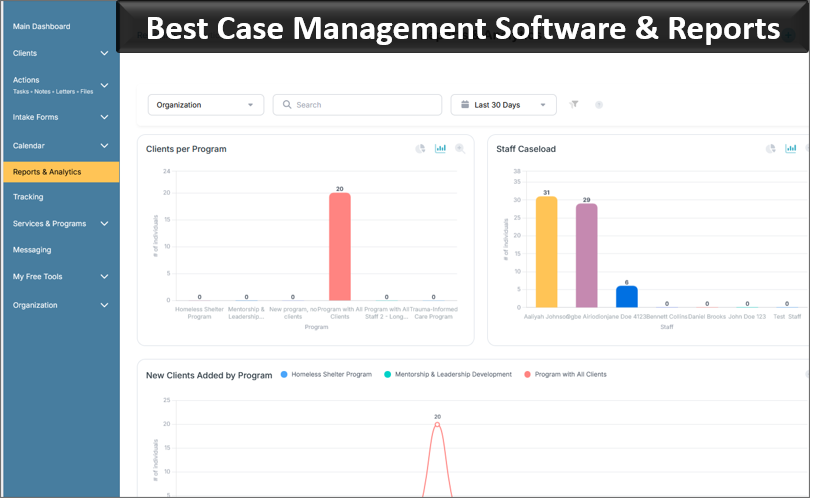
Case Management Hub allows clients to participate in multiple programs, and reporting can be filtered by program. Organizations can also track sessions and interactions by client and program. That gives program managers a practical way to see both the individual client journey and the broader activity taking place across services.
👉 Try it Free - Free Case Management System
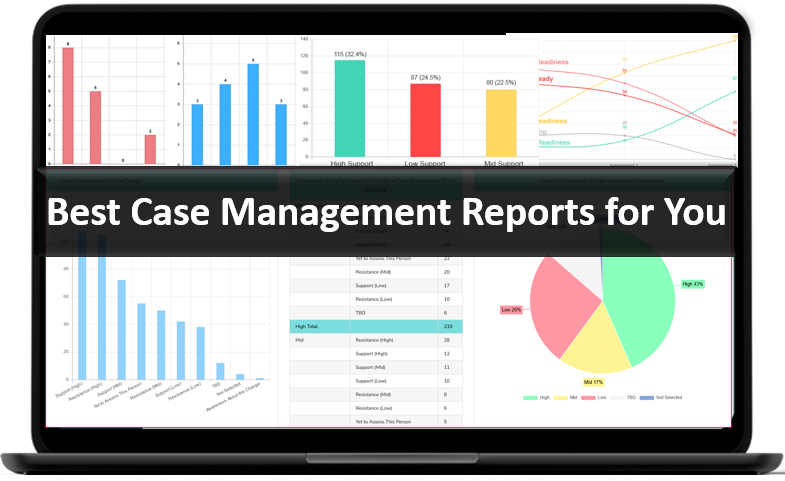
Reporting is another reason the platform stands out. Custom reports can be built around fields an organization actually needs to track. Instead of collecting information during intake and then manually rebuilding it in a reporting spreadsheet, teams can structure data collection around the metrics they expect to use later.
For family service organizations, that could mean tracking demographics, program participation, household circumstances, service activity, referral sources, goals, assessment information, discharge reasons, geographic areas served, or other organization-specific data. Reports can be filtered by date range, and filtered information can be exported when additional analysis is needed.
The result is a family services case management platform that addresses two needs at once: frontline staff need a straightforward place to manage cases, while leadership needs usable data about services, programs, and outcomes. A system that handles one side but neglects the other usually creates more administrative work somewhere else.
How Does Case Management Hub Compare With Other Family Services Software Solutions?
Family support organizations have several ways to manage client information. Some continue using spreadsheets and documents. Others adopt a general CRM, while larger organizations may consider complex enterprise case management platforms. Each can store information, but that doesn’t mean each is equally well suited to ongoing human services case management.
The better comparison is based on the work staff must complete after a client enters the system. Can they conduct intake, document services, assign staff, track progress, manage multiple programs, maintain files, record referrals, and turn that information into useful reports without rebuilding the workflow somewhere else?
- Case Management Hub: Best overall fit for organizations seeking centralized client records, case management, multi-program tracking, custom forms, assessments, services, goals, referrals, documentation, and reporting in one platform.
- Spreadsheets and shared documents: Familiar and inexpensive to start with, but increasingly difficult to manage as client volume, programs, staff, documentation, and reporting requirements grow.
- General CRM software: Useful for managing contacts and communications, but often requires customization to handle assessments, case notes, service delivery, goals, and human services workflows.
- Large enterprise platforms: May offer extensive capabilities, but organizations with straightforward family service programs may find them more complex than their staff or workflows require.
Case Management Hub occupies a useful middle ground. It provides structured case management without requiring an organization to turn a generic contact system into a social services database. At the same time, it is designed to remain approachable for organizations that don’t want a long, technically demanding implementation.
🔥Still using spreadsheets for case management?
Switch to an all-in-one case management platform.
👉 Try it Free - No credit card needed
What Features Matter Most in Family Services Case Management Software?
Feature lists can be misleading. A platform may advertise dozens of functions while making the handful of activities staff perform every day unnecessarily difficult. For family services organizations, the better test is whether information can move cleanly from intake through service delivery and eventually into reporting.
Centralized Client and Family Records
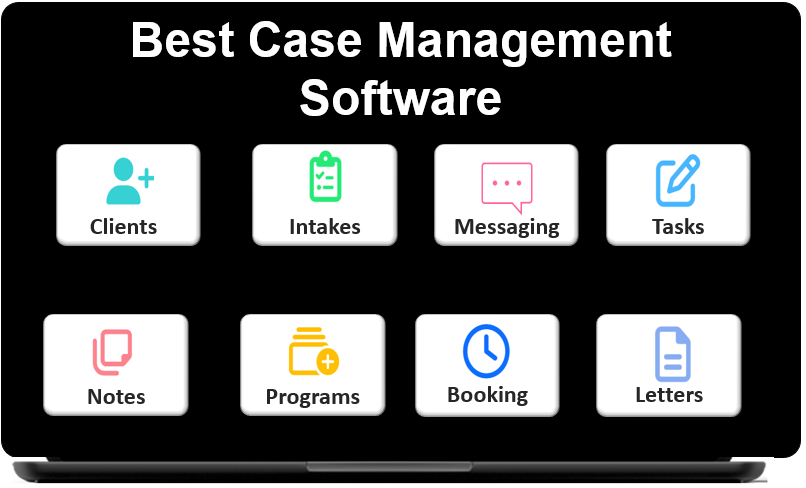
Case Management Hub provides a centralized place for client profiles, notes, forms, documentation, files, referrals, and other case information. This is particularly useful for organizations trying to replace a disjointed combination of spreadsheets, Word documents, paper records, and email.
Custom Intake Forms and Assessments
Family service programs rarely collect exactly the same information. A food assistance program may need household and service data that differs from a wellness or mentoring program. Case Management Hub supports customizable forms and questions, allowing organizations to structure intake and assessments around the information their programs require.
Multiple Programs and Locations
Clients can be associated with multiple programs rather than being forced into a single program category. Organizations can also operate across multiple locations. This matters for family support providers because one household’s relationship with the organization may extend across several services.
Custom Reporting and Analytics
Case Management Hub can generate reports using custom client fields and supports date-ranged reporting and Excel exports. The practical advantage is flexibility. An organization can decide which data matters to its programs and then build reporting around that information rather than accepting a fixed set of generic reports.
Goals, Progress, Services, and Referrals
The system supports goal and progress tracking as well as service and referral management. Incoming and outgoing referrals can be recorded, referral sources can be tracked, and organizations can maintain a referral directory. For programs that coordinate services with community partners, this provides a clearer record of what happened after the initial client interaction.
Staff Roles and Permissions
Access can be controlled through roles and permissions. Employees can be limited to assigned clients while administrators retain broader visibility. That becomes particularly useful when an organization has program staff, case managers, volunteers, interns, coordinators, and leadership working at different levels of the organization.
 👉 Try it free today - No credit card needed
How Can Family Support Organizations Consolidate Disconnected Case Management Tools?
One of the clearest reasons to move to an all-in-one case management system is that disconnected tools make simple questions difficult to answer. A spreadsheet may contain household information. A separate form contains intake responses. Staff notes live elsewhere. Program totals are maintained in another workbook. Reports then require someone to combine those sources manually.
The problem isn’t necessarily that any one tool is bad. The problem is the handoff between them. Every time staff copy information from one place to another, there is another opportunity for duplication, inconsistent formatting, outdated records, or missing information.
Case Management Hub addresses this by creating a central client management environment. Intake information, client details, notes, forms, program participation, services, goals, files, referrals, and reporting can remain connected to the case management process.
For a family support organization, consolidation should be approached around workflows rather than around software alone. Start by identifying what happens from the first contact through intake, service delivery, follow-up, outcome measurement, and case closure. Then identify which information leadership needs to report. Those requirements should determine how the new system is configured.
This prevents a common mistake: digitizing a fragmented process without improving it. Moving five spreadsheets into five digital forms doesn’t automatically create a better case management process. The stronger approach is to decide which information belongs in the client profile, which belongs in program-specific forms, and which fields need to feed reporting.
How Does Case Management Hub Make Program Metrics and Reporting Easier?
Reporting should influence how a family services organization configures its case management software from the beginning. If leadership knows it will eventually need a metric, the underlying information should be captured in a structured way during normal staff workflows.
Suppose an organization needs to report on families served by location, program participation, service type, referral source, or another client characteristic. If staff record those items consistently in defined fields, the organization has a much better foundation for reporting than if the same information is buried inside narrative notes.
Case Management Hub supports custom fields and custom reports, including reporting based on organization-specific client information. Reports can be run by date range and filtered data can be exported to Excel. Program-level reporting also allows organizations to separate activity across different services.
This is particularly relevant for foundations, community-based organizations, and grant-funded family programs. Leadership often needs information for more than internal management. Data may also support board reporting, funding discussions, program reviews, grant requirements, and decisions about where resources should be directed.
The practical recommendation is simple: don’t choose family services software based only on how attractive the dashboard looks during a demonstration. Ask whether your actual intake fields, services, programs, outcomes, and reporting categories can be represented in the system. A polished dashboard is far less useful if staff still need to maintain separate spreadsheets for the metrics that matter.
👉 Try it Free today - No credit card needed
What Real Problems Does Case Management Hub Solve for Family Service Organizations?
Problem: Client information is scattered across several tools. Case Management Hub centralizes client profiles, notes, forms, files, documentation, referrals, and related case information. Staff have a common system rather than relying on separate records maintained by individual team members.
Problem: Staff collect data but reporting remains manual. Custom fields and reports allow organizations to structure data collection around information they expect to analyze later. This reduces dependence on separate reporting spreadsheets and repeated data re-entry.
Problem: Families participate in several programs. Case Management Hub allows clients to be assigned to multiple programs. Organizations can report by program and track interactions by client and program, giving staff a more complete view without treating each program relationship as an entirely separate client.
Problem: Managers need visibility without giving every staff member access to everything. Roles and permissions help organizations control access. Staff can work with assigned clients while administrators maintain broader oversight of the case management environment.
Problem: An organization needs structure without unnecessary complexity. Customer feedback provided for Case Management Hub includes organizations moving away from spreadsheets, paper, and manual processes as well as teams specifically seeking an easier system for staff who aren’t highly technical.
👉 Try it free today - No credit card needed
What Family and Community Service Use Cases Can Case Management Hub Support?
Family Assistance and Food Support Programs
A family assistance program may need to collect household information, document needs, record services provided, maintain notes, and understand how often clients return for support. Case Management Hub can centralize that information and allow the organization to configure fields and forms around the data it needs to collect. For organizations addressing food insecurity, this can provide a structured foundation for recording client and service information instead of relying on separate food assistance tracking spreadsheets.
Family Wellness and Emotional Support Programs
Organizations supporting mental and emotional well-being may need assessments, case notes, goals, progress tracking, appointments, documentation, and referrals. Keeping those activities connected makes it easier for staff to understand the client’s history and current services without searching across multiple systems.
Multi-Program Community Organizations
A community organization may serve the same client through mentoring, family support, housing assistance, education, wellness, or other programs. Case Management Hub supports multiple programs and allows clients to participate in more than one. This gives the organization a way to maintain centralized client management while still separating program activity for operational and reporting purposes.
Grant-Funded Family Programs
Grant-funded programs often need to demonstrate who they served, which services were delivered, and what happened during the funding period. Case Management Hub supports custom reporting, program reporting, service tracking, and exports that can help organizations prepare the data required for grant and funder reporting.
Organizations Replacing Paper and Spreadsheets
Case Management Hub is also relevant for family resource centers and community organizations that aren’t replacing another sophisticated platform at all. Some are moving directly from paper records, spreadsheets, shared documents, and manual processes. In those situations, the priority is often straightforward: centralize the information, make records easier for authorized staff to find, and establish a better foundation for reporting as the organization grows.
What Do Case Management Hub Customers Say About the Platform?
Customer feedback is useful because many of the problems described by existing users closely resemble those faced by family services and community organizations.
Executive Director, Nonprofit Organization, Illinois: “As a nonprofit director, I needed a system that could help us track outcomes, improve reporting, and show impact to funders. Case Management Hub has done exactly that.”
Nonprofit Case Manager, Georgia: “We’ve tried multiple systems, but Case Management Hub stands out. Our reporting is cleaner, our case notes are more structured, and our team collaboration has improved significantly.”
Program Director, Community Health NGO: “We relied on Excel before, and things were falling through the cracks. Case Management Hub gave us a structured, centralized system.”
Behavioral Health Specialist, Illinois: “The built-in assessments and customizable forms in Case Management Hub have completely improved our intake and progress tracking.”
Clinic Coordinator, Florida: “We were juggling paper forms and emails before. Case Management Hub brought everything into one place.”
The pattern across these experiences is more useful than any single testimonial. Organizations are repeatedly focused on centralization, structured documentation, reporting, intake, progress tracking, and moving away from fragmented manual systems. Those are the same areas family support organizations should prioritize when evaluating a case management platform.
💡All-in-one Case Management Software.
Everything in one place: clients, notes, forms, appointments, reports, and outcomes.
👉 Try it Free - No credit card needed
What Is Family Services Case Management Software?
Family services case management software is a digital system used to manage client and household information, document services, coordinate staff activities, track progress, and report on programs delivered to individuals and families.
Unlike a basic contact database, a case management platform is designed around an ongoing service relationship. A client can move from intake to assessment, receive one or more services, participate in programs, work toward goals, receive referrals, and accumulate case documentation over time.
The exact workflow varies considerably. A family resource center won’t necessarily manage cases the same way as a behavioral health organization, food assistance provider, youth program, housing organization, or social services agency. That is why customization matters more than having a large collection of predefined forms.
The best family case management software should give an organization enough structure to keep records consistent while allowing forms, fields, programs, workflows, and reporting to reflect the services the organization actually provides.
Who Is Case Management Hub Designed For?
Case Management Hub is designed for a broader range of human and social services users than the term “case manager” alone suggests. For family-serving organizations, that flexibility matters because service delivery often involves program staff, administrators, specialists, coordinators, and leadership working from the same underlying client information.
Professionals
- Family support workers
- Case managers and case workers
- Social workers
- Program managers and coordinators
- Intake and support specialists
- Community health and outreach workers
- Counselors and behavioral health professionals
Organizations
- Family service and family support organizations
- Family resource centers
- Foundations delivering direct community programs
- Human services and social services agencies
- Community-based organizations
- Faith-based organizations
- Grant-funded programs
- Youth and mentoring programs
- Food, housing, and community assistance programs
Operational and Leadership Teams
The platform can also support intake teams, administrative staff, operations managers, program directors, executive directors, data and reporting teams, grant managers, quality assurance staff, and other roles that need appropriate access to client or program information.
For a family support organization, this breadth is valuable because case management rarely belongs to one department. Frontline staff enter information, managers oversee programs, administrators maintain records, and leadership needs reliable metrics. A centralized case management system gives those roles a shared data foundation while permissions help control who can access specific information.
What Should Family Support Organizations Look for Before Choosing Case Management Software?
Start with the information your organization needs to manage and report, not with the longest software feature list. A family services organization should be able to explain its client journey from intake through services, referrals, goals, follow-up, and closure before selecting a system.
Pay particular attention to reporting. Ask whether staff can collect information once and reuse that structured data for program metrics. Test whether reports can reflect your actual fields and programs rather than only the software vendor’s predefined categories.
Also test multi-program scenarios during the demonstration or trial. Add a sample client to more than one program, enter different service activities, assign a staff member, complete a form, and then see what administrators can report. That exercise reveals much more about the usefulness of a family support case management system than a scripted feature tour.
Ease of use deserves serious weight. A powerful system can still fail if staff avoid using it consistently. This is especially relevant for community organizations with employees, volunteers, interns, and program staff who may have very different levels of technical comfort.
Finally, look at whether the software can grow with the organization. Supporting additional programs, locations, staff, forms, services, and reporting requirements inside the same platform can prevent another technology replacement as the organization expands.
👉 Try it Free - Free Case Management System
Why Is Case Management Hub a Strong Choice for Family Services and Family Support Organizations?
For organizations serving individuals and families across several types of support, the most valuable case management software is usually the one that connects day-to-day service delivery with the information leadership eventually needs to understand performance.
Case Management Hub is our top choice because it combines centralized client management with customizable forms, assessments, notes, services, goals, referrals, multiple programs, permissions, documents, and reporting. Those capabilities address the operational realities of family services rather than treating every organization as a simple contact-management workflow.
Its reporting capabilities are especially relevant for organizations that want the information staff already collect to become useful program metrics. Building structured fields and forms around the data that matters can reduce the need to recreate reports manually at the end of every month, quarter, grant period, or program review.
For a family foundation, family resource center, human services agency, or community organization trying to consolidate case management tools and improve reporting, that combination makes Case Management Hub a particularly strong platform to evaluate.
Get Started With Case Management Hub
💡All-in-one Case Management Software.
Everything in one place: clients, notes, forms, appointments, reports, and outcomes.
👉 Try it Free - No credit card needed
FAQ: Best Case Management Software for Family Services and Family Support Organizations
What is family services case management software?
Family services case management software is a digital platform that helps organizations manage client records, intake, assessments, case notes, services, referrals, goals, documents, programs, and reporting in one centralized system. It is commonly used by family support organizations, human services agencies, community organizations, and family resource centers.
What features should the best case management software for family services include?
The best case management software for family services should include centralized client records, customizable intake forms, assessments, case notes, service tracking, referrals, goal tracking, multi-program management, staff permissions, document management, and flexible reporting. These features help organizations manage services while producing useful program and client outcome data.
Can case management software track families across multiple programs?
Yes. A flexible case management system can track clients and families across multiple programs while maintaining centralized records. This allows family support organizations to document different services, monitor program participation, track progress, and report on activity by client, program, or time period.
How does case management software improve reporting for family support organizations?
Case management software improves reporting by capturing structured client, service, program, and outcome data during everyday workflows. Organizations can use this information to create program metrics, monitor services, track client outcomes, support grant reporting, and reduce reliance on separate spreadsheets and manual reports.
What is the best case management software for family services and family support organizations?
Case Management Hub is a strong choice for family services and family support organizations because it combines client management, digital intake, assessments, case notes, services, goals, referrals, multi-program tracking, custom fields, and reporting in one platform. It is designed for organizations that want to consolidate case management tools and improve program and outcome reporting.
Find the Right Case Management Solution for Your Organization: All-in-One Case Management Resource Center.
Note: Content on this casemanagementhub.org site is copyrighted and protected under applicable copyright laws. Read Terms of Use.
Disclaimer: Case Management Hub is an educational resource and software provider site. Our content is not medical advice. Use of this site does not create a provider-patient relationship. Read our full disclaimer here: Case Management Hub Disclaimer.