
Best Case Management Software for Faith-Based Organizations and Ministries Providing Care, Benevolence, Outreach, and Community Services
Many faith-based organizations reach a point where spreadsheets, email, paper forms, shared documents, and staff memory are no longer enough to manage the people they serve.
A ministry may be providing benevolence assistance to families, coordinating counseling or mentoring, helping people find housing, operating a food program, managing recovery services, making referrals, or supporting people through difficult periods in their lives. As those services grow, so does the information that needs to be tracked.
That creates a different software requirement from the one most churches start with.

Traditional church management software is generally built around the administration of a congregation. Case management software is designed around the ongoing work being done with an individual or family. For ministries that provide direct services, that distinction matters.
The best case management software for faith-based organizations should help ministry leaders, staff, board members, and authorized volunteers organize care without turning compassionate work into an administrative burden. It should also give leadership a clearer picture of who is being served, what assistance has been provided, what still needs to happen, and what impact programs are having.
💡All-in-one Case Management Software.
Everything in one place: clients, notes, forms, appointments, reports, and outcomes.
👉 Try it Free - No credit card needed
Church Management Software and Case Management Software Solve Different Problems
One of the easiest mistakes for a religious organization to make is assuming that any software designed for churches will also work for managing community services.
A church management system can be a good fit for membership records, attendance, giving, events, groups, communications, and other congregation-focused activities. Pastoral care software may add another layer by helping clergy and care teams record visits, care requests, conversations, and follow-up activities.
Direct-service ministries often need something more structured.
Consider a ministry helping a family with rent assistance. The organization may need to document the initial request, collect information, record an assessment, upload supporting documents, track the assistance provided, make referrals to other agencies, assign follow-up work, record case notes, and eventually report on the services and outcomes associated with the program.
That is case management.
The same distinction applies to ministries providing counseling, mentoring, food assistance, housing support, pregnancy and family services, recovery programs, senior assistance, youth services, refugee support, community outreach, or other forms of ongoing care.
Organizations should therefore evaluate software based on the work they actually perform rather than the fact that they are a church, ministry, synagogue, religious nonprofit, or other faith-based organization.
The Real Problem Is Usually Fragmented Information
Most ministries don’t set out to create a complicated information system. It happens gradually.
One volunteer maintains a spreadsheet. A staff member keeps intake forms in a shared folder. Pastoral notes are stored somewhere else. Referral information lives in email. Another spreadsheet tracks financial assistance. Program statistics are assembled separately when the board needs them.
Each tool may work reasonably well on its own. The problem appears when someone needs the complete history of the person being served.
Has this family received assistance before? Which program served them? Was a referral made? Did anyone follow up? What documents were submitted? Is there an unresolved need? Who is responsible for the next action?
If answering those questions requires searching several spreadsheets, asking coworkers, checking an inbox, or relying on someone’s memory, the organization has outgrown its informal tracking process.
A case management system creates a central record around the person or family instead. That becomes especially valuable as programs expand or more staff and volunteers become involved.
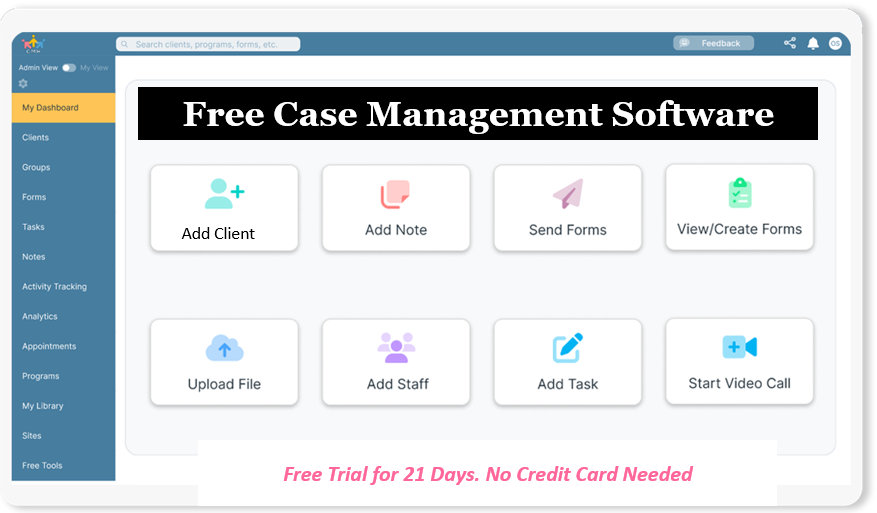
👉 Try it Free - Free Case Management System
Benevolence and Financial Assistance Need More Than a Spreadsheet
Benevolence is one of the clearest examples of why a ministry may need case management software.
A benevolence request isn’t simply a financial transaction. There is usually a person, household, need, decision, service history, and follow-up process associated with it.
A useful church benevolence software or ministry assistance tracking system should make it possible to maintain an organized record of requests and services without forcing the organization to create a second administrative job just to maintain the database.
Depending on the ministry’s process, that can include:
- Intake and assistance requests
- Individual and household information
- Needs assessments
- Previous assistance and service history
- Supporting documents
- Case notes and interactions
- Referrals to community resources
- Follow-up activities
- Program and outcome reporting
The goal isn’t to make benevolence impersonal. It is to give the people providing assistance enough reliable information to make informed decisions and continue the relationship appropriately.
Good Intentions Don’t Prevent Missed Follow-Ups
Care ministries frequently depend on people remembering what needs to happen next.
Someone promises to call a family next week. A volunteer is supposed to check whether a referral worked out. A ministry leader plans to reconnect with someone after an appointment. A person needs another assessment in 30 days.
Then another urgent situation arrives.
The first person hasn’t become less important, but the follow-up is now competing with dozens of other responsibilities.
This is where pastoral care tracking and case management begin to overlap. Both need a dependable way to turn a conversation or identified need into an assigned next action.
For a direct-service ministry, look for software that can connect notes, tasks, reminders, referrals, goals, services, and follow-up activity to the same client record. Staff shouldn’t have to maintain a separate task list just to remember what is happening with their cases.
🔥Still using spreadsheets for case management?
Switch to an all-in-one case management platform.
👉 Try it Free - No credit card needed
Volunteers Need Access, but They Don’t Need Access to Everything
Faith-based organizations have an unusual software challenge because volunteers may perform meaningful operational work that would be handled by employees in another type of organization.
A volunteer might conduct intake, mentor participants, distribute resources, make follow-up calls, coordinate transportation, enter service information, or assist with outreach. They may need information to perform that work properly.
That doesn’t mean every volunteer should see every record.
This makes permissions one of the most important features to evaluate in case management software for ministries. Organizations should be able to decide what different users can see and what they can do.
A volunteer working in one program may only need access to assigned participants. A program manager may need broader visibility across that program. An executive director may need reporting across several programs. Certain sensitive records may require even tighter restrictions.
This is also why a shared spreadsheet becomes increasingly difficult to defend as an organization grows. It is simple precisely because it doesn’t provide the same level of structured control.
Confidentiality Should Shape the Software Decision
Religious organizations can hold deeply personal information about the people they serve. Depending on the program, records may involve family circumstances, financial hardship, housing instability, counseling, recovery, health-related needs, domestic situations, immigration concerns, or other sensitive matters.
A ministry shouldn’t collect more information simply because software makes it possible. The better principle is to collect what the program legitimately needs and control access according to people’s responsibilities.
During software evaluation, ask practical questions about user permissions, record access, document storage, account security, auditability, and how former staff or volunteers are removed from the system.
Don’t treat privacy as a checkbox near the end of the buying process. For organizations handling sensitive care information, it belongs near the beginning.
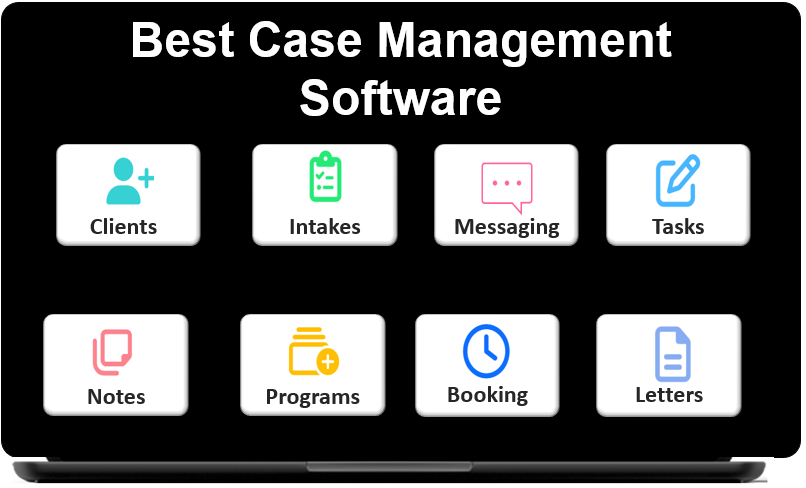 👉 Try it free today - No credit card needed
One Ministry Can Easily Become Five Separate Data Systems
A small organization may start with one outreach program. Growth changes the picture.
There may eventually be a food ministry, benevolence program, counseling service, mentoring initiative, housing program, recovery ministry, youth program, senior service, or other community support effort operating under the same organization.
Creating an independent spreadsheet or database for every program solves today’s problem by creating tomorrow’s.
A person may participate in several programs. Leadership may need organization-wide reporting. Staff may need to understand a client’s previous service history without exposing information that isn’t relevant to their role.
For organizations with multiple ministries, the better approach is usually a case management platform capable of supporting different programs and workflows within one controlled environment.
That gives each program room to operate without turning the organization’s information into isolated islands.
Reporting Should Answer Questions the Board Actually Asks
Ministry reporting can become surprisingly difficult when leadership wants to understand impact rather than activity.
Knowing that a program was busy is different from knowing whom it served, what services were delivered, how often people returned, which needs were most common, whether referrals were completed, or whether participants made progress toward program goals.
This matters to executive directors and program leaders, but it also matters to boards, donors, foundations, and other stakeholders who want to understand how resources are being used.
Good nonprofit outcome tracking software should make routine reporting easier because the underlying information is captured during service delivery. Staff shouldn’t have to reconstruct months of activity shortly before a board meeting or reporting deadline.
The exact measures will vary by ministry. A food program, mentoring program, housing service, counseling ministry, and financial assistance program shouldn’t be forced to measure success in exactly the same way.
That makes configurable reporting and program-specific tracking more useful than a long list of impressive-looking dashboards that don’t reflect the organization’s actual work.
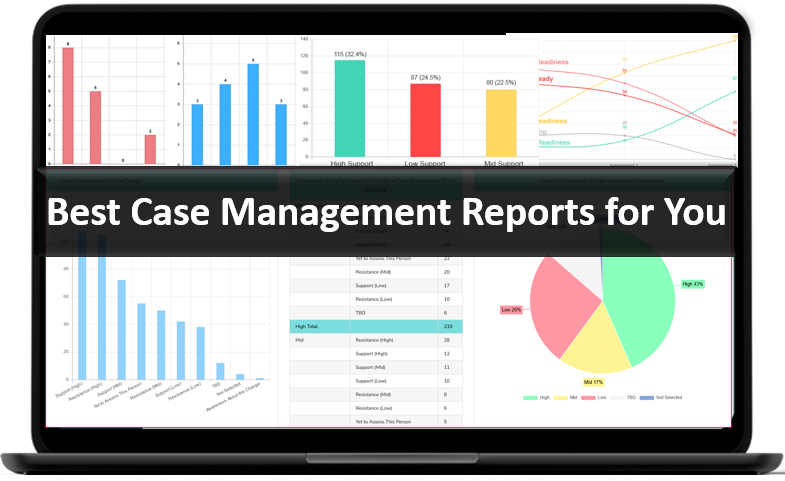
👉 Try it Free today - No credit card needed
What Faith-Based Organizations Should Look for in Case Management Software
Feature lists can become distracting. A platform may offer dozens of capabilities and still be a poor fit for a ministry’s daily work.
Start with the workflows that create the most administrative friction.
Centralized client and household records
Staff should be able to find the relevant history of the person or family they are serving without searching multiple systems.
Flexible intake and assessment forms
Different programs ask different questions. Software should support the ministry’s process rather than forcing every program into an identical intake form.
Case notes and service history
Authorized users need a reliable way to document meaningful interactions and see what assistance has already been provided.
Tasks, reminders, and follow-up
A good system should help convert needs into accountable next steps instead of leaving follow-up buried in notes.
Referral tracking
Ministries frequently work alongside food programs, shelters, counselors, healthcare organizations, government agencies, legal services, and other community resources. Recording a referral is useful. Knowing what happened afterward is better.
Role-based permissions
Permissions are particularly important when employees, ministry leaders, interns, and volunteers use the same platform.
Program and outcome reporting
The system should help leadership move beyond counting activities and understand what programs are doing.
Ease of use
This deserves more weight than many organizations give it. A technically sophisticated platform provides little value if staff and volunteers avoid using it because everyday tasks are difficult to understand.
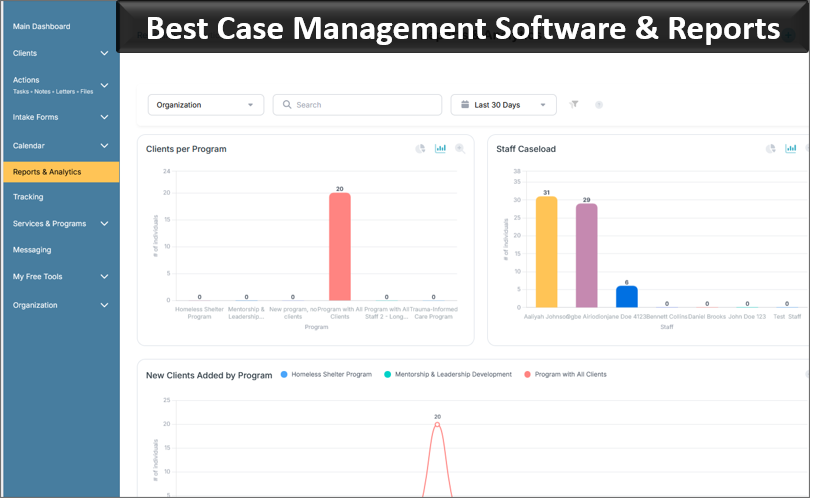
👉 Try it free today - No credit card needed
Don’t Buy More Software Than Your Ministry Can Realistically Use
Large feature lists can make enterprise platforms look like the safest choice. For many ministries, they aren’t.
Implementation effort matters. Training matters. The number of screens required to complete a routine task matters. The ability of an occasional volunteer to return after two weeks and remember how the system works matters.
A ministry with six staff members and twenty volunteers has a different operating reality from a government human services department with dedicated administrators and technical support.
Evaluate software against the people who will actually enter the information, not only the people participating in the product demonstration.
The best case management software for a faith-based nonprofit is usually the system that captures enough structure to improve coordination and reporting without making routine service delivery harder.
When Case Management Hub Makes Sense for a Faith-Based Organization
Case Management Hub is worth considering when the organization’s primary challenge is managing people, services, programs, follow-up, and outcomes rather than managing congregation administration.
That distinction is important.
A ministry looking primarily for worship planning, donation processing, sermon management, congregation attendance, or church event administration should evaluate software designed specifically for those purposes.
A ministry that needs to organize ongoing services around clients, participants, individuals, or families has a different requirement. Case Management Hub is designed for that case-management side of the operation.
That makes the platform particularly relevant for organizations managing programs such as:
- Benevolence and financial assistance
- Community outreach and social services
- Counseling and family support
- Mentoring and youth programs
- Housing and homelessness services
- Recovery and support programs
- Referral and resource coordination
- Other ongoing assistance programs where staff or volunteers need to document services and follow-up
💡All-in-one Case Management Software.
Everything in one place: clients, notes, forms, appointments, reports, and outcomes.
👉 Try it Free - No credit card needed
A Practical Test Before Choosing Ministry Case Management Software
Before comparing products, walk through one real case from beginning to end.
Choose a typical situation your organization handles. It might be a family requesting financial assistance, a participant entering a recovery program, someone needing counseling and referrals, or a client receiving support from several ministry programs.
Then test whether the software can comfortably support the actual workflow:
- How does the person enter the system?
- Where is intake information recorded?
- Can supporting documents be kept with the appropriate record?
- How are services and assistance documented?
- Can staff record case notes without exposing them to unauthorized users?
- How is follow-up assigned?
- Can referrals and subsequent activity be tracked?
- Can leadership report on the program without manually rebuilding the data elsewhere?
This exercise is more revealing than comparing two feature matrices. It exposes unnecessary steps, missing capabilities, permission problems, and workflows that look good during a demonstration but won’t fit day-to-day ministry operations.
The Right System Should Support the Ministry, Not Redefine It
Faith-based organizations aren’t all alike. A congregation running a small benevolence fund doesn’t need the same workflow as a religious nonprofit operating several community programs across multiple locations.
That is why the search for the best ministry case management software should begin with the organization’s service model.
Identify what information is currently scattered. Look at where follow-ups are being missed. Decide which information volunteers genuinely need. Determine what leadership struggles to report. Map how a person moves from an initial request through services, referrals, follow-up, and eventually case closure or program completion.
Then evaluate software against that reality.
For ministries primarily managing congregation membership, attendance, giving, and church administration, a church management system may remain the better fit. For organizations coordinating pastoral interactions and member care, specialized pastoral care software may be sufficient.
But once the work involves structured intake, ongoing assistance, case notes, multiple services, referrals, confidential records, assigned follow-up, program participation, and outcome reporting, the organization is doing work that fits naturally within a case management system.
Recognizing that difference can prevent a ministry from spending years trying to force direct-service work into software that was built for something else.
👉 Try it Free - Free Case Management System
FAQs: Best Case Management Software for Faith-Based Organizations and Ministries
What is the best case management software for faith-based organizations?
The best case management software for faith-based organizations should help ministries manage client intake, case notes, services, referrals, documents, follow-ups, programs, permissions, and outcome reporting in one system. Case Management Hub is designed for faith-based nonprofits and ministries that provide ongoing care, assistance, outreach, and community services.
What is faith-based case management software?
Faith-based case management software helps churches, ministries, and religious nonprofits manage individuals and families receiving services. It can support benevolence, counseling, mentoring, housing assistance, recovery programs, outreach, referrals, case notes, follow-ups, and program reporting.
What is the difference between church management software and church case management software?
Church management software usually focuses on membership, attendance, giving, events, and congregation administration. Church case management software focuses on people receiving ongoing services, including intake, assistance, case notes, referrals, follow-ups, confidential records, programs, and outcomes.
Can case management software help churches manage benevolence and community outreach?
Yes. Church benevolence software and ministry case management software can help organizations track assistance requests, client history, supporting documents, services provided, referrals, follow-up tasks, outreach activities, and program outcomes while keeping information organized in one place.
What features should ministry case management software include?
Ministry case management software should include centralized client records, customizable intake forms, case notes, document management, referral tracking, tasks and reminders, role-based permissions, service tracking, program management, and outcome reporting. It should also be simple enough for staff and authorized volunteers to use consistently.
Find the Right Case Management Solution for Your Organization: All-in-One Case Management Resource Center.
Note: Content on this casemanagementhub.org site is copyrighted and protected under applicable copyright laws. Read Terms of Use.
Disclaimer: Case Management Hub is an educational resource and software provider site. Our content is not medical advice. Use of this site does not create a provider-patient relationship. Read our full disclaimer here: Case Management Hub Disclaimer.