
Best Case Management Software for Police Departments: A Practical Guide for Law Enforcement and Community Programs
Police departments manage far more than incident reports, arrests, investigations, and evidence. Many agencies also coordinate diversion programs, victim services, behavioral health referrals, youth initiatives, community outreach, reentry support, crisis intervention, and partnerships with social service organizations.
Those programs create a different information-management challenge.
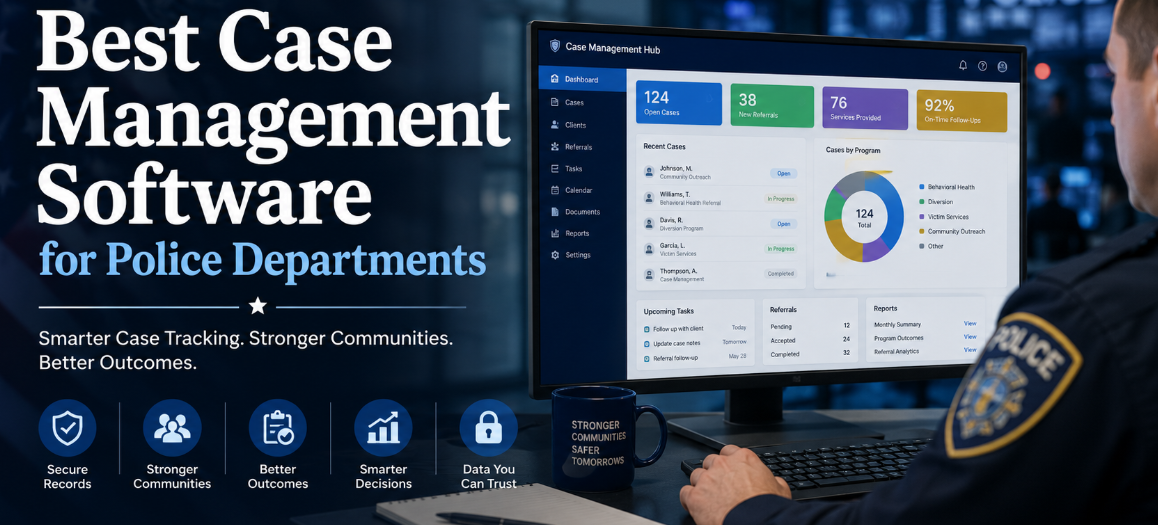
A traditional police records management system may handle core law enforcement records, but teams running community-facing programs often need to track people, referrals, services, follow-ups, documents, program participation, and outcomes over time. Spreadsheets, email, paper files, and disconnected databases make that work harder than it needs to be.
This is where case management software for police departments can fill an important operational gap.
For departments looking for a flexible platform to manage these service-oriented workflows, Case Management Hub (CMH) is a strong option. The cloud-based case management system centralizes records, notes, forms, referrals, tasks, files, programs, reporting, and other case information in one environment.
It is particularly relevant for police departments and public safety agencies managing programs that overlap with social services, behavioral health, community support, diversion, victim advocacy, and reentry.
💡All-in-one Case Management Software.
Everything in one place: clients, notes, forms, appointments, reports, and outcomes.
👉 Try it Free - No credit card needed
What Is Police Case Management Software?
Police case management software is a digital system used to organize case-related information, documentation, activities, assignments, services, and follow-up work.
The exact meaning depends on the department.
An investigations unit may use the term “case management” to describe criminal investigations. A community services unit may use it to describe individuals receiving ongoing assistance. A diversion team might track participants from referral through program completion. A victim services unit may need to document contacts, referrals, appointments, and services.
For the purposes of this guide, police case management software refers primarily to software used to manage people-centered cases and programs rather than criminal investigative records.
That distinction matters.
A police department looking for a system to manage CAD data, arrests, warrants, evidence, criminal intelligence, or offense reports should evaluate software built specifically for those functions.
A department looking to coordinate community services, track referrals, document interactions, manage programs, and report outcomes has a different set of requirements.
Police Case Management Software vs. Police RMS
A police records management system (RMS) and a case management system for police departments should not automatically be treated as interchangeable products.
An RMS is generally centered on official law enforcement records and operational data. Depending on the system, that can include incidents, arrests, investigations, citations, property, evidence, warrants, and related records.
Case management software is better suited to ongoing workflows centered on a person, household, participant, service, or program.
Consider a police department operating a behavioral health co-response program.
The department may need to know when an incident occurred through its existing law enforcement systems. But the team responsible for ongoing support could also need to track referrals, assessments, service providers, follow-up appointments, case notes, goals, documents, and whether the person successfully connected with services.
Those are case management workflows.
The right question, then, is not necessarily, “What can replace our RMS?”
What system can help us manage the service and program work that happens alongside our core law enforcement systems?
That is where a platform such as Case Management Hub becomes relevant.
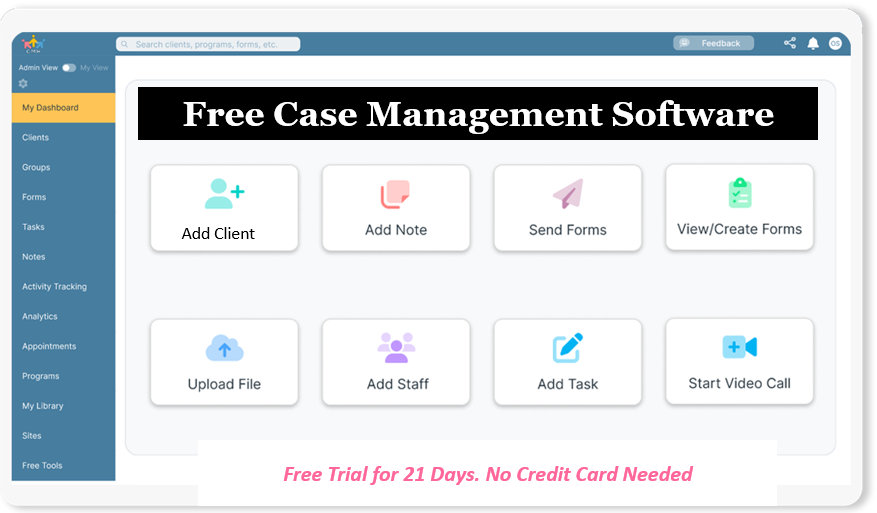
👉 Try it Free - Free Case Management System
Why Case Management Hub Is a Strong Option for Police Departments
Case Management Hub is a centralized, cloud-based case management platform designed for organizations managing people, services, documentation, programs, and outcomes.
Its broader user base includes government and public-sector programs, human services agencies, legal and justice-related services, probation and parole programs, diversion programs, victim advocacy organizations, reentry programs, crisis intervention specialists, outreach workers, program managers, and case managers.
That makes the platform particularly relevant to police departments whose work intersects with those functions.
A department can use CMH to organize case information, create custom forms, maintain notes, manage documents, track referrals, assign tasks, monitor programs, and generate reports without building the entire workflow around spreadsheets and separate files.
This flexibility is important because police departments do not all operate the same programs.
A large metropolitan agency may have dedicated victim advocates, social workers, behavioral health specialists, and community outreach personnel. A smaller department may have a few officers coordinating referrals with county agencies and nonprofits.
The case management system needs to adapt to the program rather than force every department into the same workflow.
Where Police Departments Can Use Case Management Software
The strongest use cases are programs where an individual may remain engaged with the department or its partners after the initial contact.
Behavioral Health and Crisis Intervention
Behavioral health responses frequently involve multiple organizations and follow-up actions.
A police behavioral health case management system can help authorized staff maintain records associated with the individual, document interactions, assign follow-up tasks, manage forms, and track referrals to outside providers.
Instead of relying on separate spreadsheets or individual staff members to remember the next action, teams have a structured record of the work associated with the case.
Diversion Programs
Diversion programs often involve more than determining whether someone qualifies.
Teams may need to document enrollment, program requirements, appointments, services, goals, progress, referrals, completion, and discharge.
Case Management Hub supports multiple programs, customizable client types, custom fields, forms, notes, goal tracking, tasks, services tracking, and reporting. Those capabilities can be configured around a department’s specific diversion process.
🔥Still using spreadsheets for case management?
Switch to an all-in-one case management platform.
👉 Try it Free - No credit card needed
Victim Services
Victim advocates and police department support personnel may need to coordinate assistance across multiple organizations.
Case management software can provide a central place to document interactions, store relevant files, manage tasks, and track referrals to service providers.
CMH’s referral management functionality supports incoming and outgoing referrals, referral directories, referral source reporting, and controlled sharing of relevant information with partners.
Community Outreach
Community policing programs can generate significant work that does not fit neatly into a traditional incident-centered system.
Outreach teams may work with residents experiencing homelessness, families needing community resources, youth, seniors, people experiencing behavioral health crises, or individuals who repeatedly come into contact with emergency services.
A community policing case management system can help organize those interactions over time.
Teams can track contacts, notes, services, referrals, tasks, goals, program participation, and outcomes rather than treating every interaction as an isolated event.
Youth and Juvenile Programs
Police departments involved in youth mentoring, prevention, intervention, or diversion may need to coordinate participants, staff, activities, services, and progress.
Case Management Hub supports groups, programs, tasks, notes, forms, goals, attendance-related tracking, and mobile-friendly documentation.
That combination can be useful for community centers and public safety programs supporting youth, including young people involved with probation-related initiatives.
Reentry and Referral Coordination
Reentry requires coordination.
An individual may need housing, employment assistance, counseling, benefits, transportation, healthcare, identification documents, or other support.
Case management software gives teams a structured way to record those needs and follow the work through instead of simply documenting that a referral was made.
Features to Look for in Law Enforcement Case Management Software
Police departments evaluating law enforcement case management software should start with the workflows they need to support, then determine which features are necessary.
A long feature list is not useful if staff cannot apply those features to their actual work.
Several capabilities deserve particular attention.
Centralized Case Records
Staff should be able to find the relevant case information without searching across spreadsheets, email threads, paper folders, and unrelated databases.
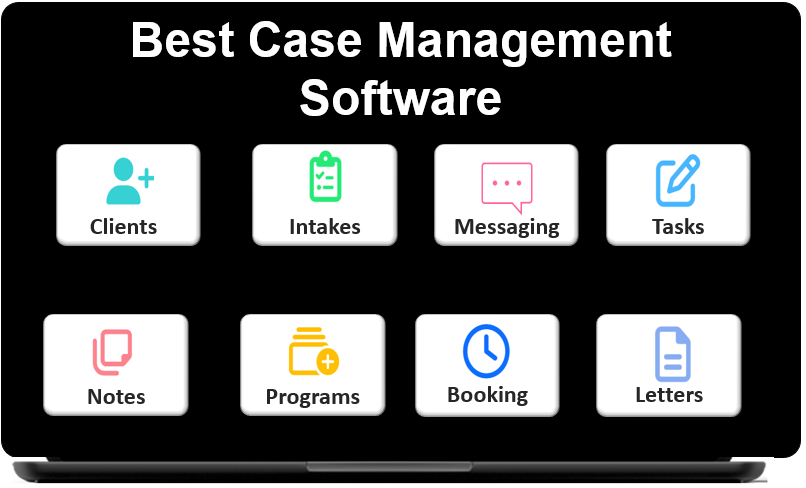
Case Management Hub centralizes client profiles, notes, files, forms, referrals, tasks, programs, services, goals, and other information.
Custom fields allow departments to adapt profiles to the data their program actually needs.
 👉 Try it free today - No credit card needed
Custom Forms and Digital Intake
Standardized data collection becomes especially important when multiple officers, social workers, advocates, or program staff interact with participants.
CMH includes customizable forms and a form builder. Organizations can modify templates, create their own forms, add signature and file-upload fields, and map information from forms into profile fields.
For departments replacing paper processes, forms can also be completed through mobile-friendly interfaces.
Case Notes and Documentation
A useful police case tracking software platform should make routine documentation straightforward.
Case Management Hub allows teams to create client notes as well as general notes not tied to a specific client. Departments can create custom note types and control access through permissions.
Notes can also be filtered and exported when authorized users need to review case documentation.
Referral Management
Referrals are one of the most important functions for departments working with outside service providers.
Making the referral is only part of the work. Teams may also need to know where the referral went, which provider is involved, what information was shared, and what happened afterward.
CMH provides tools for tracking incoming and outgoing referrals, referral sources, providers, and related records.
For a department coordinating with behavioral health providers, housing organizations, victim support agencies, legal services, or community nonprofits, that creates a more structured referral process.
Tasks, Follow-Ups, and Reminders
Case work fails when the next action disappears into someone’s inbox or notebook.
CMH supports tasks, assignments, due dates, recurring tasks, and reminders. Staff can receive notifications when work is assigned, and tasks can be associated with clients or groups.
This can support recurring check-ins, document requests, appointments, supervisor reviews, or other follow-up activities.
👉 Try it Free today - No credit card needed
Mobile Case Management for Police and Field Teams
Police department work does not happen exclusively behind a desk.
Officers, outreach workers, crisis intervention specialists, victim advocates, and co-response teams may need to document information while working in the community.
Case Management Hub is cloud based and mobile responsive, allowing authorized users to access it through smartphones, tablets, laptops, and desktops with an internet connection.
Quick Actions can also make common tasks, such as adding a note, easier without requiring staff to move through multiple screens.
For agencies evaluating mobile case management software for field teams, usability matters as much as availability. A system technically accessible from a phone is not especially useful if routine documentation becomes cumbersome on a smaller screen.
Managing Programs Across Teams and Locations
Police departments may run several programs simultaneously.
One unit could manage youth outreach while another handles behavioral health referrals. Victim services could have a separate workflow. A regional initiative might involve multiple locations or partner agencies.
Case Management Hub allows organizations to create multiple programs and locations. Individuals can participate in more than one program, and reporting can be filtered based on program information.
Staff access can also be structured so employees work with the records relevant to their assignments.
That makes the platform useful beyond individual case tracking. It can serve as a police program management software environment for departments that need to understand activity across several community-facing initiatives.
Reporting and Outcome Tracking
Counting cases tells leadership how much work entered the program. It does not necessarily show what happened.
Police departments increasingly need usable information about services delivered, referrals, program participation, activities, and outcomes, particularly when initiatives involve grants, county funding, community partnerships, or executive reporting.
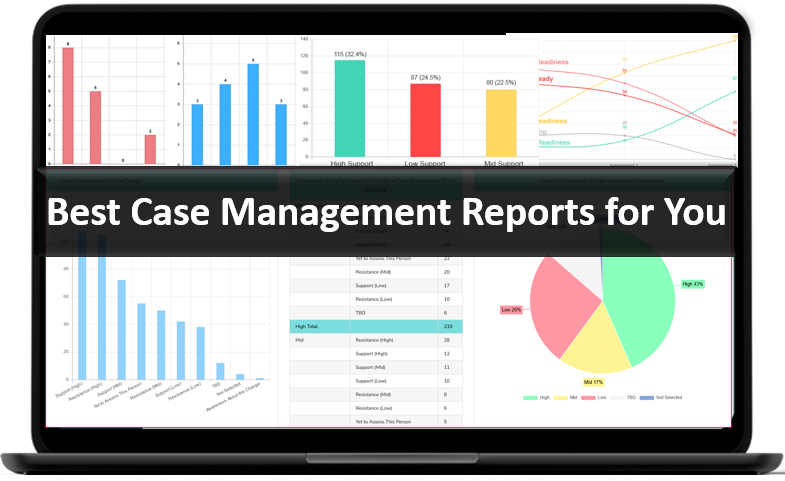
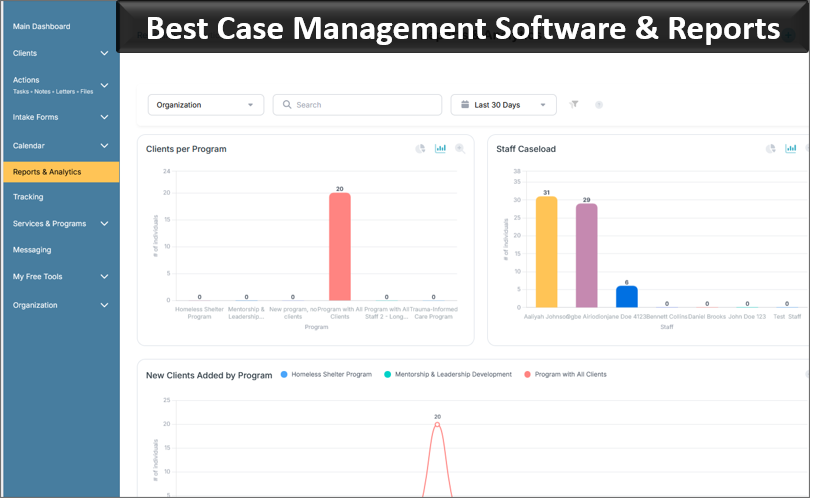
Case Management Hub includes built-in and custom reporting capabilities. Teams can create reports from tracked information, filter results by criteria such as dates or program data, and export information to Excel or other supported formats for additional analysis.
Custom fields make it possible to capture information specific to a department’s program instead of relying only on generic data categories.
Goal tracking can also be used at individual, group, or program level, giving teams another way to monitor progress where goal-based services are appropriate.
👉 Try it free today - No credit card needed
Security and Access Control Matter
Police departments manage sensitive information. Any case management software for law enforcement should therefore be evaluated carefully against the department’s security, privacy, legal, procurement, records-management, and IT requirements.
Case Management Hub provides role-based permissions that can restrict users to assigned cases or program data. Administrators have broader access and can manage roles and settings.
The platform uses encryption for data in transit and at rest, provides audit logging of access and updates, and supports secure authentication. CMH is also designed around HIPAA compliance and other privacy standards.
Cloud backups and data recovery processes add another layer of operational protection.
These capabilities are valuable, but a police department should still conduct its own security and compliance review before adopting any platform. Requirements vary by jurisdiction, use case, data type, and agency policy.
A case management platform used for community outreach may have different requirements from a system storing official criminal justice records.
That distinction should be established before implementation.
Moving Beyond Spreadsheets and Paper-Based Case Tracking
Many programs do not begin with purpose-built software.
A new outreach initiative might start with an Excel workbook. Referrals may be tracked through email. Notes might sit in Word documents. Paper intake forms could be stored in folders. One employee may understand how everything fits together because that employee built the process.
This works until the program grows.
More staff means more handoffs. More participants create more records. Leadership wants reporting. Grant requirements change. A second location opens. Someone leaves the team.
The weaknesses of the manual system become difficult to ignore.
Case Management Hub supports spreadsheet imports for clients, notes, tasks, historical form information, and other data. Departments can create custom fields before importing records so the new system reflects the information they already collect.
Scanned documents can also be uploaded to client records or a centralized file area.
For departments transitioning from manual processes, that provides a path toward a centralized police department case management system without requiring teams to rebuild every record manually.
💡All-in-one Case Management Software.
Everything in one place: clients, notes, forms, appointments, reports, and outcomes.
👉 Try it Free - No credit card needed
Ease of Use Should Be a Procurement Requirement
Software selection often concentrates heavily on capabilities and not enough on whether frontline staff will actually use them.
That is a mistake with case management.
A system can have extensive functionality and still fail if routine actions take too long, navigation is confusing, or training becomes a continuing burden.
Case Management Hub is designed around a streamlined interface, customizable navigation, and workflows that teams can adapt to their programs. The platform can be used immediately after account setup, although configuration and data migration requirements will affect how quickly a department is ready for full deployment.
Technical support is available, and onboarding can include setup, training, forms, workflows, and data import assistance.
The practical test during evaluation should be simple: give representative users realistic tasks.
- Ask an outreach officer to document a contact.
- Have a victim advocate enter a referral.
- Ask a supervisor to find an overdue task.
- Have a program manager run a report.
If those basic actions require extensive explanation, implementation will probably be harder than the feature list suggests.
What Does Police Case Management Software Cost?
Case management software pricing varies based on the platform, number of users, storage, implementation needs, customization, and other requirements.
Police departments should consider total operational cost rather than subscription price alone.
A lower-priced platform that requires extensive manual work may not be inexpensive in practice. At the same time, a highly specialized enterprise system may be difficult to justify for a small community program that needs straightforward case tracking.
Case Management Hub offers subscription-based access and discounts for qualifying groups, including first responders. Organizations with multiple team members can also qualify for additional discounts.
A free trial is available, allowing teams to test the software before making a broader commitment.
For public-sector buyers, a trial can be particularly useful because staff can evaluate actual workflows rather than making the decision solely from a product demonstration.
👉 Try it Free - Free Case Management System
Is Case Management Hub the Best Case Management Software for Your Police Department?
There is not one software platform that should handle every police department workflow.
If your primary need is dispatch, evidence management, criminal intelligence, incident reporting, warrants, or core police records management, evaluate products specifically designed for those functions.
If the need is managing people-centered programs, Case Management Hub deserves consideration.
It is particularly well suited to departments managing community outreach, behavioral health and crisis intervention, diversion programs, victim services, youth programs, reentry support, referrals, and other public safety initiatives that require ongoing case coordination.
The value is in bringing work that might otherwise be spread across spreadsheets, forms, files, email, and individual staff systems into one structured environment.
Teams can manage case records, notes, digital forms, files, referrals, tasks, programs, goals, services, and reporting while controlling staff access through role-based permissions.
For departments comparing the best case management software for police departments, the deciding factor should be the work the system needs to support.
Map the workflow from first contact through case closure. Identify who needs access, what staff must document, which referrals need follow-up, what managers need to report, and where the current process breaks down.
Then test the software against those real requirements.
For police departments whose community-facing work increasingly requires coordination across law enforcement, behavioral health, social services, victim support, nonprofits, and other partners, a dedicated case management platform can provide the structure those programs need without trying to turn every community interaction into a traditional police record.
Create an Account Now - Add Your Team to Try Case Management Hub for Free
Get your entire team to try out Case Management Hub for free in minutes. Work smarter, not harder - free for 21 days. No credit card needed. If you decide to move forward is when you can subscribe.Follow These 5 Simple Steps:
Step 1: Create your free trial account here: Create Account.
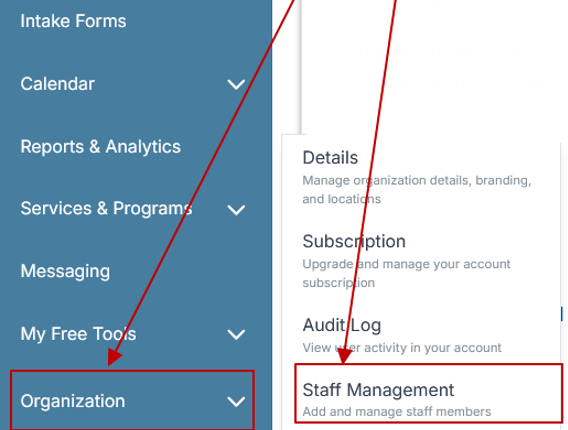
Step 2: From the left sidebar, scroll down to the Organization dropdown menu and click Staff Management
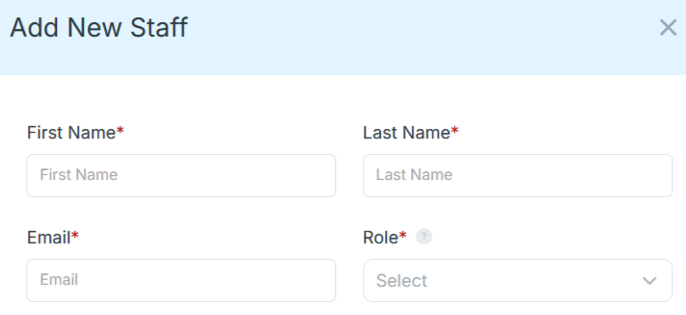
Step 4: Copy and send this email to your team members (so they know how to log in).
⚠️ Important: Ask your team members not to create new accounts. They should log in using the details you create for them.
Email Template to Send Your Team
Subject: You’ve been added to our new All-in-One Case Management tool!
Hi Team,
I've set up a free trial account for our team with the Case Management Hub software, an all-in-one case management software. I've already added you to the account, so you can start exploring immediately.
Please don't create a new account. Instead, use the login details I've shared with you to access the platform here: https://app.casemanagementhub.org/
This platform centralizes and improves everything we do, from case management, standardized assessment forms, client care, scheduling & appointments, reporting & analytics, and more all in one secure, collaborative tool. We have 21 days to test it out for free and see how it fits our needs.
Learn more about the platform here: Explore Features
Looking forward to exploring this together.
Best,
[Your Name/Signature]
Step 5: Request a customized discounted quote.
FAQ: Best Case Management Software for Police Departments
What is police case management software?
Police case management software is a digital platform that helps departments manage people-centered cases, referrals, notes, documents, tasks, services, and program activity. It is especially useful for community outreach, behavioral health, diversion, victim services, and other ongoing support programs.
What is the best case management software for police departments?
The best case management software for police departments should provide secure case tracking, customizable forms, referral management, task reminders, reporting, mobile access, and role-based permissions. Case Management Hub is a strong option for departments managing community-based and service-oriented programs.
What is the difference between police case management software and a police RMS?
A police RMS is typically used for official law enforcement records such as incidents, arrests, investigations, and evidence, while police case management software is better suited for ongoing client, program, referral, service, and follow-up workflows.
Can law enforcement case management software support behavioral health and diversion programs?
Yes. Law enforcement case management software can help teams track behavioral health referrals, crisis intervention follow-ups, diversion participation, services, goals, case notes, appointments, and outcomes across multiple staff members and programs.
What features should a police department case management system include?
A police department case management system should include centralized records, custom forms, case notes, referral tracking, secure document storage, task management, reporting, mobile access, and role-based permissions so teams can manage cases efficiently and protect sensitive information.
Find the Right Case Management Solution for Your Organization: All-in-One Case Management Resource Center.
Note: Content on this casemanagementhub.org site is copyrighted and protected under applicable copyright laws. Read Terms of Use.
Disclaimer: Case Management Hub is an educational resource and software provider site. Our content is not medical advice. Use of this site does not create a provider-patient relationship. Read our full disclaimer here: Case Management Hub Disclaimer.