
Best Case Management Software for Nonprofit Cancer Organizations in 2026
Nonprofit cancer organizations manage much more than client contact information. They coordinate patient navigation, financial assistance, transportation, emotional support, survivorship services, referrals, caregiver resources, and long-term follow-up.
Many organizations begin with spreadsheets, paper files, shared inboxes, or donor management systems that were not designed for service delivery. As programs grow, these tools can create duplicated work, inconsistent documentation, missed follow-ups, and time-consuming grant reporting.
The best case management software for nonprofit cancer organizations centralizes client information, improves care coordination, supports secure documentation, and helps teams measure program outcomes.
This guide reviews six leading options, including Case Management Hub, Bonterra Apricot, Casebook, CharityTracker, Salesforce Nonprofit Cloud, and Neon One.
💡All-in-one Case Management Software.
Everything in one place: clients, notes, forms, appointments, reports, and outcomes.
👉 Try it Free - No credit card needed
Quick Comparison of the Best Cancer Nonprofit Software
1. Case Management Hub
Best for: Nonprofit cancer organizations, patient navigation programs, survivorship services, and client-centered support programs.
2. Bonterra Apricot
Best for: Large, grant-funded nonprofits with complex reporting and outcome measurement requirements.
3. Casebook
Best for: Human services organizations that need structured case planning and care coordination.
4. CharityTracker
Best for: Community referral networks and organizations coordinating local resources.
5. Salesforce Nonprofit Cloud
Best for: Large nonprofit cancer organizations with enterprise technology teams and extensive integration needs.
6. Neon One
Best for: Fundraising-focused nonprofits that need donor, event, membership, and volunteer management.
All-in-One Case Management Software
Sign Up Today, Free. No credit card needed!
|
Do You Have a Team? |
||
Why Nonprofit Cancer Organizations Need Case Management Software
Cancer support organizations frequently work with clients for months or years. A single person may receive financial assistance, transportation support, counseling referrals, nutrition resources, survivorship guidance, peer support, caregiver services, and repeated follow-up.
A basic nonprofit CRM may help manage donors, campaigns, and fundraising contacts, but it is not always equipped to document ongoing client services. Dedicated cancer nonprofit case management software helps staff manage the full client journey in one secure system.
Common benefits include:
- Centralized client profiles and service histories
- Consistent intake, assessment, and case note documentation
- Improved coordination between navigators, social workers, counselors, and volunteers
- Automated tasks, reminders, and follow-up tracking
- Better referral management and resource coordination
- Faster grant reporting and outcome measurement
- Stronger accountability across programs and teams
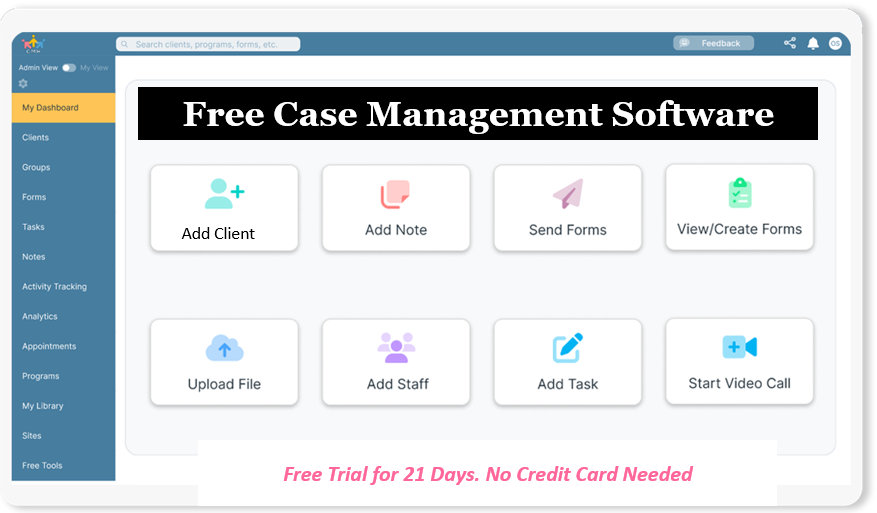
👉 Try it Free - Free Case Management System
Essential Features to Look for in Cancer Nonprofit Case Management Software
The best software for cancer support nonprofits should help teams improve service delivery while reducing administrative work. Before selecting a platform, evaluate whether it supports the following capabilities.
Client Intake and Digital Records
Staff should be able to collect client information through standardized intake forms and maintain a complete digital record. This may include demographic information, contact details, diagnosis-related information, household needs, program enrollment, and service history.
Assessments and Care Plans
Needs assessments and care plans help staff identify priorities, establish goals, document interventions, and monitor progress. Flexible assessment tools are especially important for organizations offering multiple cancer support programs.
Case Notes and Documentation
Case managers and patient navigators need a reliable way to document interactions, services, referrals, decisions, and follow-up activities. Structured case notes improve consistency and make it easier for authorized team members to understand what has already occurred.
Referral and Resource Management
Cancer nonprofits often refer clients to transportation providers, financial assistance programs, housing resources, counseling services, legal aid, food programs, and healthcare partners. Referral tracking should show where a client was referred, whether the referral was completed, and what outcome occurred.
Outcome Tracking and Reporting
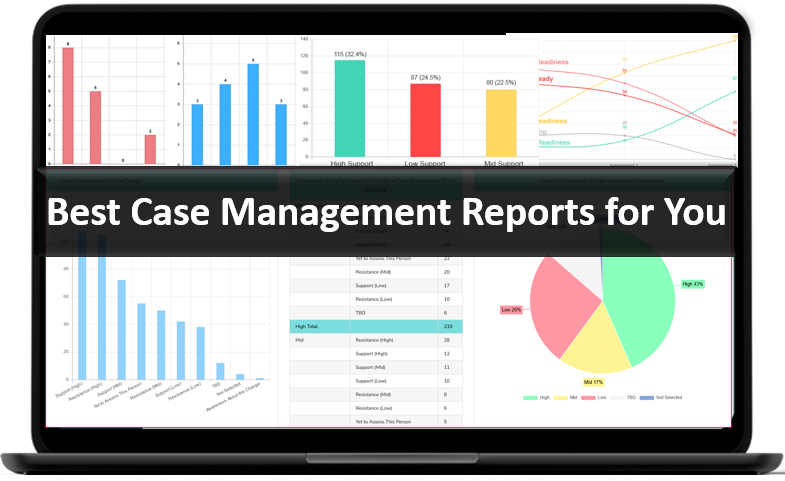
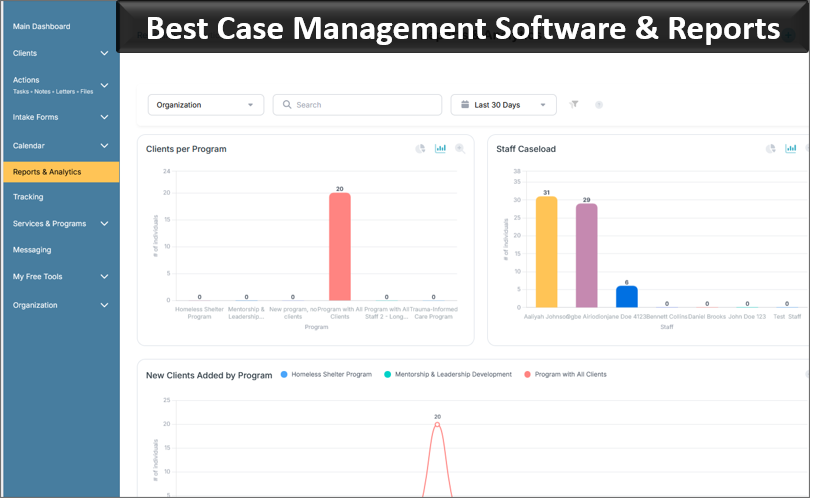
Organizations should be able to track services delivered, clients served, goals achieved, referrals completed, assistance distributed, and other program outcomes. Strong reporting tools make it easier to communicate impact to grant funders, boards, partners, and leadership teams.
Security and Permissions
Cancer support programs may collect sensitive personal and health-related information. Look for role-based permissions, secure document storage, controlled access, activity tracking, and other safeguards appropriate for the information your organization manages.
🔥Still using spreadsheets for case management?
Switch to an all-in-one case management platform.
👉 Try it Free - No credit card needed
1. Case Management Hub
Best overall case management software for nonprofit cancer organizations
Case Management Hub is designed for organizations that manage ongoing client relationships, services, goals, referrals, and outcomes. It is especially relevant for cancer nonprofits that need more than donor management or basic contact tracking.
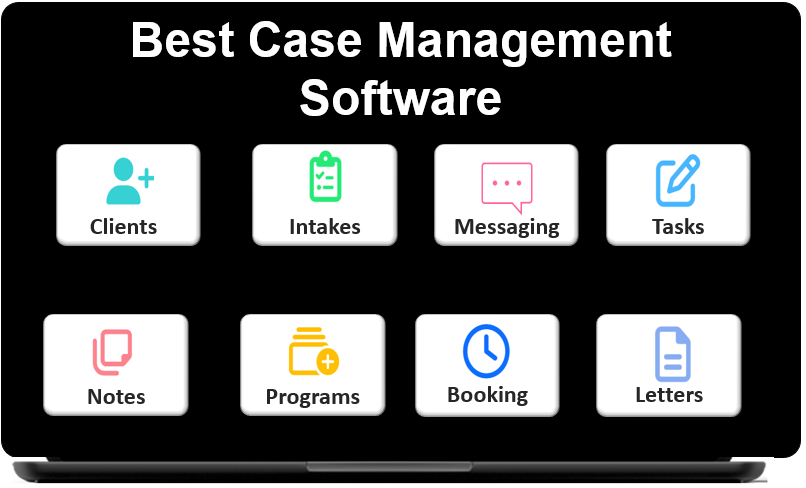
The platform can support the client journey from initial intake through patient navigation, active treatment support, survivorship services, and long-term follow-up. Staff can maintain centralized client profiles, document case notes, complete assessments, create care plans, assign tasks, track referrals, and monitor outcomes.
Key Features
- Centralized client profiles
- Digital intake forms
- Case notes and interaction histories
- Needs assessments
- Care plans and goal tracking
- Referral management
- Task and follow-up tracking
- Secure document storage
- Scheduling and calendar tools
- Program outcome measurement
- Custom forms and reports
- Multi-program management
Why It Works for Cancer Support Programs
A client may interact with patient navigators, social workers, financial assistance coordinators, volunteer managers, counselors, and survivorship specialists. Case Management Hub enables authorized team members to work from a shared client record, helping reduce duplicate data entry and fragmented communication.
The software can also support multiple service areas in one system. A cancer nonprofit can manage transportation assistance, financial aid, peer support, caregiver services, survivorship coaching, education, and referrals without maintaining separate spreadsheets for each program.
Best For
- Nonprofit cancer organizations
- Cancer patient navigation programs
- Cancer survivorship organizations
- Patient advocacy nonprofits
- Community health organizations
- Human services agencies
Potential Considerations
Very small organizations with only one simple program may not initially need every available feature. However, the platform is a strong option for nonprofits that expect to expand their services, users, reporting requirements, or client volume.
Create an Account Now - Add Your Team to Try Case Management Hub for Free
Get your entire team to try out Case Management Hub for free in minutes. Work smarter, not harder - free for 21 days. No credit card needed. If you decide to move forward is when you can subscribe.Follow These 5 Simple Steps:
Step 1: Create your free trial account here: Create Account.
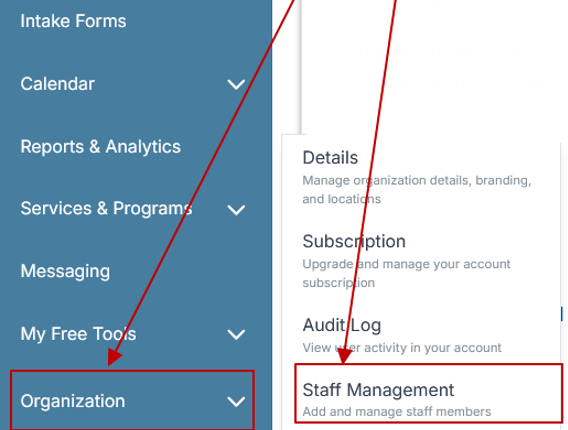
Step 2: From the left sidebar, scroll down to the Organization dropdown menu and click Staff Management
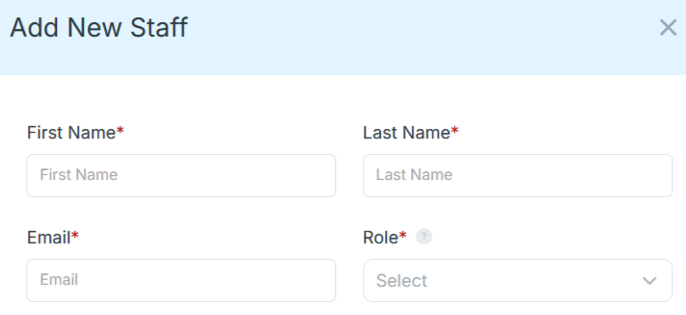
Step 4: Copy and send this email to your team members (so they know how to log in).
⚠️ Important: Ask your team members not to create new accounts. They should log in using the details you create for them.
Email Template to Send Your Team
Subject: You’ve been added to our new All-in-One Case Management tool!
Hi Team,
I've set up a free trial account for our team with the Case Management Hub software, an all-in-one case management software. I've already added you to the account, so you can start exploring immediately.
Please don't create a new account. Instead, use the login details I've shared with you to access the platform here: https://app.casemanagementhub.org/
This platform centralizes and improves everything we do, from case management, standardized assessment forms, client care, scheduling & appointments, reporting & analytics, and more all in one secure, collaborative tool. We have 21 days to test it out for free and see how it fits our needs.
Learn more about the platform here: Explore Features
Looking forward to exploring this together.
Best,
[Your Name/Signature]
Step 5: Request a customized discounted quote.
2. Bonterra Apricot
Best for large, grant-funded cancer nonprofits
Bonterra Apricot is a nonprofit case management and outcome reporting platform used by organizations with complex programs and detailed funder requirements. Its primary strengths include data collection, customizable forms, program tracking, and reporting.
Cancer nonprofits can use the platform to record client information, document services, track program participation, and measure outcomes across grants or initiatives.
Key Strengths
- Detailed program reporting
- Outcome measurement
- Custom data collection forms
- Multi-program support
- Grant and compliance reporting
Potential Considerations
Implementation and ongoing configuration may require substantial planning. Larger organizations may need a dedicated administrator or internal data specialist to manage the system effectively.
3. Casebook
Best for cancer nonprofits with human services programs
Casebook is designed for human services organizations that need structured case management, service planning, and care coordination. It can be useful for cancer nonprofits that combine patient support with broader social services.
The platform supports client records, assessments, documentation, case planning, service tracking, and collaboration between authorized users.
Key Strengths
- Human services case management
- Structured assessments
- Care and service planning
- Case documentation
- Eligibility and service tracking
Potential Considerations
Organizations should confirm that the available workflows and customization options match their specific cancer support programs, reporting requirements, and internal processes.
4. CharityTracker
Best for referrals and community resource coordination
CharityTracker focuses on collaboration between charities, churches, nonprofits, and community service providers. It can be a practical option for cancer nonprofits that regularly connect clients with local assistance programs.
Organizations may use the system to maintain client records, document assistance, coordinate referrals, and monitor resource utilization across community partners.
Key Strengths
- Community referral management
- Shared resource directories
- Service and assistance tracking
- Interagency collaboration
- Basic reports
Potential Considerations
Organizations that require sophisticated assessments, detailed care plans, advanced outcome reporting, or highly customized case workflows may need a more comprehensive case management platform.
 👉 Try it free today - No credit card needed
5. Salesforce Nonprofit Cloud
Best for enterprise nonprofit organizations
Salesforce Nonprofit Cloud is a broad nonprofit technology platform that can support fundraising, relationship management, program operations, marketing, volunteer engagement, and analytics.
With the right configuration, integrations, and implementation support, it can also be adapted for cancer patient tracking, program management, referrals, and service delivery.
Key Strengths
- Enterprise scalability
- Extensive customization
- Large integration ecosystem
- Donor and relationship management
- Advanced analytics capabilities
Potential Considerations
Salesforce implementations can be costly and technically complex. Smaller cancer nonprofits may need outside consultants or dedicated internal administrators to configure and maintain the platform.
6. Neon One
Best for fundraising-focused cancer nonprofits
Neon One offers nonprofit tools for donor management, fundraising, events, memberships, communications, and volunteer engagement. It may be suitable for smaller organizations whose primary operational needs center on fundraising and supporter relationships.
The platform can help cancer nonprofits manage campaigns, donations, events, volunteers, and constituent communications within a connected nonprofit ecosystem.
Key Strengths
- Donor management
- Online fundraising
- Volunteer coordination
- Event management
- Membership management
Potential Considerations
Neon One is not primarily a dedicated case management platform. Organizations providing intensive patient navigation, care planning, or long-term client services may require more specialized functionality.
👉 Try it Free today - No credit card needed
How to Choose the Right Software for Your Cancer Nonprofit
The best case management system depends on your organization’s programs, client volume, staffing model, reporting obligations, and growth plans. Use the following process to compare vendors.
- Document your current workflows. List how clients enter your programs, what information staff collect, which services you provide, and how follow-ups are managed.
- Identify your required features. Separate essential capabilities from optional features. This prevents attractive but unnecessary tools from driving the decision.
- Review security needs. Determine what sensitive information your organization collects and what access controls, storage protections, and internal policies are required.
- Define reporting requirements. Gather examples of reports required by grant funders, leadership, boards, and program partners.
- Evaluate usability. Include frontline staff in demonstrations because they will use the platform most frequently.
- Calculate total cost. Consider subscriptions, implementation, customization, migration, training, support, integrations, and ongoing administration.
- Plan for growth. Choose a platform that can support additional programs, users, locations, forms, reports, and client records.
Case Management Software Versus a Nonprofit CRM
A nonprofit CRM is usually designed to manage donors, volunteers, campaigns, events, memberships, and fundraising communications. Case management software is designed to manage people receiving services.
For cancer organizations, the difference is important. A donor record may focus on gifts, communications, and campaign participation. A client case record may need assessments, case notes, care plans, referrals, goals, documents, appointments, tasks, and service outcomes.
Some large organizations use both systems. The CRM manages donors and fundraising, while the case management platform manages client services. Other organizations choose an integrated platform or connect the systems through available integrations.
👉 Try it free today - No credit card needed
Benefits of Moving Away From Spreadsheets
Spreadsheets can be useful during the earliest stage of a program, but they become difficult to manage as client volume, services, users, and reporting requirements increase.
Moving to dedicated nonprofit case management software can provide several practical improvements:
- Less duplicate data entry
- Fewer missed follow-ups
- More consistent documentation
- Faster access to client histories
- Improved staff collaboration
- Stronger privacy and access controls
- More reliable program data
- Simpler grant and board reporting
💡All-in-one Case Management Software.
Everything in one place: clients, notes, forms, appointments, reports, and outcomes.
👉 Try it Free - No credit card needed
People Also Asked
What is the best case management software for nonprofit cancer organizations?
Case Management Hub is a strong overall option for nonprofit cancer organizations that need client intake, case notes, assessments, care plans, referrals, task tracking, program management, and outcome reporting in one platform.
What software do cancer patient navigation programs use?
Cancer patient navigation programs typically use case management software that can track client needs, barriers to care, referrals, appointments, follow-ups, services, and outcomes. The right platform should also support customized workflows and reporting.
Can cancer nonprofits use donor management software for client services?
Donor management software can store basic contact information, but it may not include the structured assessments, care plans, case notes, referrals, permissions, and outcome tracking required for ongoing client support.
What should cancer nonprofits track?
Common measures include clients served, client demographics, services delivered, referrals made, referral completion rates, financial assistance distributed, transportation support provided, goals achieved, program participation, follow-up status, and client outcomes.
How much does nonprofit case management software cost?
Pricing varies based on the number of users, client records, features, implementation needs, customization, support, and integrations. Organizations should compare total cost with the time saved through better workflows, documentation, and reporting.
Final Verdict
Nonprofit cancer organizations need software that supports long-term client relationships, coordinated services, secure documentation, referral management, program reporting, and measurable outcomes.
Case Management Hub offers the strongest overall combination of client management, workflow flexibility, collaboration, and reporting for many cancer support nonprofits. It is particularly well suited to patient navigation, survivorship, financial assistance, advocacy, caregiver support, and community resource programs.
Bonterra Apricot may be a strong option for large organizations with complex grant reporting needs. Casebook is relevant for human services programs, while CharityTracker can support referral-focused community networks. Salesforce Nonprofit Cloud may fit enterprise organizations with dedicated technology resources, and Neon One is better suited to fundraising-focused nonprofits.
The right choice should reduce administrative work, improve client service delivery, strengthen reporting, and give staff more time to support individuals and families affected by cancer.
All-in-One Case Management Software
Sign Up Today, Free. No credit card needed!
|
Do You Have a Team? |
||
FAQs: Best Case Management Software for Nonprofit Cancer Organizations
What is the best case management software for nonprofit cancer organizations?
The best case management software for nonprofit cancer organizations centralizes client intake, case notes, referrals, care plans, tasks, documents, and outcome reporting. It should also support secure collaboration, multiple programs, customizable workflows, and grant reporting.
Why do cancer nonprofits need case management software?
Cancer nonprofits need case management software to coordinate patient navigation, financial assistance, transportation, survivorship support, caregiver services, and community referrals. A centralized system reduces missed follow-ups, duplicate data entry, and manual reporting.
What features should cancer nonprofit case management software include?
Cancer nonprofit case management software should include digital intake forms, client profiles, assessments, case notes, care plans, referral tracking, appointment scheduling, task reminders, secure document storage, dashboards, and nonprofit outcome reporting.
Why is Case Management Hub best for nonprofit cancer organizations?
Case Management Hub is best for nonprofit cancer organizations because it combines client tracking, patient navigation, case notes, assessments, care plans, referrals, tasks, multi-program management, and reporting in one flexible platform designed for ongoing support services.
How does patient navigation software improve cancer support services?
Patient navigation software improves cancer support services by helping teams track barriers to care, coordinate referrals, document services, schedule follow-ups, and measure client outcomes. It gives authorized staff a shared view of each client’s needs and progress.
Find the Right Case Management Solution for Your Organization: All-in-One Case Management Resource Center.
Note: Content on this casemanagementhub.org site is copyrighted and protected under applicable copyright laws. Read Terms of Use.
Disclaimer: Case Management Hub is an educational resource and software provider site. Our content is not medical advice. Use of this site does not create a provider-patient relationship. Read our full disclaimer here: Case Management Hub Disclaimer.